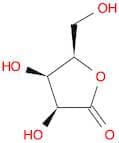
CAS 15384-34-6
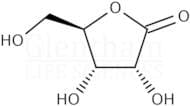
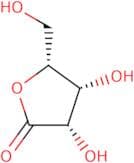
:(3R,5R)-3,4-dihydroxy-5-(hydroxyméthyl)tetrahydrofurane-2-one
Formule :C5H8O5
InChI :InChI=1/C5H8O5/c6-1-2-3(7)4(8)5(9)10-2/h2-4,6-8H,1H2/t2-,3?,4-/m1/s1
SMILES :C([C@@H]1C([C@H](C(=O)O1)O)O)O
Trier par
Degré de pureté (%)
0
100
|
0
|
50
|
90
|
95
|
100
8 produits trouvés.
(3S, 4R, 5R)-3, 4-Dihydroxy-5-(hydroxymethyl)dihydrofuran-2(3H)-one
CAS :(3S, 4R, 5R)-3, 4-Dihydroxy-5-(hydroxymethyl)dihydrofuran-2(3H)-oneFormule :C5H8O5Degré de pureté :≥95%Masse moléculaire :148.11D-Lyxono-1,4-lactone
CAS :D-Lyxono-1,4-lactone is a biochemical reagent that can be used as a biomaterial for life science related research and as a sulfonylation reagent for organic synthesis and drug discovery.Formule :C5H8O5Masse moléculaire :148.11D-Lyxono-1,4-lactone
CAS :D-Lyxono-1,4-lactone is a 4-deoxy-l-fucose derivative that is a potent inhibitor of bacterial growth. It is a highly effective antibiotic with a broad spectrum of activity against Gram-positive and Gram-negative bacteria. D-Lyxono-1,4-lactone has been shown to be active against multivorans, including Escherichia coli and Salmonella enterica serovar Typhimurium. This compound was found to be more active than antibiotics such as penicillin and streptomycin. The structure of D-Lyxono-1,4-lactone includes two hydroxamic acid groups that are connected by an acetal linkage to form the benzylidene acetal moiety. The optical enantiomers of this molecule have been characterized using high resolution NMR spectroscopy and magnetic resonance spectroscopy techniques.BR> Dosis: 250Formule :C5H8O5Degré de pureté :Min. 95.0 Area-%Masse moléculaire :148.11 g/molRef: 3D-W-201380
-Unit-ggÀ demander5gÀ demander10gÀ demander25gÀ demander50gÀ demander2500mgÀ demanderD-Lyxono-1,4-lactone
CAS :D-Lyxono-1,4-lactone is an inhibitor of the enzyme fucosidase. It competitively inhibits the enzyme, but does not inhibit other hydroxamic acids such as enantiomers of D-lyxono-1,4-lactone. D-Lyxono-1,4-lactone has been used to treat HIV and AIDS because it prevents viral replication by blocking the synthesis of glycoproteins in the virus's envelope. It also has inhibitory effects on tumor cells that are not dependent on fucosidase activity. Magnetic resonance spectroscopy (NMR) studies have shown that d-lyxono-1,4-lactone binds to human liver cells and blocks the binding site for cytotoxic molecules in these cells. The molecular modelling study has demonstrated that d-lyxono 1,4 lactone binds to a specific site on human HLA class II molecule and reduces itsFormule :C5H8O5Degré de pureté :(%) Min. 97%Couleur et forme :PowderMasse moléculaire :148.11 g/mol(3S,4R,5R)-3,4-Dihydroxy-5-(hydroxymethyl)dihydrofuran-2(3H)-one
CAS :Formule :C5H8O5Degré de pureté :95%Masse moléculaire :148.114D-Lyxono-1,4-lactone
CAS :Produit contrôléApplications D-Lyxono-1,4-lactone is used for synthesis of 1,4-dideoxy-1,4-imino-L-arabinitol, a glucosidase inhibitor with in vitro antiviral activity.
References Mitrakou, A., et al.: Diab. Med., 15, 657 (1998), Scott, L., et al.: Drugs, 59, 521 (2000), Vasella, A., et al.: Curr. Opin. Chem. Biol., 6, 619 (2002), Kato, A., et al.: J. Med. Chem., 48, 2036 (2005),Formule :C5H8O5Couleur et forme :NeatMasse moléculaire :148.11D-Lyxonic acid, g-lactone
CAS :Formule :C5H8O5Degré de pureté :95%Couleur et forme :SolidMasse moléculaire :148.1140