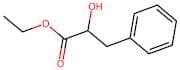
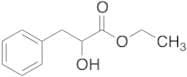
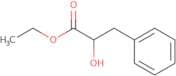
CAS 15399-05-0
:Éthyl 2-hydroxy-3-phénylpropanoate
- 3-Phenyllactic acid ethyl ester
- Benzenepropanoic Acid, Alpha-Hydroxy-, Ethyl Ester
- Benzenepropanoic acid, α-hydroxy-, ethyl ester
- Ethyl 2-hydroxy-3-phenylpropionate
- Ethyl 3-phenyllactate
- Ethyl <span class="text-smallcaps">DL</span>-α-phenyllactate
- Ethyl phenyllactate
- Ethyl α-hydroxyhydrocinnamate
- Lactic acid, 3-phenyl-, ethyl ester
- Phenyllactic acid ethyl ester
- Propanoic acid, 2-hydroxy-3-phenyl, ethyl ester
Ethyl 2-hydroxy-3-phenylpropanoate
CAS :Formule :C11H14O3Degré de pureté :98%Couleur et forme :SolidMasse moléculaire :194.2271Ethyl 2-hydroxy-3-phenylpropanoate
CAS :Ethyl 2-hydroxy-3-phenylpropanoateDegré de pureté :98%Masse moléculaire :194.23g/molEthyl 2-Hydroxy-3-phenylpropanoate
CAS :Produit contrôléApplications Ethyl 2-Hydroxy-3-phenylpropanoate (cas# 15399-05-0) was detected as a compound in vinasse-cured duck during processing.
References Lou, X. W., et al.: Poultry Sci., 97, 2607 (2018)Formule :C11H14O3Couleur et forme :NeatMasse moléculaire :194.22Ethyl 2-hydroxy-3-phenylpropanoate
CAS :Ethyl 2-hydroxy-3-phenylpropanoate (EPP) is a component of the fragrance, which is used in perfumes, soaps, and detergents. It has been shown to have a hypocholesterolemic effect in rats and a proliferator-activated receptor agonist effect on human cells. EPP also has been shown to stimulate collagen production and inhibit the proliferation of human keratinocytes. The biological properties of this compound are related to its ability to activate insulin receptors in muscle cells. EP can be synthesized by reacting 3-phenylpropanal with ethyl bromoacetate followed by hydrolysis of the resulting ester.
Formule :C11H14O3Degré de pureté :Min. 95%Masse moléculaire :194.23 g/mol