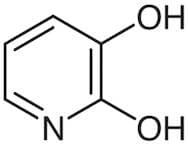
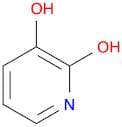
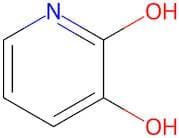
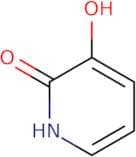
CAS 16867-04-2
:2,3-Dihydroxypyridine
- 2(1H)-Pyridinone, 3-hydroxy-
- 2(1H)-Pyridone, 3-hydroxy-
- 2,3-Pyridinediol
- 3-Hydroxy-1,2-dihydropyridin-2-one
- 3-Hydroxy-1H-pyridin-2-one
- 3-Hydroxy-2(1H)-pyridinone
- 3-Hydroxy-2-pyridinone
- 3-Hydroxy-2-pyridone
- 3-hydroxypyridin-2(1H)-one
- NSC 49272
- 2,3-Dihydroxypyridine
2,3-Dihydroxypyridine
CAS :Formule :C5H5NO2Degré de pureté :>99.0%(GC)Couleur et forme :Light yellow to Brown powder to crystalMasse moléculaire :111.102,3-Pyridinediol
CAS :Formule :C5H5NO2Degré de pureté :97%Couleur et forme :SolidMasse moléculaire :111.09872,3-Dihydroxypyridine
CAS :2,3-DihydroxypyridineFormule :C5H5NO2Degré de pureté :98%Couleur et forme :Beige SolidMasse moléculaire :111.09872,3-Dihydroxypyridine
CAS :Formule :C5H5NO2Degré de pureté :(HPLC) ≥ 97.0%Couleur et forme :Beige to brown solidMasse moléculaire :111.102,3-Dihydroxypyridine
CAS :2,3-Dihydroxypyridine is a chemical compound that is a metabolite of the amino acid histidine. It is an important hydrogen bond donor in biological systems. 2,3-Dihydroxypyridine has been shown to have anti-pandemic influenza activity against influenza A (H1N1) and B. The mechanism of this activity may be due to its ability to inhibit the synthesis and release of proinflammatory cytokines such as IL-6 and TNF-α. 2,3-Dihydroxypyridine also has potent anti-fungal activity against Candida albicans. This activity is due to its ability to bind to amine groups on proteins and disrupt hydrogen bonding interactions within the cell membrane. 2,3-Dihydroxypyridine has been shown to have transcriptional regulatory properties in vitro by binding to DNA at specific sequences near promoters or enhancers and inhibiting binding of other transcription factors
Formule :C5H5NO2Degré de pureté :Min. 95%Couleur et forme :White PowderMasse moléculaire :111.1 g/mol2,3-Dihydroxypyridine
CAS :Formule :C5H5NO2Degré de pureté :95%Couleur et forme :Solid, Beige powderMasse moléculaire :111.1