CAS 172450-46-3
:Trier par
Degré de pureté (%)
0
100
|
0
|
50
|
90
|
95
|
100
4 produits concernés.
Stichodactyla helianthus Neurotoxin (ShK)
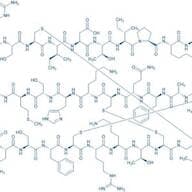
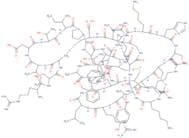
CAS :ShK-toxin, originally isolated from the sea anemone Stichodactyla helianthus, has been found to inhibit the specific binding of dendrotoxin I to rat brain membranes. Due to its unique structure (it contains three intramolecular disulfide bridges) and high affinity for some potassium channels, ShK-toxin may become a useful molecular probe for investigating potassium channels.Formule :C169H274N54O48S7Degré de pureté :>96%Couleur et forme :Whitish PowderMasse moléculaire :4054.83ShK toxin
CAS :ShK toxin, isolated from the Caribbean sea anemone (Stichodactyla helianthus), is an inhibitor of the voltage-dependent potassium channel (Kv1.3 channel).Formule :C169H274N54O48S7Degré de pureté :98%Couleur et forme :SolidMasse moléculaire :4054.8Stichodactyla Toxin
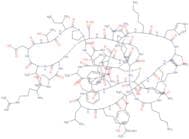
CAS :Stichodactyla toxin is a peptide that binds to neuronal ion channels and inhibits the transmission of nerve impulses. It has been shown to bind to the nicotinic acetylcholine receptor (nAChR) and inhibit ligand-gated ion channels, such as glutamate receptors. Stichodactyla toxins have been used as research tools in pharmacology and protein interactions. This toxin may be an inhibitor of cell proliferation, or an activator of apoptosis. The high purity of this toxin makes it suitable for antibody production.Formule :C169H274N54O48S7Degré de pureté :Min. 95%Masse moléculaire :4,054.8 g/molStichodactyla helianthus Neurotoxin (ShK) trifluoroacetate salt
CAS :ShK is an amide toxin that is found in the skin of the tropical marine organism Stichodactyla helianthus. It has been shown to have antimicrobial activity against E. coli and other bacteria, as well as a protective effect on inflammatory bowel disease. ShK has been shown to act by inhibiting protein synthesis, which may be due to its ability to bind to signal peptides and change their conformation.Formule :C169H274N54O48S7Degré de pureté :Min. 95%Masse moléculaire :4,054.78 g/mol