CAS 1732-29-2
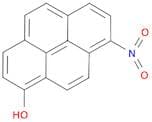
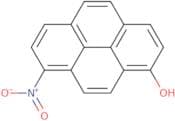
:8-Hydroxy-1-nitropyrène
- 1-Hydroxy-8-nitropyrene
- 1-Nitro-8-Hydroxypyrene
- 1-Nitropyren-8-Ol
- 1-Pyrenol, 8-nitro-
- 8-Hydroxy-1-Nitropyrene
- 8-Nitro-1-pyrenol
- 8-Nitropyren-1-Ol
- 8-Nitropyrene-1-ol
- 1-nitropyrene-8-ol
- DISCONTINUED. Please see N519995
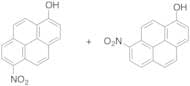
6-Nitro-1-pyrenol and 8-Nitro-1-pyrenol Mixture (8-Nitro major)
CAS :Produit contrôléApplications 6-Nitro-1-pyrenol and 8-Nitro-1-pyrenol are urinary hydroxylated metabolites used as a biomarkers of exposure to polycyclic aromatic hydrocarbons.
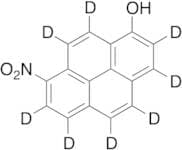
References Toriba, A., et al.: J. Health. Sci., 53; 631 (2007); Chae, Y.H., et al.: Cancer Res., 59, 1473 (1999);Formule :C16H9NO3Couleur et forme :NeatMasse moléculaire :263.258-Nitro-1-pyrenol-d8 (~85%)
CAS :Produit contrôléApplications 8-Nitro-1-pyrenol is a urinary hydroxylated metabolites used as a biomarkers of exposure of polycyclic aromatic hydrocarbons. This is the labeled analog.
References Toriba, A., et al.: J. Health. Sci., 53; 631 (2007); Chae, Y.H., et al.: Cancer Res., 59, 1473 (1999); Sangaiah, R., et al.: Poly. Aro. Comp., 11, 283 (1996);Formule :C16HD8NO3Degré de pureté :~85%Couleur et forme :NeatMasse moléculaire :271.398-Nitro-1-pyrenol-d8
CAS :8-Nitro-1-pyrenol-d8 is a potent inhibitor of cancer cells that has been used in medicinal research. This compound inhibits the activity of proteins involved in cell cycle regulation and promotes apoptosis, making it a promising candidate for anticancer therapies. 8-Nitro-1-pyrenol-d8 has been found to be effective against various types of human cancer, including leukemia. This compound has also been shown to inhibit the activity of kinases that are involved in tumor growth and progression. Additionally, 8-Nitro-1-pyrenol-d8 can be detected in urine samples, making it a useful tool for studying the effects of cancer inhibitors on the body. Overall, this compound shows great potential as an anticancer agent and warrants further investigation in the field of oncology.
Formule :C16H9NO3Degré de pureté :Min. 95%Masse moléculaire :263.25 g/mol