CAS 173833-08-4
:ostabolin
Description :
ostabolin, identifié par son numéro CAS 173833-08-4, est un composé synthétique qui a suscité l'attention dans le domaine de la biochimie et de la pharmacologie. Il est principalement connu pour ses propriétés anaboliques potentielles, qui peuvent influencer la croissance musculaire et la densité osseuse. ostabolin est souvent classé comme un modulateur sélectif des récepteurs androgènes (SARM), ce qui signifie qu'il cible sélectivement les récepteurs androgènes dans les tissus musculaires et osseux, minimisant potentiellement les effets secondaires généralement associés aux stéroïdes anabolisants. Le composé se caractérise par sa capacité à promouvoir l'activité anabolique tout en réduisant les effets androgéniques dans les tissus non ciblés. Cette sélectivité en fait un sujet d'intérêt pour la recherche sur les traitements de conditions telles que la perte musculaire et l'ostéoporose. Cependant, il est important de noter que la sécurité, l'efficacité et les effets à long terme de ostabolin chez l'homme sont encore à l'étude, et il n'est pas approuvé pour un usage médical dans de nombreuses régions. Comme pour tout produit chimique de recherche, il est conseillé de faire preuve de prudence quant à son utilisation et aux implications légales potentielles.
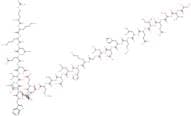
Formule :C162H270N50O46S2
InChI :InChI=1/C162H270N50O46S2/c1-21-86(18)130(211-143(240)101(42-47-124(223)224)190-154(251)117(75-215)207-157(254)127(83(12)13)208-133(230)93(168)73-213)159(256)193-100(41-45-119(170)217)139(236)197-107(60-80(6)7)145(242)191-103(49-56-259-19)141(238)202-112(65-89-71-178-77-184-89)149(246)204-113(66-120(171)218)150(247)195-105(58-78(2)3)134(231)182-72-122(220)185-95(35-24-27-51-163)135(232)201-111(64-88-70-177-76-183-88)148(245)198-108(61-81(8)9)146(243)203-114(67-121(172)219)151(248)206-116(74-214)155(252)194-104(50-57-260-20)160(257)258-126(227)48-43-102(192-156(253)128(84(14)15)209-142(239)98(38-31-55-180-162(175)176)187-132(229)92(167)39-46-123(221)222)140(237)200-110(63-87-69-181-94-34-23-22-32-90(87)94)147(244)199-109(62-82(10)11)153(250)212-158(255)129(85(16)17)210-152(249)115(68-125(225)226)205-138(235)99(40-44-118(169)216)189-144(241)106(59-79(4)5)196-137(234)97(37-26-29-53-165)188-136(233)96(36-25-28-52-164)186-131(228)91(166)33-30-54-179-161(173)174/h22-23,32,34,69-71,76-86,88-89,91-93,95-117,127-130,181,213-215H,21,24-31,33,35-68,72-75,163-168H2,1-20H3,(H2,169,216)(H2,170,217)(H2,171,218)(H2,172,219)(H,182,231)(H,185,220)(H,186,228)(H,187,229)(H,188,233)(H,189,241)(H,190,251)(H,191,242)(H,192,253)(H,193,256)(H,194,252)(H,195,247)(H,196,234)(H,197,236)(H,198,245)(H,199,244)(H,200,237)(H,201,232)(H,202,238)(H,203,243)(H,204,246)(H,205,235)(H,206,248)(H,207,254)(H,208,230)(H,209,239)(H,210,249)(H,211,240)(H,221,222)(H,223,224)(H,225,226)(H4,173,174,179)(H4,175,176,180)(H,212,250,255)/t86-,88?,89?,91-,92-,93-,95-,96-,97-,98-,99-,100-,101-,102-,103-,104-,105-,106-,107-,108-,109-,110-,111-,112-,113-,114-,115-,116-,117-,127-,128-,129-,130-/m0/s1
SMILES :CC[C@H](C)[C@@H](C(=N[C@@H](CCC(=N)O)C(=N[C@@H](CC(C)C)C(=N[C@@H](CCSC)C(=N[C@@H](CC1C=NC=N1)C(=N[C@@H](CC(=N)O)C(=N[C@@H](CC(C)C)C(=NCC(=N[C@@H](CCCCN)C(=N[C@@H](CC1C=NC=N1)C(=N[C@@H](CC(C)C)C(=N[C@@H](CC(=N)O)C(=N[C@@H](CO)C(=N[C@@H](CCSC)C(=O)OC(=O)CC[C@@H](C(=N[C@@H](Cc1c[nH]c2ccccc12)C(=N[C@@H](CC(C)C)C(=NC(=O)[C@H](C(C)C)N=C([C@H](CC(=O)O)N=C([C@H](CCC(=N)O)N=C([C@H](CC(C)C)N=C([C@H](CCCCN)N=C([C@H](CCCCN)N=C([C@H](CCCNC(=N)N)N)O)O)O)O)O)O)O)O)O)N=C([C@H](C(C)C)N=C([C@H](CCCNC(=N)N)N=C([C@H](CCC(=O)O)N)O)O)O)O)O)O)O)O)O)O)O)O)O)O)O)O)N=C([C@H](CCC(=O)O)N=C([C@H](CO)N=C([C@H](C(C)C)N=C([C@H](CO)N)O)O)O)O
Synonymes :- Hpth-(1-31)NH2
- Human parathyroid hormone (1-31) amide
- L-Seryl-L-valyl-L-seryl-L-alpha-glutamyl-L-isoleucyl-L-glutaminyl-L-leucyl-L-methionyl-L-histidyl-L-asparaginyl-L-leucylglycyl-L-lysyl-L-histidyl-L-leucyl-L-asparaginyl-L-seryl-L-methionyl-L-alpha-glutamyl-L-arginyl-L-valyl-L-alpha-glutamyl-L-tryptophyl-L-leucyl-L-arginyl-L-lysyl-L-lysyl-L-leucyl-L-glutaminyl-L-alpha-aspartyl-L-valinamide
- Parathyroid hormone (1-31) amide
- Pth (1-31) amide
- L-Valinamide, L-seryl-L-valyl-L-seryl-L-alpha-glutamyl-L-isoleucyl-L-glutaminyl-L-leucyl-L-methionyl-L-histidyl-L-asparaginyl-L-leucylglycyl-L-lysyl-L-histidyl-L-leucyl-L-asparaginyl-L-seryl-L-methionyl-L-alpha-glutamyl-L-arginyl-L-valyl-L-alpha-glutamyl-L-tryptophyl-L-leucyl-L-arginyl-L-lysyl-L-leucyl-L-glutaminyl-L-alpha-aspartyl-
Trier par
Degré de pureté (%)
0
100
|
0
|
50
|
90
|
95
|
100
4 produits concernés.
pTH (1-31) amide (human)
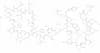
CAS :pTH (1-31) amide appears so far to be the smallest of the potently osteogenic pTH fragments. The osteogenic activity of this pTH fragment seems to be related to its ability to activate adenylyl cyclase. Unlike pTH, this fragment does not activate phospholipase C and should therefore have fewer side-effects and find application in the osteoporosis treatment.Formule :C162H270N50O46S2Degré de pureté :96.7%Masse moléculaire :3718.37Human PTH-(1-31) amide
CAS :Human PTH-(1-31) amide, an analog of PTH, effectively stimulates phosphatidylcholine hydrolysis and promotes the release of adenylyl cyclase [1].Formule :C162H270N50O46S2Couleur et forme :SolidMasse moléculaire :3718.31Parathyroid Hormone (Human, 1-31 Amide)
CAS :This product which is available as a 0.5mg vial is amino acids 1-31 of the 84 amino acid parathyroid hormone (PTH) and can be used as an adenylate cyclase and bone growth stimulating peptide.
PTH is a peptide hormone that is secreted from the parathyroid gland in the event of abnormal serum calcium levels and it ultimately regulates calcium and phosphate levels in the body. The PTH exerts its activity through binding to the G-protein coupled receptor type 1 PTH receptor, which activates adenylate cyclase or phospholipase C thus activating pathways involved in the mediation of bone resorption and bone formation. This product is suitable for life science applications.Formule :C162H270N50O46S2Degré de pureté :Min. 95%Masse moléculaire :3,718.3 g/molpTH (1-31) amide (human)
CAS :pTH (1-31) amide is a polymer conjugate that is used to treat osteoporosis. It has been shown to be effective in reducing the risk of fracture and increasing bone mineral density in animals. The compound binds to the extracellular domain of the estrogen receptor, altering its conformation and preventing it from interacting with other proteins in the nucleus. pTH (1-31) amide has also been shown to reduce blood pressure in animals by inhibiting angiotensin-converting enzyme. Clinical data on this drug are limited, but it has been well tolerated so far.Formule :C162H270N50O46S2Degré de pureté :Min. 95%Masse moléculaire :3,718.32 g/mol