CAS 17422-32-1
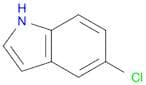
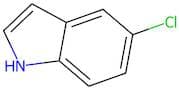
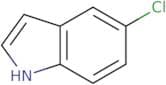
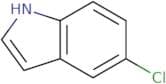
:5-Chloroindole
- 1H-Indole, 5-chloro-
- 1H-Indole,5-chloro-(9CI)
- 5-chloro-1H-indole
- Indole, 5-chloro-
- NSC 89562
- 5-Chloroindole
5-Chloroindole
CAS :Formule :C8H6ClNDegré de pureté :>98.0%(GC)Couleur et forme :White to Yellow to Orange powder to crystalMasse moléculaire :151.591H-Indole, 5-chloro-
CAS :Formule :C8H6ClNDegré de pureté :97%Couleur et forme :SolidMasse moléculaire :151.59295-Chloro-1H-indole
CAS :5-Chloro-1H-indoleFormule :C8H6ClNDegré de pureté :97%Couleur et forme : brown to dark brown crystalline solidMasse moléculaire :151.59g/mol5-Chloroindole
CAS :5-Chloroindole is a molecule that can bind to the CB2 cannabinoid receptor. It has been shown in experiments to be an allosteric modulator of this receptor. 5-Chloroindole has been found to have an inhibitory effect on degenerative diseases, such as Huntington's disease and Alzheimer's disease, and may have therapeutic potential for these disorders. 5-Chloroindole binds to a metal surface by forming hydrogen bonds with the oxygen atom of its carboxyl group and the metal surface. The nucleophilic nature of 5-chloroindole allows it to react with chloride ions present in solution. 5-Chloroindole reacts with the carbon source in tissue culture, which leads to receptor activity and inhibition of cell proliferation.
Formule :C8H6ClNCouleur et forme :White PowderMasse moléculaire :151.59 g/mol5-Chloroindole
CAS :Formule :C8H6ClNDegré de pureté :97%Couleur et forme :SolidMasse moléculaire :151.595-Chloroindole
CAS :5-Chloroindole is a fine chemical that belongs to the class of indoles. It is used as a building block in the synthesis of more complex chemicals, such as pharmaceuticals and pesticides.
Formule :C8H6ClNDegré de pureté :Min. 96.0 Area-%Masse moléculaire :151.60 g/mol