CAS 185055-67-8
:Ferroquine
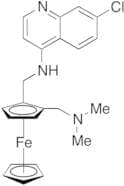
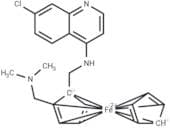
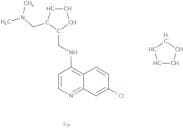
- 1-[[(7-Chloro-4-quinolinyl)amino]methyl]-2-[(dimethylamino)methyl]ferrocene
- 7-Chloro-4-(((2-((dimethylamino)methyl)ferrocenyl)methyl)amino)quinoline
- Ferrocene, 1-[[(7-chloro-4-quinolinyl)amino]methyl]-2-[(dimethylamino)methyl]-
- Ferrochloroquine
- Ferroquine [INN]
- Ssr 97193
- Ferroquine
- Ferroquine
1-[[(7-Chloro-4-quinolinyl)amino]methyl]-2-[(dimethylamino)methyl]ferrocene
CAS :Formule :C23H24ClFeN3Degré de pureté :97%Masse moléculaire :433.7548Ferroquine
CAS :Produit contrôléFormule :C23H24ClFeN3Couleur et forme :NeatMasse moléculaire :433.755Ferroquine
CAS :Ferroquine, a ferrocenyl variant of Chloroquine, exhibits antimalarial properties through oxidative stress induction, destroying Plasmodium membranes.Formule :C23H24ClFeN3Degré de pureté :99.97%Couleur et forme :SolidMasse moléculaire :433.76Ferroquine
CAS :Ferroquine is a drug that has been shown to be effective in the treatment of cancers and viral infections. It is a ferrous (Fe2+) complex with a quinoline ring. Ferroquine can be synthesized by reacting ferric chloride and quinoline. The Fe2+ ion in the complex binds to the N7 nitrogen atom of guanine, which inhibits DNA synthesis. This inhibition prevents viral replication, resulting in cytotoxicity and cell death. Ferroquine also has potent antifungal activity against Candida albicans, Cryptococcus neoformans, and Aspergillus fumigatus. Ferroquine has shown no significant adverse effects on cardiac function or blood pressure, but it is not yet clear if this drug will have any long-term adverse effects on the heart or other parts of the body.
Formule :C23H24ClFeN3Degré de pureté :Min. 98 Area-%Couleur et forme :PowderMasse moléculaire :433.75 g/mol
![1-[[(7-Chloro-4-quinolinyl)amino]methyl]-2-[(dimethylamino)methyl]ferrocene](/_next/image/?url=https%3A%2Fstatic.cymitquimica.com%2Fproducts%2FIN%2Fthumb%2FDA00AMBO.jpg&w=3840&q=75)