CAS 18771-50-1
:Tétrahydrouridine
Description :
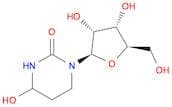
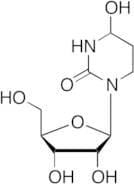
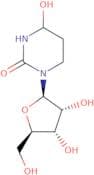
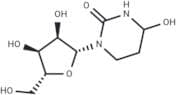
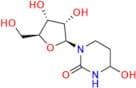
Tétrahydrouridine (THU) est un analogue de nucléoside qui fonctionne principalement comme un inhibiteur de l'enzyme cytidine désaminase, impliquée dans le métabolisme des nucléosides. Sa structure chimique présente un cycle pyrimidinique avec un moiety de tétrahydrofurane, contribuant à ses propriétés uniques. THU est connu pour sa capacité à améliorer la biodisponibilité de certains analogues de nucléosides en prévenant leur dégradation, augmentant ainsi leur efficacité thérapeutique. Il est souvent étudié dans le contexte des thérapies antivirales et anticancéreuses, en particulier en combinaison avec d'autres analogues de nucléosides. THU est généralement administré sous une forme pharmaceutique, et sa solubilité et sa stabilité sont des facteurs importants dans son application. De plus, il a été étudié pour son rôle potentiel dans la modulation des réponses immunitaires et dans diverses applications de recherche biochimique. Les profils de sécurité et de toxicité sont des considérations essentielles dans son utilisation, et la recherche en cours continue d'explorer son éventail complet d'activités biologiques et de potentiel thérapeutique.
Formule :C9H16N2O6
InChI :InChI=1S/C9H16N2O6/c12-3-4-6(14)7(15)8(17-4)11-2-1-5(13)10-9(11)16/h4-8,12-15H,1-3H2,(H,10,16)/t4-,5?,6-,7-,8-/m1/s1
Code InChI :InChIKey=UCKYOOZPSJFJIZ-XVKVHKPRSA-N
SMILES :O[C@H]1[C@@H](O[C@H](CO)[C@H]1O)N2C(=O)NC(O)CC2
Synonymes :- 1-(β-<span class="text-smallcaps">D</span>-Ribofuranosyl)-4-hydroxytetrahydro-1(1H)-pyrimidinone
- 2(1H)-Pyrimidinone, tetrahydro-4-hydroxy-1-β-<span class="text-smallcaps">D</span>-ribofuranosyl-
- 2(1H)-pyrimidinone, tetrahydro-4-hydroxy-1-beta-D-ribofuranosyl-
- 3,4,5,6-Tetrahydrouridine
- 4-hydroxy-1-(beta-D-ribofuranosyl)tetrahydropyrimidin-2(1H)-one
- 4-hydroxy-1-pentofuranosyltetrahydropyrimidin-2(1H)-one
- 5,6-Dihydrouridine
- Brn 0752319
- Nsc 112907
- Nsc-112907-D
- U 23284
- Uridine, 3,4,5,6-tetrahydro-
- Tetrahydrouridine
- 2(1H)-Pyrimidinone, tetrahydro-4-hydroxy-1-β-D-ribofuranosyl-
- Voir plus de synonymes
Trier par
Degré de pureté (%)
0
100
|
0
|
50
|
90
|
95
|
100
6 produits concernés.
Tetrahydrouridine
CAS :Formule :C9H16N2O6Degré de pureté :95%Couleur et forme :SolidMasse moléculaire :248.23313,4,5,6-Tetrahydrouridine (>80%)
CAS :Stability Light Sensitive
Applications 3,4,5,6-Tetrahydrouridine, is a derivative of Uridine (U829910). Tetrahydrouridine (THU), is a potent inhibitor of cytidine. It inhibits cell proliferation through cell cycle regulation regardless of cytidine deaminase expression levels deaminase (CDA), and thus can be used as a potential and promising treatment for tumors with highly expressed CDA.
References Lorine, P., et al.: J. Biol. Chem., 178, 439 (1949); Funamizu, N., PLoS One, 37424 (2012);Formule :C9H16N2O6Degré de pureté :>80%Couleur et forme :NeatMasse moléculaire :248.23Tetrahydrouridine
CAS :Tetrahydrouridine is a pyrimidine nucleoside that has been shown to have inhibitory properties in clinical pathology. Tetrahydrouridine is a natural product derived from the amino acid histidine and is found in the cells of many living organisms. It is believed that tetrahydrouridine may be useful as an adjuvant to radiation therapy, and it has been shown to reduce the toxicity of chemotherapy drugs, such as decitabine and Ara-C. Tetrahydrouridine inhibits enzymes involved in DNA methylation, which can lead to cancer cell death.br> Tetrahydrouridine also has inhibitory effects on enzymes that produce cytidine from uracil, which can help prevent the formation of cancerous cells.br> Tetrahydrouridine inhibits deaminase activity, which produces uracil from cytosine. This inhibition prevents the production of uracil-cytosineFormule :C9H16N2O6Degré de pureté :Min. 95%Couleur et forme :White Off-White PowderMasse moléculaire :248.23 g/molTetrahydrouridine
CAS :Tetrahydrouridine (NSC-112907; THU) is a multidrug resistance modulator.Formule :C9H16N2O6Degré de pureté :98%Couleur et forme :SolidMasse moléculaire :248.23