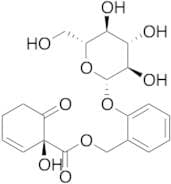
CAS 1887055-63-1
:Salicortine
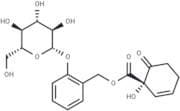
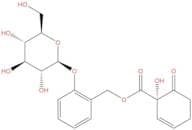
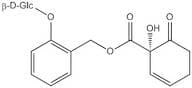
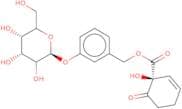
- β-D-Glucopyranoside, 2-[[[[(1S)-1-hydroxy-6-oxo-2-cyclohexen-1-yl]carbonyl]oxy]methyl]phenyl
- 2-[[[[(1S)-1-Hydroxy-6-oxo-2-cyclohexen-1-yl]carbonyl]oxy]methyl]phenyl β-D-glucopyranoside
- Salicortin
Salicortin
CAS :Salicortin, a phenolic glycoside from Populus and Salix, has anti-adipogenic, anti-amnesic, and immune effects.Formule :C20H24O10Degré de pureté :98%Couleur et forme :SolidMasse moléculaire :424.40Salicortin
CAS :Natural glycosideFormule :C20H24O10Degré de pureté :≥ 90.0 % (HPLC)Couleur et forme :PowderMasse moléculaire :424.4Salicortin - Populus sp. (Poplar)
CAS :Salicortin is a phytochemical compound, which is a naturally occurring salicylate-glycoside. It is derived specifically from the genus *Populus*, commonly known as poplar. This bioactive compound is synthesized within the poplar tree as part of its defense mechanism. Salicortin’s mode of action involves the enzymatic conversion into salicylic acid, which is structurally similar to acetylsalicylic acid (aspirin). This conversion takes place in mammalian systems, leading to anti-inflammatory and analgesic effects by inhibiting cyclooxygenase enzymes, thereby reducing the production of pro-inflammatory prostaglandins.
Formule :C20H24O10Degré de pureté :Min. 95 Area-%Couleur et forme :PowderMasse moléculaire :424.4 g/molSalicortin
CAS :Produit contrôléApplications Salicortin is used in the treatment and prevention of joint disorders.
References Mehansho, H., et al.: U.S. Pat. Appl. Publ. 34pp. (2019)Formule :C20H24O10Couleur et forme :NeatMasse moléculaire :424.399