CAS 19690-23-4
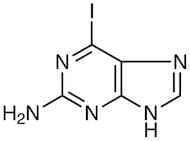
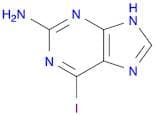
:2-Amino-6-iodopurine
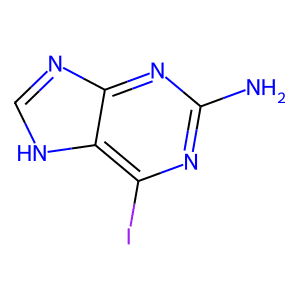
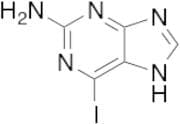
- 2-Amino-6-iodo-7H-purine
- 2-Amino-6-Iodo
- 6-Iodo-7H-Purin-2-Amine
- 9H-Purin-2-amine, 6-iodo-
- 6-Iodoguanine
- 6-iodo-5H-purin-2-amine
- 2-Amino-6-iodo purine
2-Amino-6-iodopurine
CAS :Formule :C5H4IN5Degré de pureté :>98.0%(T)(HPLC)Couleur et forme :White to Orange to Green powder to crystallineMasse moléculaire :261.036-Iodo-9H-purin-2-amine
CAS :Formule :C5H4IN5Degré de pureté :99%Couleur et forme :SolidMasse moléculaire :261.02322-Amino-6-iodo-7H-purine
CAS :2-Amino-6-iodo-7H-purineDegré de pureté :99%Couleur et forme :PowderMasse moléculaire :261.02g/mol2-Amino-6-iodopurine
CAS :2-Amino-6-iodopurine is an analog of the purine nucleoside guanine, which has been used to synthesize a variety of boronic acids. The most common use for 2-amino-6-iodopurine is in the synthesis of benzylboronic acid, which can be used as an organometallic reagent in organic synthesis. This compound also has dehydrogenase activity and has been shown to catalyze the conversion of benzoic acid to benzaldehyde, mediated by NADH. 2-Amino-6-iodopurine is found in the biosynthesis of ribonucleotides and deoxyribonucleotides, where it reacts with chloride ions and phosphate groups to form adenylate and xanthosine monophosphates.
Formule :C5H4IN5Degré de pureté :Min. 95%Couleur et forme :PowderMasse moléculaire :261.02 g/mol2-Amino-6-iodopurine
CAS :Produit contrôléApplications 2-Amino-6-iodopurine is used as a reagent in the synthesis of Lobucavir (L469360) which is an antiviral agent.
References Singh, J., et al.: Org. Process Res. Dev., 2, 393 (1998);Formule :C5H4IN5Couleur et forme :NeatMasse moléculaire :261.02