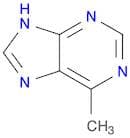
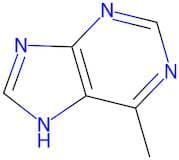
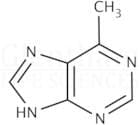
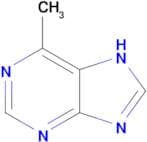
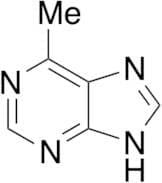
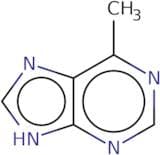
CAS 2004-03-7
:6-méthylpurine
- 1H-Purine, 6-methyl-
- 1H-Purine, 6-methyl- (9CI)
- 6-Methyl purine
- 6-Methyl-1H-purine
- 6-Methyl-9H-purine
- 6-methyl-5H-purine
- 6-methyl-7H-purine
- 9H-Purine, 6-methyl-
- Ai3-52214
- Nsc 407198
- Purine, 6-methyl-
- 6-Methylpurine
- 6-METHYLPURINE CRYSTALLINE
- 6-Methylpurine,98%
- 6-methyl-1h-purin
- Voir plus de synonymes
6-Methyl-7h-purine
CAS :Formule :C6H6N4Degré de pureté :98%Couleur et forme :SolidMasse moléculaire :134.13866-Methylpurine
CAS :Heterocyclic compound - purineFormule :C6H6N4Couleur et forme :SolidMasse moléculaire :134.14Ref: TM-TNU0683
5mgÀ demander10mgÀ demander25mgÀ demander50mgÀ demander100mgÀ demander500mgÀ demander6-Methylpurine
CAS :Degré de pureté :95.0%Couleur et forme :Solid, Light yellow solidMasse moléculaire :134.141998291015626-Methylpurine
CAS :Produit contrôléApplications 6-Methylpurine (cas# 2004-03-7) is a compound useful in organic synthesis.
Not a dangerous good if item is equal to or less than 1g/ml and there is less than 100g/ml in the packageFormule :C6H6N4Couleur et forme :NeatMasse moléculaire :134.146-Methylpurine
CAS :6-Methylpurine is a product of the nucleotide metabolism in E. coli, which is a model organism for protein synthesis. 6-Methylpurine inhibits protein synthesis and exerts significant cytotoxicity. It has been shown to inhibit the enzyme activities of DNA polymerase alpha, DNA ligase, and RNA polymerase, as well as other enzymes involved in nitrogen metabolism. 6-Methylpurine has been shown to be an analog of adenine and has a similar reaction mechanism. The uptake of 6-methyl purine by cells is mediated by hydrogen bonds with amino acid residues on the cell membrane surface. This molecule also forms glycosidic bonds with ribose sugar groups on cellular surfaces. 6-Methylpurine plays an important role in energy metabolism through its incorporation into glucose and glycogen molecules.
Formule :C6H6N4Degré de pureté :Min. 98 Area-%Couleur et forme :White PowderMasse moléculaire :134.14 g/mol