CAS 2026-48-4
:1-Butanol, 2-amino-3-méthyl-, (2S)-
Description :
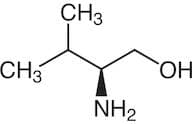
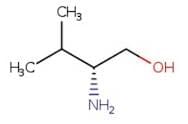
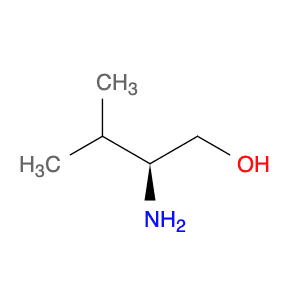
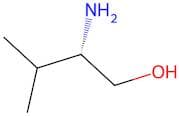
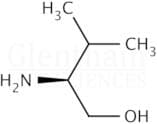
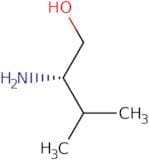
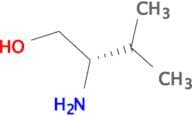
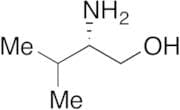
1-Butanol, 2-amino-3-méthyl-, (2S)-, également connu sous le nom de (S)-2-amino-3-méthyl-1-butanol, est un composé organique caractérisé par sa structure d'alcool aminé. Il présente une structure de butanol avec un groupe amino (-NH2) et un groupe méthyle (-CH3) attachés respectivement au deuxième et au troisième atome de carbone. Ce composé est une molécule chirale, avec la désignation (2S) indiquant sa stéréochimie spécifique. Il s'agit généralement d'un liquide incolore à jaune pâle avec une odeur caractéristique et il est soluble dans l'eau en raison de la présence du groupe hydroxyle (-OH). La présence des deux groupes fonctionnels, amino et hydroxyle, lui permet de participer à des liaisons hydrogène, influençant ses propriétés physiques et sa réactivité. 1-Butanol, 2-amino-3-méthyl-, (2S)- est souvent utilisé dans diverses synthèses chimiques et peut servir d'intermédiaire dans la production de produits pharmaceutiques ou d'agrochimiques. Son activité biologique et ses applications potentielles en chimie médicinale sont des domaines de recherche en cours.
Formule :C5H13NO
InChI :InChI=1S/C5H13NO/c1-4(2)5(6)3-7/h4-5,7H,3,6H2,1-2H3/t5-/m1/s1
Code InChI :InChIKey=NWYYWIJOWOLJNR-RXMQYKEDSA-N
SMILES :[C@H](C(C)C)(CO)N
Synonymes :- (+)-(S)-Valinol
- (+)-2-Amino-3-methyl-1-butanol
- (+)-Valinol
- (2S)-1-Hydroxy-3-methylbutan-2-amine
- (2S)-2-Amino-3-methyl-1-butanol
- (2S)-Valinol
- (S)-(+)-2-Amino-3-methyl-1-butanol
- (S)-2-Amino-3-methylbutanol
- 1-Butanol, 2-amino-3-methyl-, (S)-
- 1-Butanol, 2-amino-3-methyl-, <span class="text-smallcaps">L</span>-
- 1-Butanol, 2-amino-3-methyl-, L-
- <span class="text-smallcaps">L</span>-Valinol
- Butanol, 2-Amino-3-Methyl, (S)-(+)-
- L-2-amino-3-methylbutan-1-ol
- L-2-amino-3-methylbutane-1-ol
- L-2-amino-3-metilbutan-1-ol
- L-Valinol
- Nsc 322922
- [(S)-1-(Hydroxymethyl)-2-methylpropyl]amine
- Valinol,97%
- (2R)-2-amino-3-methylbutan-1-ol
- 1-Butanol, 2-amino-3-methyl-, (2S)-
- H-Val-ol
- (S)-2-Amino-3-methyl-butanol
- Voir plus de synonymes
Trier par
Degré de pureté (%)
0
100
|
0
|
50
|
90
|
95
|
100
9 produits concernés.
L-Valinol
CAS :Formule :C5H13NODegré de pureté :>97.0%(GC)(T)Couleur et forme :White or Colorless to Light orange to Yellow powder to lump to clear liquidMasse moléculaire :103.17L-(+)-Valinol, 97%
CAS :L-(+)-Valinol reacts with aldehydes and nitriles to form imines and oxazolines, respectively, for asymmetric synthesis. It is also used for preparation of 4-isopropyloxazolidinones, employed in stereocontrolled aldol and alkylation reactions, synthesis of chiral 2-thiazolidinethiones for aldol reactFormule :C5H13NODegré de pureté :97%Couleur et forme :Colourless/white to yellow, liquid/low melting solidMasse moléculaire :103.171-Butanol, 2-amino-3-methyl-, (2S)-
CAS :Formule :C5H13NODegré de pureté :96%Couleur et forme :LiquidMasse moléculaire :103.1628(S)-(+)-2-Amino-3-methyl-1-butanol
CAS :(S)-(+)-2-Amino-3-methyl-1-butanolFormule :C5H13NODegré de pureté :97%Couleur et forme : colourless to light yellow crystalline solidMasse moléculaire :103.16g/molL-Valinol
CAS :Formule :C5H13NODegré de pureté :≥ 97.0%Couleur et forme :Colourless to white or pale yellow solid, crystals or liquidMasse moléculaire :103.17L-Valinol
CAS :L-Valinol is a model system that is used to study the reaction of aziridines with oxygen nucleophiles. It has been shown that this reaction proceeds through the formation of an intermediate, hydrogen tartrate, followed by a second step with nitrogen atoms as the nucleophile and alcohol residue as the substrate. The use of L-valinol in asymmetric synthesis was also demonstrated. In this process, amides were obtained with high enantioselectivity by reacting L-valinol with amines in acidic conditions. This synthetic pathway was found to be synergic with other reactions, such as nitroolefination and benzoylation.Formule :C5H13NODegré de pureté :Min. 95%Couleur et forme :Solidified MassMasse moléculaire :103.16 g/molL-Valinol
CAS :M03447 - L-Valinol
Formule :C5H13NODegré de pureté :95%Couleur et forme :LiquidMasse moléculaire :103.165L-Valinol
CAS :Produit contrôléApplications L-Valinol is used as a reagent in the synthesis of simple 1,3-thiazolidine-2-thione derivatives which can exhibit fungicidal activity. L-Valinol is also used as a reagent in the synthesis of small-molecule inhibitors of MDM2-p53 protein-protein interaction (MDM2 inhibitors) in clinical trials for the treatment of cancer.
References Chen, N., et al.: Phosphorus Sulfur, 190, 112 (2015); Zhao, Y., et al.: J. Med. Chem., 58, 1038 (2015)Formule :C5H13NOCouleur et forme :WhiteMasse moléculaire :103.163