CAS 21420-58-6
:Baeocystine
Description :
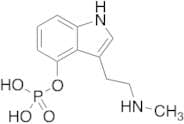
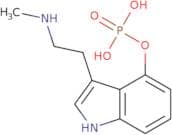
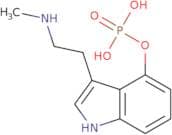
Baeocystine est un composé psychédélique qui se produit naturellement et appartient à la famille des tryptamines, structurellement lié à la psilocybine et à la psilocine. On le trouve principalement dans certaines espèces de champignons, en particulier ceux du genre Psilocybe. Baeocystine est connu pour ses propriétés psychoactives, qui sont attribuées à sa capacité à interagir avec les récepteurs de la sérotonine dans le cerveau, similaire à d'autres composés hallucinogènes. La structure chimique de Baeocystine comprend un squelette de tryptamine, avec un groupe phosphate qui contribue à son activité biologique. Il est généralement rencontré en quantités traces dans les champignons et suscite un intérêt tant dans la recherche pharmacologique que dans l'étude des substances psychoactives. Bien que ses effets ne soient pas aussi bien documentés que ceux de la psilocybine, des études préliminaires suggèrent qu'il pourrait avoir des effets psychoactifs similaires, bien que plus légers. Comme pour d'autres psychédéliques, l'utilisation de Baeocystine soulève d'importantes considérations concernant la sécurité, la légalité et les applications thérapeutiques potentielles.
Formule :C11H15N2O4P
InChI :InChI=1S/C11H15N2O4P/c1-12-6-5-8-7-13-9-3-2-4-10(11(8)9)17-18(14,15)16/h2-4,7,12-13H,5-6H2,1H3,(H2,14,15,16)
Code InChI :InChIKey=WTPBXXCVZZZXKR-UHFFFAOYSA-N
SMILES :C(CNC)C=1C=2C(NC1)=CC=CC2OP(=O)(O)O
Synonymes :- Beocystin
- 1H-Indol-4-ol, 3-[2-(methylamino)ethyl]-, dihydrogen phosphate (ester)
- Indol-4-ol, 3-[2-(methylamino)ethyl]-, dihydrogen phosphate (ester)
- Baeocystin
- 1H-Indol-4-ol, 3-[2-(methylamino)ethyl]-, 4-(dihydrogen phosphate)
Trier par
Degré de pureté (%)
0
100
|
0
|
50
|
90
|
95
|
100
4 produits concernés.
Baeocystin
CAS :Produit contrôléApplications Baeocystin is an analogue of Psilocybin (P839650), a major of two hallucinogenic components of Teonanacatl, the sacred mushroom of Mexico, the other component being Psilocin. Psychomimetic.Controlled substance (hallucinogen).
References Pedersen-Bjergaard, S., et al.: J. Chromatogr. B Biomed. Sci. Appl., 694, 375 (1997); Hofmann, et al.: Experientia, 14, 397 (1958); Callahan, P., et al.: J. Pharmacol. Exp. Ther., 246, 866 (1988); Appel, J., et al.: Eur. J. Pharmacol., 159, 41 (1989); Blair, J., et al.: J. Med. Chem., 43, 4701 (2000);Formule :C11H15N2O4PCouleur et forme :NeatMasse moléculaire :270.222Baeocystin (biosynthetic origin)
CAS :Produit contrôléCymit Quimicaetic form of Baeocystin, a psychedelic compound found in certain mushrooms with effects on the central nervous system.
Formule :C11H15N2O4PMasse moléculaire :270.22 g/molBaeocystin
CAS :Produit contrôléBaeocystin is a psychedelic compound, which is an alkaloid sourced from certain species of psilocybin mushrooms, primarily those within the genus Psilocybe. It is structurally similar to psilocybin and psilocin, active compounds known for their psychotropic effects. Baeocystin works by interacting with serotonin receptors in the brain, particularly the 5-HT2A receptor. This interaction modulates neurotransmitter activity, leading to alterations in perception, mood, and cognition.While not as extensively studied as its counterparts, psilocybin and psilocin, baeocystin is considered part of the broader spectrum of psychedelics that influence the central nervous system. Its applications are currently under research, focusing on its potential impacts on mental health, including the management of conditions such as depression, anxiety, and PTSD. Through its psychotropic effects, baeocystin may offer insights into consciousness and therapeutic benefits in a clinical setting. Ongoing studies seek to elucidate its pharmacological profile and therapeutic potential, though it remains a controlled substance in many regions due to its psychoactive properties.Formule :C11H15N2O4PDegré de pureté :Min. 95%Couleur et forme :PowderMasse moléculaire :270.22 g/mol