CAS 22948-94-3
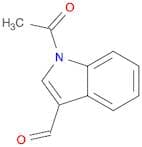
:N-Acétylindole-3-carboxaldéhyde
- 1-Acetyl-1H-indole-3-carbaldehyde
- 1-Acetyl-1H-indole-3-carboxaldehyde
- 1-Acetyl-3-formyl-1H-indole
- 1-Acetyl-3-formylindole
- 1-Acetylindole-3-carbaldehyde
- 1-Acetylindole-3-carboxaldehyde
- 1H-Indole-3-carboxaldehyde, 1-acetyl-
- Indole-3-carboxaldehyde, 1-acetyl-
- N-Acetyl-1H-indole-3-carboxaldehyde
- N-Acetyl-3-indolecarboxaldehyde
- N-Acetylindol-3-carboxaldehyde
- NSC 61289
- Voir plus de synonymes
1H-Indole-3-carboxaldehyde, 1-acetyl-
CAS :Formule :C11H9NO2Degré de pureté :97%Couleur et forme :SolidMasse moléculaire :187.19471-Acetyl-1H-indole-3-carboxaldehyde
CAS :1-Acetyl-1H-indole-3-carboxaldehydeFormule :C11H9NO2Degré de pureté :≥95%Couleur et forme : faint orange crystalline powderMasse moléculaire :187.19466g/mol1-Acetylindole-3-carboxaldehyde
CAS :1-Acetylindole-3-carboxaldehyde is a versatile building block that can be used as a reagent and reaction component in many organic syntheses. It is an important intermediate for the synthesis of various heterocycles, such as indoles, benzofurans, benzothiophenes and indazoles. 1-Acetylindole-3-carboxaldehyde is also a useful building block for the synthesis of complex compounds with a wide range of applications. This compound has been used in the preparation of a number of pharmaceuticals, including antidiabetic drugs, antihistamines and antipsychotics. It can also be used to make fine chemicals such as herbicides and insecticides.Formule :C11H9NO2Degré de pureté :Min. 99 Area-%Masse moléculaire :187.20 g/mol1-Acetyl-1H-indole-3-carbaldehyde
CAS :Formule :C11H9NO2Degré de pureté :97%Couleur et forme :Solid, CrystallineMasse moléculaire :187.1981-Acetyl-3-indolecarboxaldehyde
CAS :1-Acetyl-3-indolecarboxaldehyde is a ligand that binds to the cannabinoid receptor 1 (CB1). It has been shown to bind to the CB1 receptor with high affinity and selectivity. In addition, it has been demonstrated to inhibit the proliferation of human breast cancer cells in vitro. The compound is used as a fluorescent probe for cb1 receptor binding. Data obtained from molecular modelling studies have suggested that the hydroxyl group might be involved in binding to the CB1 receptor. 1-Acetyl-3-indolecarboxaldehyde also binds carotenoids, which are molecules responsible for giving plants and other photosynthetic organisms their coloration. This compound can be found in many different plants, such as carrots and bananas, where it acts as an antioxidant.
Formule :C11H9NO2Degré de pureté :Min. 95%Couleur et forme :PowderMasse moléculaire :187.19 g/mol