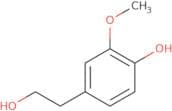
CAS 2380-78-1
:Alcool homovanillique
Description :
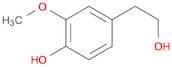
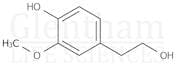
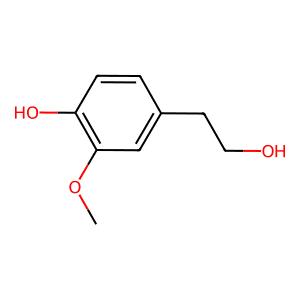
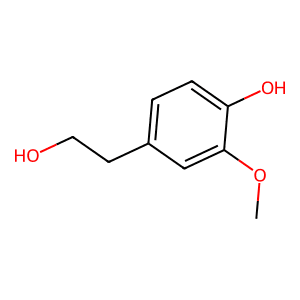
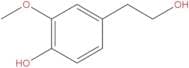
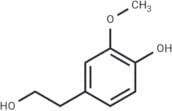
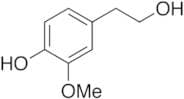
Alcool homovanillique, avec le numéro CAS 2380-78-1, est un composé organique caractérisé par sa structure phénolique. C'est un dérivé de la vanilline, présentant un groupe hydroxyle (-OH) et un groupe méthoxy (-OCH3) sur l'anneau aromatique. Ce composé se trouve généralement sous forme de solide cristallin blanc à blanc cassé et est soluble dans l'eau, l'alcool et d'autres solvants organiques. Alcool homovanillique est connu pour son arôme doux, semblable à celui de la vanille, ce qui le rend intéressant dans les industries des saveurs et des parfums. De plus, il a été étudié pour ses potentielles propriétés antioxydantes et ses effets neuroprotecteurs, qui peuvent avoir des implications dans diverses applications liées à la santé. Le composé est également utilisé dans la recherche biochimique, en particulier dans des études liées aux systèmes de neurotransmetteurs, car il peut influencer le métabolisme de la dopamine. Dans l'ensemble, Alcool homovanillique est un composé polyvalent avec des applications pratiques et un intérêt biologique significatif.
Formule :C9H12O3
InChI :InChI=1S/C9H12O3/c1-12-9-6-7(4-5-10)2-3-8(9)11/h2-3,6,10-11H,4-5H2,1H3
Code InChI :InChIKey=XHUBSJRBOQIZNI-UHFFFAOYSA-N
SMILES :O(C)C1=CC(CCO)=CC=C1O
Synonymes :- 2-(3-Methoxy-4-hydroxyphenyl)ethanol
- 2-(4-Hydroxy-3-Methoxyphenyl)Ethanol
- 3-Methoxy-4-hydroxyphenethanol
- 3-Methoxy-4-hydroxyphenethyl alcohol
- 4-(2-Hydroxyethyl)-2-Methoxyphenol
- 4-(2-Hydroxyethyl)Guaiacol
- 4-Hydroxy-3-methoxybenzeneethanol
- 4-Hydroxy-3-methoxyphenethyl alcohol
- 4-Hydroxy-3-methoxyphenylethanol
- Ba 2772
- Benzeneethanol, 4-hydroxy-3-methoxy-
- Homovanillic alcohol
- Phenethyl alcohol, 4-hydroxy-3-methoxy-
- Voir plus de synonymes
Trier par
Degré de pureté (%)
0
100
|
0
|
50
|
90
|
95
|
100
11 produits concernés.
Benzeneethanol, 4-hydroxy-3-methoxy-
CAS :Formule :C9H12O3Degré de pureté :95%Couleur et forme :SolidMasse moléculaire :168.18984-(2-Hydroxyethyl)-2-methoxyphenol
CAS :4-(2-Hydroxyethyl)-2-methoxyphenolFormule :C9H12O3Degré de pureté :99%Couleur et forme : white powderMasse moléculaire :168.19g/molHomovanillyl alcohol
CAS :Homovanillyl alcohol is a biological metabolite of Hydroxytyrosol.Formule :C9H12O3Degré de pureté :99.62%Couleur et forme :Cream To Light Brown ChunksMasse moléculaire :168.19Vanillylmethanol
CAS :Produit contrôléApplications An odorant found in strawberries, grapes and olive oil. Vanillylmethanol has high scavenging activities and inhibits homocysteine-induced endothelial cell adhesion.
References Ubeda, C. et al.: J. Agr. Food. Chem., 60, 6095 (2012); Barata, A. et al.: J. Agr. Food Chem., 59, 2543 (2011); Manna, C. et al.: J. Agr. Food Chem., 57, 3478 (2009)Formule :C9H12O3Couleur et forme :NeatMasse moléculaire :168.19Homovanillyl alcohol
CAS :Homovanillyl alcohol is a reactive, oxidative byproduct of dopamine that is involved in carcinogenic pathways. It has been shown to be a potential therapeutic target for prostate cancer cells. Homovanillyl alcohol induces oxidative injury by forming reactive oxygen species that damage DNA and cell membranes. Studies have found that homovanillyl alcohol can be used as a model system to study the pathogenic mechanism of Parkinson's disease and other metabolic disorders, such as diabetes mellitus type 2. The toxicological studies have demonstrated that homovanillyl alcohol is not carcinogenic to humans and does not cause skin cancer in mice. However, it has been shown to cause skin cancer in humans when applied directly to the skin. Natural compounds such as hydroxytyrosol and catechins are also capable of preventing the formation of homovanillyl alcohol from dopamine through their anti-oxidant effects.Formule :C9H12O3Degré de pureté :Min. 95%Couleur et forme :PowderMasse moléculaire :168.19 g/mol