CAS 25322-68-3
:Polyéthylène glycol
Description :
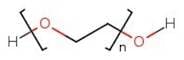
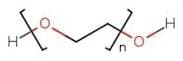
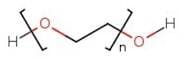
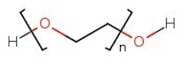
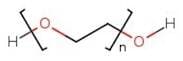
Polyéthylène glycol (PEG), avec le numéro CAS 25322-68-3, est un polymère polyvalent connu pour ses propriétés hydrophiles et sa biocompatibilité. Il est composé d'unités répétitives d'oxyde d'éthylène, ce qui donne une structure pouvant varier en poids moléculaire, influençant ainsi ses caractéristiques physiques et chimiques. Le PEG est généralement un liquide incolore, inodore et visqueux ou un solide cireux, selon son poids moléculaire. Il est soluble dans l'eau et de nombreux solvants organiques, ce qui le rend utile dans une large gamme d'applications, y compris les produits pharmaceutiques, cosmétiques et alimentaires. Le PEG sert de lubrifiant, d'humectant et d'émulsifiant, et est souvent utilisé dans les formulations médicamenteuses pour améliorer la solubilité et la biodisponibilité. De plus, sa nature non toxique et sa capacité à former des hydrogels le rendent précieux dans les applications biomédicales, telles que les systèmes de délivrance de médicaments et l'ingénierie tissulaire. Cependant, les propriétés spécifiques du PEG peuvent varier considérablement en fonction de son poids moléculaire et de sa formulation, ce qui doit être pris en compte lors de sa sélection pour des applications particulières.
Formule :(C2H4O)nH2O
InChI :InChI=1S/C2H6O2/c3-1-2-4/h3-4H,1-2H2
Code InChI :InChIKey=LYCAIKOWRPUZTN-UHFFFAOYSA-N
SMILES :C(CO[H])O
Synonymes :- 1660O
- 1660S
- 3,6,9,12,15,18,21,24,27,30,33,36,39-Tridecaoxahentetracontane-1,41-diol
- 400Dab8
- Alkox
- Aquaffin
- Badimol
- Carbowachs
- Carbowax
- Colonsoft
- Db-Wax
- Duraseal
- FPR
- Forlax
- GlycoLax
- IW
- Isocolan
- KleanPrep
- Macrogol
- MiraLax
- Modopeg
- Muvinlax
- Nosilen
- Nycoline
- OEG
- PEB
- PEG
- PEG-(OH)<sub>2</sub>
- PEG-diol
- PEO
- PER
- Pegorion
- Peo-Pf
- Peo-Pfz
- Peo-Pfzr
- Peopo-A
- Polikol
- Poly(Oxy-1,2-Ethanediyl),A-Hydro-W-Hydroxy
- Poly(oxy-1,2-ethanediyl)
- Polyaethylenglykol
- Polyethox
- Polyethyleneglycol
- Polyetox
- Polygol
- Polyhydroxyethylene
- Polyosm
- Polyox
- Polyoxydin
- Polyoxyethylenediol
- Postonal
- Sed-Fix
- Slovapeg
- Solbase
- SpaceOAR
- Superox
- Ucarfloc
- α-Hydro-ω-hydroxypoly(oxy-1,2-ethanediyl)
- α-Hydro-ω-hydroxypoly(oxyethylene)
- PEG 6000
- Polyethylene glycol
- Polyethylene Glycol
- PEG 6000, MB Grade (1.12033)
- Poly(oxy-1,2-ethanediyl), α-hydro-ω-hydroxy-
- PEG 200
- Poly(ethylene oxide)
- Poly(ethylene glycol)
- Polyethyleneoxidemonomethacryloxymonotrimethylsiloxyterminated
- Poly ethylene glycol
- O-Methacryloxy(polyethyleneoxy)trimethylsilane
- poly(oxyethylene)
- Polyethylene glygcol
- PEG 200-8000
- Polyethylene glycol
- Ethylene oxide, homopolymer
- Polyethylene Glycol 5000000
- PolyethyleneoxideMW
- Aquacide III
- Polyethylene glycol series
- Tri-(2,3-Dibromopropyl) Phosphate
- Glycols, polyethylene
- Polyethylene glycol PEG
- Polyethylene glycol - 6000 grade
- Carmowax
- PEG 8000
- PEG 1000
- Ethylene glycol 8000 polymer
- PEG-400
- polyethylene oxide standard 511000
- Oxide Wax AN
- PEG 400
- Polyethylene Oxide
- PEG 600
- Voir plus de synonymes
Trier par
Degré de pureté (%)
0
100
|
0
|
50
|
90
|
95
|
100
Polyethylene glycol 1,500
CAS :Cell fusion induced by polyethylene glycol(PEG) has become a standard method in somatic cell genetics. PEG promoted cell fusion is involved in the production of hybridoma cells. This Thermo Scientific Chemicals brand product was originally part of the Alfa Aesar product portfolio. Some documentationFormule :(C2H4O)nCouleur et forme :White, Waxy flakesPolyethylene glycol 1,000
CAS :Polyethylene glycol is used as an excipent in pharmaceutical products. It is used in the precipitation of proteins as well as in the separation and purification of biomolecules and in the induction of cell hybridization. It acts as a fusing agent to enhance the effect of macrophages on hybridoma; asFormule :(C2H4O)nCouleur et forme :Waxy solid, WhitePolyethylene Glycol 6000, Flakes, Ultrapure
CAS :Thermo Scientific Polyethylene Glycol 6000 Flakes UltrapureFormule :(C2H4O)nCouleur et forme :White or slightly yellowish, FlakesMasse moléculaire :5400-6600Polyethylene oxide, M.W. >5,000,000
CAS :It is used as a thickening agent and gel binder in the pharmaceutical industry. It is used as a analytical reagents, substrates, flocculants, dispersants, lubricants, emulsifiers, moisturizers, food additives. This Thermo Scientific Chemicals brand product was originally part of the Alfa Aesar produFormule :(C2H4O)nCouleur et forme :White, Powder/flakePolyethylene glycol 600
CAS :Polyethylene glycol is used as a humectant in inks and adhesives. It acts as a solvent in soldering flux and as a dye carrier in inks. It is also useful as a modifier and binder in latex paint. It is used as an additive in synthetic lubricants, cutting oil and hydraulic fluids. It plays an importantFormule :(C2H4O)nCouleur et forme :Liquid as melt or white low-melting solid, ColorlessPolyethylene oxide, M.W. 1,000,000
CAS :Polyethylene oxide is used as lubricants for rubber molds, textiles, metalworking and ceramics production. Further, it is used in food packaging, water-based paints, polishes, paper coatings, dispersing agents and chemical intermediates. In addition, it is used to impart viscosity to and modify theFormule :(C2H4O)nCouleur et forme :White to off-white, Powder or crystals or crystalline powderPolyethylene glycol 4,000
CAS :Polyethylene glycol is used in gene delivery of protoplast transfection and incubation. It is used in the preparation of extraction for measuring cytosolic phosphoenolpyruvate carboxykinase (PEPCK) from plant tissues. It is useful to mediate DNA transformation into protoplasts derived from rice leafFormule :(C2H4O)nCouleur et forme :Powder or flakes or granular, WhitePolyethylene glycol 6,000
CAS :Polyethylene glycol is used in the modification of therapeutic proteins and peptides to enhance its solubility. It is also used in the fabrication of bioactive and immuno isolating barriers for encapsulation of cells. In Gas chromatorgraphy, it is used as a polar stationary phase. It is used as moldFormule :(C2H4O)nCouleur et forme :White to cream, Powder or flakesHIGH-MOLECULAR-MASS MACROGOL CRS
CAS :HIGH-MOLECULAR-MASS MACROGOL CRSFormule :C9H17NO3Masse moléculaire :187.2362Polyethylene Glycol 3000
CAS :Polyethers, nesoiFormule :HOCH2CH2nOHCouleur et forme :Colorless FlakesMasse moléculaire :187.2362Polyethylene Glycol 8000
CAS :Polyethers, nesoiFormule :HOCH2CH2nOHCouleur et forme :White GranularMasse moléculaire :7000 - 9000Polyethylene Glycol 600
CAS :Polyethers, nesoiFormule :HOCH2CH2nOHCouleur et forme :LiquidMasse moléculaire :570 - 630Polyethylene Glycol 400
CAS :Polyethers, nesoiFormule :HOCH2CH2nOHCouleur et forme :Colorless Clear LiquidMasse moléculaire :380 - 420Polyethylene Glycol 300
CAS :Polyethers, nesoiFormule :HOCH2CH2nOHCouleur et forme :LiquidMasse moléculaire :285 - 315Polyethylene Glycol 200
CAS :Polyethers, nesoiFormule :HOCH2CH2OnHCouleur et forme :Colorless Clear LiquidMasse moléculaire :About 200 (44.05 monomer)Polyethylene Glycol 3350
CAS :Polyethers, nesoiFormule :HOCH2CH2nOHCouleur et forme :White SolidMasse moléculaire :3015 - 3685Polyethylene Glycol 6000
CAS :Polyethers, nesoiFormule :HOC2H4nOHCouleur et forme :Colorless FlakesMasse moléculaire :5400 - 6600Polyethylene Oxide
CAS :Polyethers, nesoiFormule :(CH2CH2O)nCouleur et forme :White Off-White PowderMasse moléculaire :5000000Polyethylene Glycol 4000
CAS :Polyethers, nesoiFormule :HOCH2CH2nOHCouleur et forme :White Off-White Waxy Solid FlakesMasse moléculaire :3600 - 4400