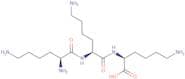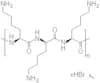
CAS 25988-63-0
:hydrobromure de poly-L-lysine
- Lysine, L-, peptides, hydrobromide
- Poly(L-lysine) hydrobromide
- Poly-L-lysine hydrogen bromide
- L-Lysine, homopolymer, hydrobromide
- Polylysine hydrobromide
- Poly-L-Lysine Hydrobromide [MW 1, 500-8, 000]
- L-Lysine homopolymer
- POLY-L-LYSINE HYDROBROMIDE, MOL WT 7
- Poly-L-lysine HBr
- POLY-L-LYSINE HYDROBROMIDE MOL. WT.*70,0 00-150,000
- POLY-L-LYSINE HYDROBROMIDE MOL WT 1000-5000
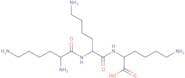
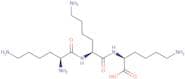
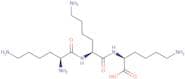
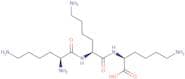
- (2S)-6-amino-2-[[(2S)-6-amino-2-[[(2S)-2,6-diaminohexanoyl]amino]hexanoyl]amino]hexanoic acid
- POLY-L-LYSINE HYDROBROMIDE MOL WT*GR
- Poly-L-lysine solution ( 0.1%)
- Poly-L-lysine hydrobromide 4'000-15'000
- POLY-L-LYSINE HYDROBROMIDE 30'000-70'000
- (2S)-6-azanyl-2-[[(2S)-6-azanyl-2-[[(2S)-2,6-bis(azanyl)hexanoyl]amino]hexanoyl]amino]hexanoic acid
- PDL HBr
- POLY-L-LYSINE HYDROBROMIDE MOL WT*30000- 70000
- POLY-L-LYSINE HYDROBROMIDE 10'000-20'000
- POLY-L-LYSINE 0.01% SOLUTION MOL. WT.*70 ,000-150,00
- POLY-L-LYSINE HYDROBROMIDE MOL WT*GREATE R THAN 3000
- PDL Solution
- POLY-L-LYSINE 0.01% SOLUTION MOL. WT.*15 0,000-300,0
- POLY-L-LYSINE HYDROBROMIDE, MOL. WT. 500-2,002
- POLY-L-LYSINE HYDROBROMIDE MOL. WT.*30,0 00-70,000 G
- POLY-L-LYSINE HYDROBROMIDE 70'000-150'000
- POLY-L-LYSINE HYDROBROMIDE MOL WT*4000-1 5000
- POLY-L-LYSINE HYDROBROMIDE 5'000-10'000
- POLY-L-LYSINE HYDROBROMIDE MOL WT*15000- 30000
- poly-L-lysine 0.01% solution mol. wt.*70,000-150,
- POLY-L-LYSINE HYDROBROMIDE 20'000-30'000
- POLY-L-LYSINE HYDROBROMIDE MOL WT*30
- Poly-L-lysine HCl
- L-LYS-(L-LYS)N-L-LYS XHBR
- POLY-L-LYSINE HYDROBROMIDE MOL. WT.*>300 ,000 GAMMA-
- POLY(LYS).HBR
- POLY-L-LYSINE HYDROBROMIDE MOL WT*150000 -300000
- POLY-L-LYSIN-HYDROBROMIDE 30'000-70'000
- POLY-L-LYSINE HYDROBROMIDE >300'000
- POLY-L-LYSINE
- POLY-L-LYSINE HYDROBROMIDE 150'000-300'000
- POLY-L-LYSINE HYDROBROMIDE MOL WT*40
- POLY-L-LYSINE HYDROBROMIDE MOL WT 10
- POLY-L-LYSINE HYDROBROMIDE MOL WT*15
- POLY-L-LYSINE HYDROBROMIDE, MOL. WT. 500-2,003
- Voir plus de synonymes
L-Lysine, homopolymer, hydrobromide
CAS :Formule :C10H27BrN2ODegré de pureté :%Couleur et forme :SolidMasse moléculaire :271.2382Poly-L-Lysine Hydrobromide
CAS :Poly-L-Lysine Hydrobromide is a neurotrophic factor that is used to stimulate nerve growth in the peripheral nervous system. It has been shown to increase the production of nerve growth factor, which is important for neuronal development and regeneration. Poly-L-Lysine Hydrobromide also has biological properties against human erythrocytes, enabling it to bind to the erythrocyte membrane and subsequently cause hemolysis. This process is mediated by Toll-like receptors. The active form of this drug has been shown to have antiviral activity against HIV and other viruses in transfection experiments using cells from mice, as well as an ability to inhibit replication of herpes simplex virus type 1 (HSV-1) in a model system consisting of rat neurons grown on a polymer substrate. Poly-L-Lysine Hydrobromide can be cleaved into smaller pieces by enzymes such as DNase I or terminal transferases, forming polymers
Degré de pureté :Min. 95%Poly-L-lysine hydrobromide - M.W:4000-20000
CAS :Poly-L-Lysine hydrobromide is a synthetic polymer that is used as a bacterial sealant, a model system for studying the effects of antimicrobial peptides on cells and as an additive to human serum. It has been shown to inhibit the growth of carcinoma cell lines and it has been used in treatments for leukemic mice. The molecular weight of this polymer ranges from 4000 to 20000. Poly-L-Lysine hydrobromide contains terminal amide groups, which can be cleaved by trypsin, an enzyme found in soybean and human serum. This allows it to act as a carrier molecule for other molecules.
Formule :(C6H14N2O2)x•(HBr)xDegré de pureté :Min. 95%Couleur et forme :White PowderPoly-L-lysine hydrobromide - M.W:70000-150000
CAS :Poly-L-lysine hydrobromide is a synthetic polymer that is used as a coating material for medical devices and implants. Poly-L-lysine hydrobromide has been shown to have antimicrobial activity against leukemic mice, carcinoma cell lines, and other microorganisms. It also has been shown to inhibit the growth of bacteria in vitro by binding to their cell membranes and interfering with their metabolism. This polymer has been shown to be effective in treating bacterial infections on the skin, urinary tract, and respiratory system. Poly-L-lysine hydrobromide has also been used as a coating material for catheters to prevent biofilm formation, which can lead to urinary tract infections. The carboxy terminal end of the polymer chain renders it hydrophobic and prevents it from precipitating out of solution. The thermal expansion coefficient of poly-L-lysine hydrobromide is very close to that of water, so it will not cause any kind
Formule :(C6H12N2O2)n•(HBr)xCouleur et forme :White PowderPoly-L-lysine hydrobromide - M.W:1000-5000
CAS :Poly-L-lysine hydrobromide is a polymer that consists of repeating lysine monomers. It has a molecular weight range of 1000 to 5000 Daltons. Poly-L-lysine hydrobromide is used for intramolecular hydrogen bonding, which increases its resistance to thermal and kinetic energy. Poly-L-lysine hydrobromide is also used in the structural analysis of proteins, because it can be easily purified from human serum by dialysis. This polymer has been shown to be effective against carcinoma cell lines, amide bonds, terminal residues, and ester linkages. There is also evidence that poly-L-lysine hydrobromide may have anticancer properties in vitro and in vivo. Poly-L-lysine hydrobromide has been shown to have antiangiogenic properties due to its ability to block the interaction between tumor cells and endothelial cells. This can lead to tumor regression and decreased metastasisFormule :(C6H12N2O2)n•(HBr)xDegré de pureté :Min. 95%Couleur et forme :White PowderPoly-L-Lysine Hydrobromide (PLL HBr), 70-150kDa
CAS :Formule :LLys(LLys)nLLys·xHBrCouleur et forme :White to off-white, Solid, Colourless to faint yellow, Clear to slightly hazyMasse moléculaire :70,000-150,000Poly-L-lysine hydrobromide - M.W:15,000-30,000
CAS :Poly-L-lysine hydrobromide is a polypeptide made of lysine and has a molecular weight of 15,000 to 30,000. It has been shown to have antimicrobial properties and has been used as an additive in animal feed. This product has been shown to be effective against leukemic mice as well as carcinoma cell lines. Poly-L-lysine hydrobromide is also known to inhibit the activity of glycol ester hydrolase, which is an enzyme that catalyzes the hydrolysis of glycol esters. The carboxy terminal amino acid residues on this molecule are in the form of an amide bond with a protein.
Formule :(C6H12N2O2)n•(HBr)xDegré de pureté :Min. 95%