CAS 26124-78-7
:L-Lysine, chlorhydrate (1:1), homopolymère
- Lysine, monohydrochloride, L-, peptides
- L-Lysine, monohydrochloride, homopolymer
- L-Lysine, hydrochloride (1:1), homopolymer
- L-Lysine hydrochloride homopolymer
- Poly(lysine hydrochloride)
Poly-L-lysine (hydrochloride)
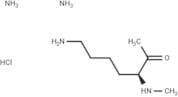
CAS :Formule :C10H27ClN2ODegré de pureté :98%Masse moléculaire :226.7872Poly-L-lysine hydrochloride
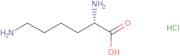
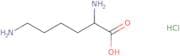
CAS :Poly-L-lysine hydrochloride enhances cell adhesion, has antimicrobial properties, and regulates phase separation kinetics.Formule :(C6H14N2O2·ClH)xDegré de pureté :98%Couleur et forme :SolidMasse moléculaire :182.65Poly-L-lysine hydrochloride - MW 3300Da
CAS :Poly-L-lysine hydrochloride is a polymer of L-lysine monomers. It has been shown to be effective in promoting cellular transformation and inhibiting cancer cell growth. Poly-L-lysine hydrochloride is used in the study of cellular physiology, such as energy metabolism and complex enzyme activity. This product has also been shown to have anti-infectious properties, with the ability to inhibit the replication of viruses and bacteria. The mechanism of action is not well understood, although it may be due to inhibition of transcriptional regulation by ubiquitin ligases or through its ability to disrupt protein synthesis by binding to amino acids involved in transcriptional regulation.Degré de pureté :Min. 95%Poly-L-lysine hydrochloride, MW 10000 - 30000
CAS :Poly-L-lysine hydrochloride, MW20000 is a water soluble polymer with an average molecular weight of 20000 Da. It is used in the synthesis of peptides and proteins due to its high purity, high quality, and low cost. Poly-L-lysine hydrochloride, MW20000 has been shown to bind to a wide range of surfaces such as glass, plastic, silicon dioxide, and stainless steel. This makes it useful for surface modification. Poly-L-lysine hydrochloride can be used as a scaffold for chemical reactions or as an intermediate in the synthesis of complex compounds.
Couleur et forme :PowderPoly-L-lysine hydrochloride
CAS :Poly-L-Lysine Hydrochloride is a synthetic polymer that has been shown to inhibit the growth of cancer cells. It has also been shown to be effective in preventing neuronal cell death, as well as toxicity caused by exposure to high levels of water vapor. Poly-L-Lysine Hydrochloride can be used as an anticancer agent and has a synergistic effect with other drugs. This polymer is thought to work by blocking the synthesis of DNA, RNA, and proteins, which are vital for the cell's survival.
Formule :(C6H14N2O2•HCl)xDegré de pureté :Min. 95%