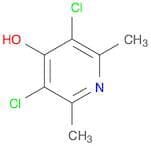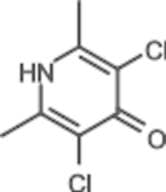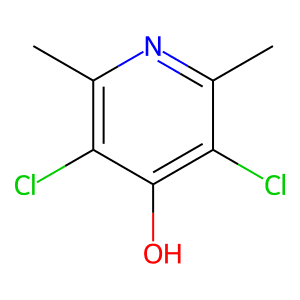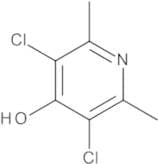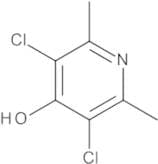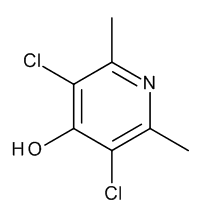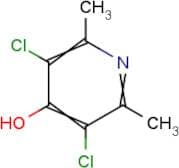
CAS 2971-90-6
:Clopidol
Description :
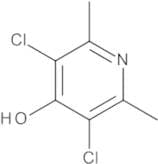
Clopidol, avec le numéro CAS 2971-90-6, est un composé chimique principalement utilisé comme agent antihelminthique et antimicrobien en médecine vétérinaire. Il appartient à la classe de composés connus sous le nom de pyrimidines et se caractérise par sa capacité à inhiber la croissance de certains parasites et bactéries. Clopidol est généralement administré sous forme de poudre ou de granulés et est souvent incorporé dans l'alimentation animale. Le composé présente un niveau modéré de solubilité dans l'eau et est stable dans des conditions de stockage standard. Son mécanisme d'action implique une interférence avec les processus métaboliques des organismes cibles, entraînant leur mort éventuelle. Bien que Clopidol soit efficace contre une gamme de pathogènes, son utilisation est réglementée, et il est important de respecter les dosages recommandés pour éviter une toxicité potentielle chez les animaux. De plus, en raison de ses applications vétérinaires, il existe des périodes de retrait spécifiques avant que les animaux traités avec Clopidol puissent être utilisés pour la production alimentaire, garantissant la sécurité pour la consommation humaine.
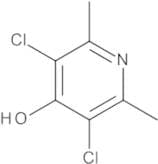
Formule :C7H7Cl2NO
InChI :InChI=1S/C7H7Cl2NO/c1-3-5(8)7(11)6(9)4(2)10-3/h1-2H3,(H,10,11)
Code InChI :InChIKey=ZDPIZLCVJAAHHR-UHFFFAOYSA-N
SMILES :ClC=1C(O)=C(Cl)C(C)=NC1C
Synonymes :- 2,6-Dimethyl-3,5-dichloro-4-hydroxypyridine
- 2,6-Dimethyl-3,5-dichloro-4-pyridinol
- 3,5-Dichloro-2,6-Dimethylpyridinol
- 3,5-Dichloro-2,6-dimethyl-4-hydroxypyridine
- 3,5-Dichloro-2,6-dimethyl-4-pyridinol
- 3,5-Dichloro-4-hydroxy-2,6-dimethylpyridine
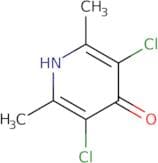
- 3,5-dichloro-2,6-dimethylpyridin-4(1H)-one
- 3,5-dichloro-2,6-dimethylpyridin-4(3H)-one
- 4-Pyridinol, 3,5-dichloro-2,6-dimethyl-
- Coccidiostat C
- Coyden
- Coyden 25
- Farmcoccid
- Lerbek
- Methylchloropindol
- Methylchlorpindol
- Meticlorpindol
- NSC 253479
- Pharmcoccid
- Pharmcoccid 10
- Wr 61112
- Clopidol
- Voir plus de synonymes
Trier par
Degré de pureté (%)
0
100
|
0
|
50
|
90
|
95
|
100
14 produits concernés.
2,6-Dimethyl-3,5-dichloro-4-pyridinol
CAS :Formule :C7H7Cl2NODegré de pureté :95%Couleur et forme :SolidMasse moléculaire :192.0426Clopidol
CAS :Clopidol (WR-61112) is a very effective anticoccidial agent used in poultry.Formule :C7H7Cl2NODegré de pureté :97.88% - 98%Couleur et forme :White To Light-Brown SolidMasse moléculaire :192.04Clopidol
CAS :Formule :C7H7Cl2NODegré de pureté :≥ 98.0%Couleur et forme :White or off-white crystalline powderMasse moléculaire :192.04Clopidol 100 µg/mL in Acetonitrile/Methanol
CAS :Produit contrôléFormule :C7H7Cl2NOCouleur et forme :Single SolutionMasse moléculaire :192.043,5-Dichloro-2,6-dimethyl-4-hydroxypyridine
CAS :3,5-Dichloro-2,6-dimethyl-4-hydroxypyridineDegré de pureté :95%Masse moléculaire :192.04g/molClopidol
CAS :Produit contrôléApplications An antibiotic used in veterinary medicine as a coccidiostat in poultry. Showed low order of acute and chronic toxicity in animals.
References Smith, D.N., et al.: Poult. Sci. 48, 420 (1969); Plisek, et al.: Vet. Spofa, 12, 111 (1970),Formule :C7H7Cl2NOCouleur et forme :WhiteMasse moléculaire :192.04Clopidol
CAS :Clopidol is a quinolone antibiotic that is used as a veterinary drug to treat bacterial infections in cattle, pigs, and sheep. It is an active ingredient of the topical product Quillaja-Saponaria for the treatment of skin lesions caused by bacteria such as Staphylococcus and Streptococcus. Clopidol has been shown to have low detection sensitivity due to its reaction with matrix components. This property can be overcome by using a high concentration of the reaction solution. The analytical method for clopidol depends on the type of sample and the analyte. Control analysis is needed to ensure that there are no false positives or negatives in the analysis. Resistant mutants are also a potential problem with clopidol, which can be avoided by using vitro methods instead of animal models in studies. Clopidol has been shown to inhibit protein synthesis through glucuronide conjugate formation, which prevents bacterial growth by binding to ribosomes,Formule :C7H7Cl2NODegré de pureté :Min. 95%Couleur et forme :PowderMasse moléculaire :192.04 g/mol3,5-Dichloro-2,6-dimethylpyridin-4(3H)-one
CAS :Formule :C7H7Cl2NODegré de pureté :95+%Couleur et forme :SolidMasse moléculaire :192.04