CAS 298-12-4
:Acide glyoxylique
Description :
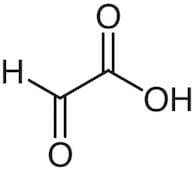
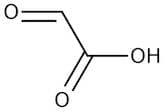
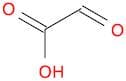
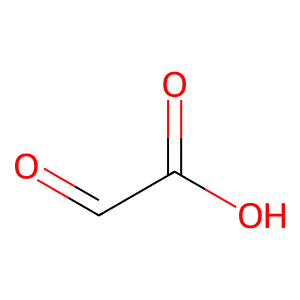
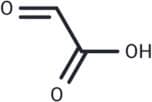
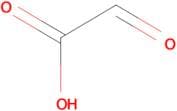
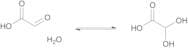
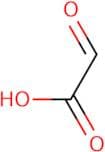
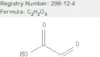
Acide glyoxylique, avec le numéro CAS 298-12-4, est un composé organique simple caractérisé par sa structure en tant que composé dicarbonyle, présentant à la fois un groupe fonctionnel aldéhyde et un groupe fonctionnel acide carboxylique. C'est un liquide incolore à jaune pâle avec une odeur piquante et il est hautement soluble dans l'eau, ce qui en fait un réactif polyvalent dans diverses réactions chimiques. Acide glyoxylique est connu pour sa réactivité, en particulier dans les réactions de condensation, et est souvent utilisé dans la synthèse de divers composés organiques, y compris des acides aminés et des produits pharmaceutiques. Il peut également agir comme agent réducteur et est impliqué dans la formation de dérivés de glyoxylate. En termes de sécurité, Acide glyoxylique est considéré comme dangereux, avec des effets irritants potentiels sur la peau, les yeux et le système respiratoire, nécessitant des précautions de manipulation appropriées. Ses applications s'étendent aux domaines de la biochimie, de l'agriculture et de la production de colorants et de parfums, soulignant son importance tant dans les environnements industriels que de laboratoire.
Formule :C2H2O3
InChI :InChI=1/C2H2O3/c3-1-2(4)5/h1H,(H,4,5)/p-1
Code InChI :InChIKey=HHLFWLYXYJOTON-UHFFFAOYSA-N
SMILES :C(C=O)(O)=O
Synonymes :- 2-Oxoacetic acid
- Acetic acid, 2-oxo-
- Acide glyoxylique
- Acido Glioxilico
- Carboxyformaldehyde
- Formylcarboxylic acid
- Formylformic acid
- Glyoxalic acid
- Glyoxo High Pure 50
- Glyoxylic Acid
- Glyoxylsaeure
- Glyoxylsaure
- Nsc 27785
- Oxalaldehydic acid
- Oxoacetic acid
- Oxoethanoic acid
- α-Ketoacetic acid
- Acetic acid, oxo-
- Glyoxalate
- glyoxylate
- oxoacetate
- Aldehydoformicacid
- 2-Oxoethanoic Acid
- oxo-acetic acid
- Formic acid, formyl-
- Formylformic
- glyoxylicacid(50%orless)
- formyl-formicaci
- alpha-ketoaceticacid
- oxo-aceticaci
- GA
- oxalaldehydicacid
- OCHCOOH
- alpha-Ketoacetic acid
- kyselinaglyoxylova
- Kyselina glyoxylova
- Voir plus de synonymes
Trier par
Degré de pureté (%)
0
100
|
0
|
50
|
90
|
95
|
100
12 produits concernés.
Glyoxylic Acid (ca. 50% in Water, ca. 9mol/L)
CAS :Formule :C2H2O3Couleur et forme :Colorless to Light orange to Yellow clear liquidMasse moléculaire :74.04Glyoxylic acid, 50% w/w aq. soln.
CAS :This Thermo Scientific Chemicals brand product was originally part of the Alfa Aesar product portfolio. Some documentation and label information may refer to the legacy brand. The original Alfa Aesar product / item code or SKU reference has not changed as a part of the brand transition to Thermo SciFormule :C2H2O3Couleur et forme :Clear colorless to yellow, LiquidMasse moléculaire :74.04Glyoxylic acid solution, 50% in water
CAS :Formule :C2H2O3Degré de pureté :%Couleur et forme :LiquidMasse moléculaire :74.0355Glyoxylic acid, 50% in water
CAS :Formule :OHCCO2HCouleur et forme :Colourless to light yellow liquidMasse moléculaire :74.04Glyoxalic acid
CAS :Glyoxalic acid is an organic compound. It is both an aldehyde and a carboxylic acid.Formule :C2H2O3Couleur et forme :SoildMasse moléculaire :74.04Glyoxylic acid (ca. 50% in Water, ca. 9mol/L)
CAS :Degré de pureté :95.0%Couleur et forme :LiquidMasse moléculaire :74.03500366210938Glyoxylic Acid (50% aqueous solution)
CAS :Applications Glyoxylic Acid is used as a reagent in the synthesis of N-{[6-chloro-4-(2,6-dimethoxyphenyl)quinazolin-2-yl]carbonyl}-L-leucine, a novel nonpeptide chemotype selective for neurotensin receptor 2. Also used as a reagent in the synthesis of elemonic acid derivatives as Pin1 inhibitors.
References Thomas, J.B., et al.: Bioorg. Med. Chem. Lett., 25, 292 (2015); Li, X., et al.: Bioorg. Med. Chem. Lett., 24, 5612 (2014)Formule :C2H2O3Couleur et forme :Colourless LiquidMasse moléculaire :74.04Glyoxylic acid - 50% aqueous solution
CAS :Glyoxylic acid is a dicarboxylic acid that can be found in the human body. It is oxidized to glyoxylate, which is then converted to oxalate by enzymes. Glyoxylic acid is a product of glycolysis, and has been shown to have antioxidant properties. Glyoxylic acid has been shown to inhibit the production of peptide hormones such as ACTH and TRH, as well as infectious diseases such as AIDS and malaria. It also has an effect on biochemical properties such as the redox potentials. The optimum extraction process for this compound is by ion-exchange chromatography with aqueous solvent. X-ray diffraction data can be used to identify this compound. The reaction mechanism for glyoxylic acid involves two steps: oxidation at carbon 2 followed by elimination at carbon 3. This chemical can be detected using analytical methods such as spectrophotometry or x-ray photoelectron spectroscopy (XPSFormule :C2H2O3Degré de pureté :Min. 95%Couleur et forme :Clear LiquidMasse moléculaire :74.04 g/mol