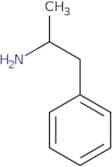
CAS 300-62-9
:Amphétamine
Description :
Amphétamine, avec le numéro CAS 300-62-9, est un puissant stimulant du système nerveux central qui appartient à la classe des composés phénéthylamine. Il se caractérise par sa formule structurelle, qui présente un anneau phényle attaché à une chaîne d'éthylamine. Amphétamine est connu pour sa capacité à augmenter la libération de neurotransmetteurs, en particulier la dopamine et la noradrénaline, entraînant une vigilance accrue, une concentration et des niveaux d'énergie. Il est couramment utilisé dans le traitement du trouble du déficit de l'attention avec hyperactivité (TDAH) et de la narcolepsie. La substance présente une gamme d'effets pharmacologiques, y compris une augmentation de la fréquence cardiaque et de la pression artérielle, ainsi qu'un potentiel d'abus et de dépendance. Amphétamine est généralement administré sous ses formes salines, telles que dextroAmphétamine ou sels mixtes de Amphétamine, qui peuvent influencer sa puissance et sa durée d'action. En raison de ses propriétés stimulantes, Amphétamine est classé comme une substance contrôlée dans de nombreuses juridictions, nécessitant une réglementation et un suivi attentifs de son utilisation.
Formule :C9H13N
InChI :InChI=1S/C9H13N/c1-8(10)7-9-5-3-2-4-6-9/h2-6,8H,7,10H2,1H3
Code InChI :InChIKey=KWTSXDURSIMDCE-UHFFFAOYSA-N
SMILES :C(C(C)N)C1=CC=CC=C1
Synonymes :- (.+-.)-1-Phenyl-2-aminopropane
- (.+-.)-Desoxynorephedrine
- (.+-.)-Phenylisopropylamine
- (.+-.)-α-Methylphenethylamine
- (.+-.)-α-Methylphenylethylamine
- (.+-.)-β-Phenylisopropylamine
- 1-Benzylethylamine
- 1-Methyl-2-phenylethylamine
- 1-Phenyl-2-propanamine
- 1-Phenyl-2-propylamine
- 2-Amino-1-phenylpropane
- 3-Phenyl-2-propylamine
- 3-Phenylpropan-2-amine
- Actedron
- Adderall
- Adderall XR
- Adipan
- Allodene
- Amfetamina
- Amfetamine
- Amphetamin
- Amphetamine
- Anorexine
- Benzebar
- Benzedrine
- Benzolone
- Elastonon
- Fenopromin
- Finam
- Isoamyne
- Isomyn
- Mecodrin
- Norephedrane
- Novydrine
- Nsc 27159
- Obesin
- Obesine
- Oktedrin
- Ortedrine
- Percomon
- Phenamine
- Phenedrine
- Phenethylamine, α-methyl-, (.+-.)-
- Profamina
- Propisamine
- Racemic Amphetamine
- Raphetamine
- Rhinalator
- Simpatedrin
- Simpatina
- Sli 381
- Sympamine
- Sympatedrine
- Weckamine
- dl-α-Methylphenethylamine
- α-Methyl-β-phenylethylamine
- α-Methylbenzeneethanamine
- β-Aminopropylbenzene
- Mydrial
- 3-Amino-1-propylbenzene
- Amfetamina [INN-Spanish]
- (+-)-alpha-Methylphenethylamine
- Phenethylamine, alpha-methyl-, (+-)-
- Anfetamina [Spanish]
- alpha-Methylphenethylamine
- AI3-02438
- (+-)-alpha-Methylphenylethylamine
- Amphetamine (Narcotics)
- 1-Phenyl-2-amino-propan
- Fenylo-izopropylaminyl
- beta-Aminopropylbenzene (VAN)
- Fenylo-izopropylaminyl [Polish]
- beta-Phenylisopropylamin
- sodium chloride 4-[6-(diethylamino)-3-(diethyliminio)-3H-xanthen-9-yl]benzene-1,3-dicarboxylate (2:1:1)
- beta-Aminopropylbenzene
- Benzeneethanamine, α-methyl-, (±)-
- 1-phenylpropan-2-amine
- Protioamphetamine
- 1-Phenyl-2-aminopropane (VAN)
- DEA No. 1100
- alpha-Methylbenzeneethaneamine
- dl-alpha-Methylphenethylamine
- Benzeneethanamine, alpha-methyl-, (+-)-
- Amfetamine [INN:BAN]
- 2-phenylpropan-2-amine
- Psychedrine
- Anfetamina
- Benzeneethanamine, α-methyl-
- Amphetamine, its salts, optical isomers, and salts of its optical isomers
- Phenethylamine, alpha-methyl-
- racemic-Desoxynor-ephedrine
- (2S)-1-phenylpropan-2-amine
- Amfetaminum [INN-Latin]
- (+-)-alpha-Methylbenzeneethanamine
- Benzeneethanamine, alpha-methyl-
- Amfetamina [Italian]
- beta-Phenylisopropylamin [German]
- HSDB 3287
- 1-Phenyl-2-amino-propan [German]
- Anorexide
- Amfetaminum
- Voir plus de synonymes
Trier par
Degré de pureté (%)
0
100
|
0
|
50
|
90
|
95
|
100
2 produits concernés.
DL-amphetamine
CAS :Produit contrôléDL-amphetamine is a medicinal compound that has been shown to be an inhibitor of protein kinases. It has been studied extensively for its potential as an anticancer agent, particularly in tumor cells. DL-amphetamine has been shown to induce apoptosis in human and Chinese hamster ovary cells, which suggests that it may have potential as a cancer therapy. This compound is structurally similar to other kinase inhibitors, such as imatinib and dasatinib, and has been found in urine samples of individuals taking these drugs. While further research is needed to fully understand the potential therapeutic benefits of DL-amphetamine, its ability to inhibit kinases makes it a promising candidate for future cancer research.
Formule :C9H13NDegré de pureté :Min. 95%Masse moléculaire :135.21 g/mol