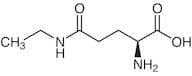
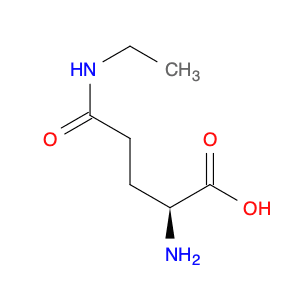
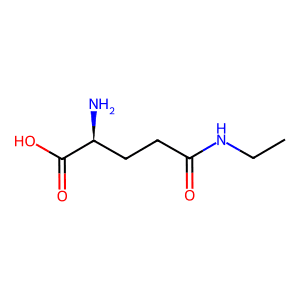
CAS 3081-61-6
:L-Théanine
Description :
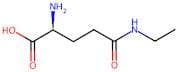
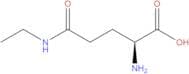
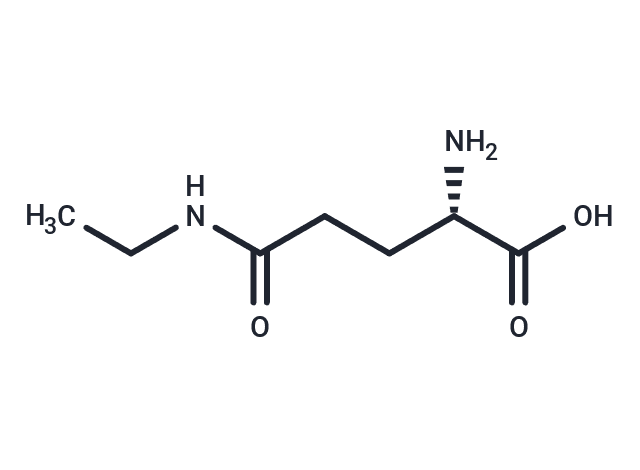
L-Théanine, avec le numéro CAS 3081-61-6, est un acide aminé naturellement présent principalement dans les feuilles de thé, en particulier le thé vert. Il est connu pour sa capacité unique à promouvoir la relaxation sans sédation, ce qui le rend populaire pour ses effets calmants potentiels. L-Théanine est structurellement similaire au glutamate, un neurotransmetteur dans le cerveau, ce qui peut contribuer à sa capacité à influencer l'activité cérébrale. Il est souvent associé à des niveaux accrus d'acide gamma-aminobutyrique (GABA), de dopamine et de sérotonine, qui peuvent améliorer l'humeur et la fonction cognitive. La substance est soluble dans l'eau et a un goût légèrement sucré. L-Théanine est généralement reconnu comme sûr et est couramment utilisé comme complément alimentaire pour soulager le stress et améliorer la concentration. Ses effets peuvent être synergiques lorsqu'ils sont combinés avec de la caféine, car il peut aider à atténuer l'agitation souvent associée à la consommation de caféine. Dans l'ensemble, L-Théanine est apprécié pour ses avantages potentiels pour la santé, en particulier pour promouvoir la clarté mentale et la relaxation.
Formule :C7H14N2O3
InChI :InChI=1S/C7H14N2O3/c1-2-9-6(10)4-3-5(8)7(11)12/h5H,2-4,8H2,1H3,(H,9,10)(H,11,12)/t5-/m0/s1
Code InChI :InChIKey=DATAGRPVKZEWHA-YFKPBYRVSA-N
SMILES :C(C[C@@H](C(O)=O)N)C(NCC)=O
Synonymes :- (2S)-2-Amino-4-(ethylcarbamoyl)butanoic acid
- (2S)-2-Azaniumyl-5-(ethylamino)-5-oxopentanoate
- (S)-2-Amino-5-(ethylamino)-5-oxopentanoic acid
- <span class="text-smallcaps">L</span>-Glutamine, N-ethyl-
- <span class="text-smallcaps">L</span>-Theanine
- Glutamine, N-ethyl-, <span class="text-smallcaps">L</span>-
- L-Theanine
- N-Ethyl-<span class="text-smallcaps">L</span>-glutamine
- N-ethyl-L-glutamine
- N5-Ethyl-L-glutamine
- N<sub>γ</sub>-Ethyl-<span class="text-smallcaps">L</span>-glutamine
- NSC 21308
- Suntheanine
- Suntheanine CG 100
- Theanin
- Theanine
- Glutamine, N-ethyl-, L-
- Voir plus de synonymes
Trier par
Degré de pureté (%)
0
100
|
0
|
50
|
90
|
95
|
100
15 produits concernés.
L-Theanine
CAS :Formule :C7H14N2O3Degré de pureté :>98.0%(T)Couleur et forme :White to Almost white powder to crystalMasse moléculaire :174.20L-Theanine
CAS :Formule :C7H14N2O3Degré de pureté :95%Couleur et forme :SolidMasse moléculaire :174.2L-Theanine
CAS :L-Theanine analytical standard provided with w/w absolute assay, to be used for quantitative titration.Formule :C7H14N2O3Degré de pureté :(HPLC) ≥98%Couleur et forme :PowderMasse moléculaire :174.2L-Theanine
CAS :Acyclic amides (including acyclic carbamates) and their derivatives and salts thereof, nesoiFormule :C7H14N2O3Couleur et forme :White Crystalline PowderMasse moléculaire :174.10044L-Theanine
CAS :Formule :C7H14N2O3Degré de pureté :98%Couleur et forme :SolidMasse moléculaire :174.1977L-Theanine
CAS :Formule :C7H14N2O3Degré de pureté :98.0 - 102.0 %Couleur et forme :White to off-white powderMasse moléculaire :174.20Theanine
CAS :L-Theanine is a relaxing and nondietary amino acid found pretty much exclusively in teas from Camellia sinensis. It is known to promote relaxation and improve concentration and learning ability and has neuroprotective effects. L-Theanine heals gastric ulcer and prevents CCl4-induced experimental hepatic cirrhosis in rats by blocking the main pro-inflammatory and pro-fibrogenic signals. L-Theanine can significantly alleviate the adverse oxidative effect.Formule :C7H14N2O3Degré de pureté :95%~99%Masse moléculaire :174.2L-Theanine
CAS :L-Theanine, a unique amino acid from Camellia sinensis tea, induces relaxation without drowsiness.Formule :C7H14N2O3Degré de pureté :99.31% - 99.38%Couleur et forme :White Crystals From Ethanol + Water White Crystalline SolidMasse moléculaire :174.20L-theanine
CAS :Acyclic amideFormule :C7H14N2O3Degré de pureté :≥ 98.0 % (HPLC)Couleur et forme :PowderMasse moléculaire :174.2L-Theanine
CAS :L-Theanine is an amino acid found in various types of tea and has been shown to have physiological effects. It is also found in the leaves of Camellia sinensis plants. L-Theanine is a nonprotein amino acid that does not have any chiral centers, unlike other amino acids. It is chemically similar to glutamate and glutamine. L-Theanine has been shown to bind to alpha 1-acid glycoprotein and polymerase chain, which may affect its solubility in water. This amino acid also has a number of enzyme activities, including those that produce enzymes for acetylcholine synthesis and metabolism. L-Theanine has been shown to have antioxidant properties and can decrease neuronal death in humans when given intravenously.
Formule :C7H14N2O3Degré de pureté :Min. 98 Area-%Couleur et forme :White PowderMasse moléculaire :174.2 g/molL-Theanine extrapure, 99%
CAS :Formule :C7H15N2O3Degré de pureté :min 99%Couleur et forme :White, Crystalline powderMasse moléculaire :175.20