CAS 3105-95-1
:Acide L-pipécolique
Description :
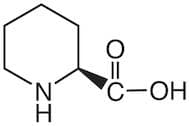
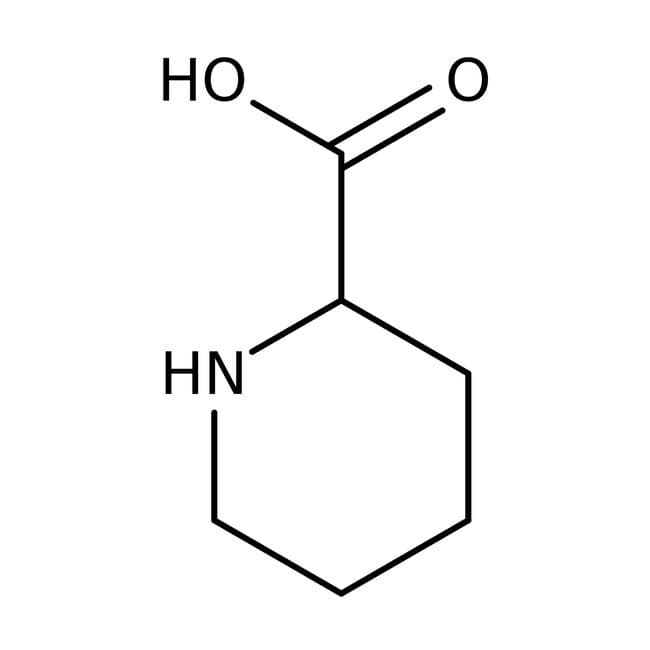
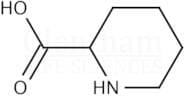
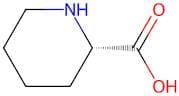
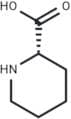
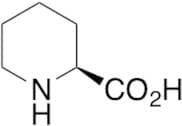
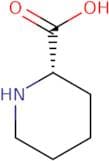
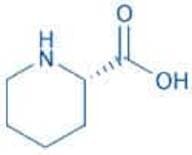
Acide L-pipécolique est un acide aminé cyclique caractérisé par sa structure en anneau de pipéridine à six membres, qui contient un groupe fonctionnel acide carboxylique. C'est un composé naturellement présent, souvent trouvé dans divers systèmes biologiques, et joue un rôle dans le métabolisme de la lysine. La formule moléculaire de Acide L-pipécolique est C6H11NO2, indiquant la présence d'atomes de carbone, d'hydrogène, d'azote et d'oxygène. Ce composé est typiquement un solide cristallin blanc à blanc cassé et est soluble dans l'eau, reflétant sa nature polaire en raison du groupe acide carboxylique. Acide L-pipécolique est connu pour son implication dans plusieurs voies biochimiques, y compris son rôle potentiel en tant que molécule de signalisation et dans la synthèse d'autres composés bioactifs. De plus, il a suscité de l'intérêt dans la recherche pharmaceutique pour ses applications thérapeutiques potentielles, en particulier dans le contexte des troubles neurologiques. Ses propriétés, telles que le point de fusion et la réactivité spécifique, peuvent varier en fonction des conditions environnementales et de la pureté.
Formule :C6H11NO2
InChI :InChI=1S/C6H11NO2/c8-6(9)5-3-1-2-4-7-5/h5,7H,1-4H2,(H,8,9)/t5-/m0/s1
Code InChI :InChIKey=HXEACLLIILLPRG-YFKPBYRVSA-N
SMILES :C(O)(=O)[C@@H]1CCCCN1
Synonymes :- (-)-Pipecolic acid
- (-)-Pipecolinic acid
- (2S)-2-Piperidinecarboxylic acid
- (2S)-Piperidin-1-ium-2-carboxylate
- (2S)-piperidine-2-carboxylate
- (2S)-piperidine-2-carboxylic acid
- (S)-(-)-2-Piperidinecarboxylic Acid
- (S)-(-)-Pipecolic acid
- (S)-Pipecolinic acid
- (S)-Piperidine-2-carboxylic acid
- 2-Piperidinecarboxylic acid (2S)-
- 2-Piperidinecarboxylic acid, (S)-
- <span class="text-smallcaps">L</span>-(-)-Pipecolic acid
- <span class="text-smallcaps">L</span>-Homoproline
- <span class="text-smallcaps">L</span>-Pipecolinic acid
- <span class="text-smallcaps">L</span>-Piperidine-2-carboxylic acid
- L(-)-2-Pipecolinic acid
- L(-)-Pipecolinic Acid
- L-Homoproline
- NSC 93089
- Voir plus de synonymes
Trier par
Degré de pureté (%)
0
100
|
0
|
50
|
90
|
95
|
100
11 produits concernés.
L-Pipecolic Acid
CAS :Formule :C6H11NO2Degré de pureté :>98.0%(T)(HPLC)Couleur et forme :White to Light yellow powder to crystalMasse moléculaire :129.16L-Pipecolinic acid, 99%
CAS :L-Pipecolinic acid is involved in synaptic transmission in the central nervous system. It is also used as pharmaceutical intermediate. This Thermo Scientific Chemicals brand product was originally part of the Alfa Aesar product portfolio. Some documentation and label information may refer to the legFormule :C6H11NO2Degré de pureté :99%Couleur et forme :White to cream, PowderMasse moléculaire :129.162-Piperidinecarboxylic acid, (2S)-
CAS :Formule :C6H11NO2Degré de pureté :97%Couleur et forme :SolidMasse moléculaire :129.1570L-Pipecolic acid
CAS :Formule :C6H11NO2Couleur et forme :White to off-white powderMasse moléculaire :129.16(L)-Pipecolinic acid
CAS :(L)-Pipecolinic acidFormule :C6H11NO2Degré de pureté :98%Couleur et forme : pale yellow solidMasse moléculaire :129.15703g/molL-Pipecolic acid
CAS :L-Pipecolic acid, a lysine metabolite, builds up in infants with peroxisomal genetic disorders like Zellweger syndrome.Formule :C6H11NO2Degré de pureté :99.75% - 99.92%Couleur et forme :SolidMasse moléculaire :129.16L-Pipecolic Acid
CAS :Applications Pipecolic acid is involved in synaptic transmission in the central nervous system. The l-form occurs in plants.
References Nomura Y., et al.: Neurochem. Res., 6, 391 (1981),Formule :C6H11NO2Couleur et forme :NeatMasse moléculaire :129.16Pipecolic acid
CAS :Pipecolic acid is a metabolite of tryptophan that has been shown to inhibit the proliferation of pluripotent cells in vitro. Pipecolic acid was also shown to have a significant effect on the reaction mechanism of dinucleotide phosphate, which is essential for the synthesis of DNA and RNA. Pipecolic acid can be synthesized from picolinic acid through an amide bond formation. This compound is also found in wild-type strains as well as cancerous and infectious strains of bacteria. Pipecolic acid inhibits bacterial growth by binding to the active site of specific enzymes, such as methionine adenosyltransferase and ribonucleotide reductase, leading to the inhibition of protein synthesis and cell division. It has been shown to inhibit leukemia inhibitory factor (LIF) activity in vitro, suggesting that it may be involved in urinary infections. Pipecolic acid can also be prepared using preparative high-performance liquid chromatography (preparFormule :C6H11NO2Degré de pureté :Min. 95%Couleur et forme :White PowderMasse moléculaire :129.16 g/molL-(-)-Pipecolinic acid
CAS :Formule :C6H11NO2Degré de pureté :97%Couleur et forme :SolidMasse moléculaire :129.159H-Homopro-OH
CAS :High enantioselectivies could be achieved (> 98% ee) when choosing L-pipecolic acid as catalyst for asymmetric Mannich reactions.Formule :C6H11NO2Degré de pureté :> 99%Couleur et forme :WhitishMasse moléculaire :129.16