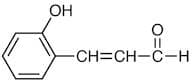
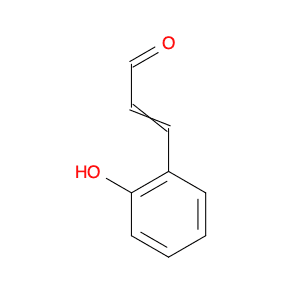
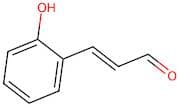
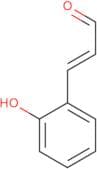
CAS 3541-42-2
:2-Hydroxycinnamaldéhyde
- (2E)-3-(2-hydroxyphenyl)prop-2-enal
- 2-Hydroxycinnamaldehyde
- 2-Hydroxycinnamic aldehyde
- 2-Propenal, 3-(2-hydroxyphenyl)-
- 3-(2-Hydroxyphenyl)-2-propenal
- 3-(2-Hydroxyphenyl)Prop-2-Enal
- 3-(2-Hydroxyphenyl)acrylaldehyde
- Cinnamaldehyde, o-hydroxy-
- NSC 114588
- o-Hydroxycinnamaldehyde
2-Hydroxycinnamaldehyde
CAS :Formule :C9H8O2Degré de pureté :>98.0%(HPLC)Couleur et forme :Light yellow to Yellow to Orange powder to crystalMasse moléculaire :148.163-(2-Hydroxyphenyl)Acrylaldehyde
CAS :3-(2-Hydroxyphenyl)AcrylaldehydeDegré de pureté :98%Masse moléculaire :148.16g/mol2-Hydroxycinnamaldehyde
CAS :2-Hydroxycinnamaldehyde is a chemical compound that has been shown to inhibit cancer cell growth and induce apoptosis in vitro. 2-Hydoxycinnamaldehyde is a member of the class of phenylpropanoids, which has been shown to bind to DNA and inhibit the expression of β-catenin. It also has anti-angiogenic effects by inhibiting vascular endothelial growth factor (VEGF) production and VEGF receptor activation. The study of 2-hydroxycinnamaldehyde was carried out using both an in vivo model and a cell culture model. The in vivo model used was the mouse skin cancer model, while the cell culture models were human colon cancer cells (SW620) and human lung cancer cells (HCT116). Swelling, necrosis, cytotoxicity, and apoptosis were observed in both types of models after treatment with 2-hydroxycinnamaldehyde. The hydroxyl group on the catech
Formule :C9H8O2Degré de pureté :Min. 95%Couleur et forme :PowderMasse moléculaire :148.16 g/mol