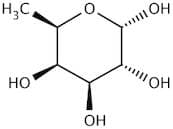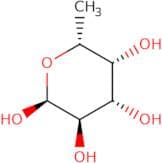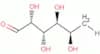
CAS 3615-37-0
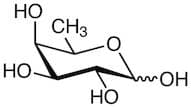
:D-fucose
- (+)-Fucose
- 6-Deoxy-<span class="text-smallcaps">D</span>-galactose
- 6-Deoxygalactose
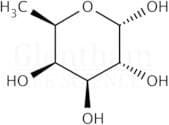
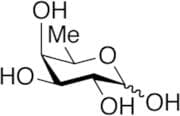
- 6-deoxy-D-galactopyranose
- 6-deoxy-D-galactose
- 6-deoxy-beta-D-galactopyranose
- <span class="text-smallcaps">D</span>-(+)-Fucose
- <span class="text-smallcaps">D</span>-6-Deoxygalactose
- <span class="text-smallcaps">D</span>-Galactose, 6-deoxy-
- D-Galactose, 6-deoxy-
- Fucose, <span class="text-smallcaps">D</span>-
- Rhodeose
- D-Fucose
- D-(+)-Fucose
- Fucose, D-
- D-6-Deoxygalactose
- ALPHA-D-FUC
- D-(+)-FUCOSE:6-DEOXY-D-GALACTOSE
- D-(+)-Fucose,99%
- 6-Deoxy-D-galactose, Rhodeose
- 6-DESOXY-D-GALACTOSE
- 6-deoxy-d-galactos
- D-FUCOSE, 96%, MIXTURE OF ANOMERS
- D(+)FUCOSE extrapure
- Voir plus de synonymes
D-(+)-Fucose
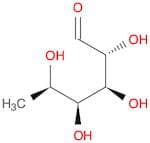
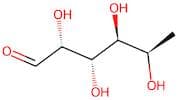
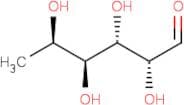
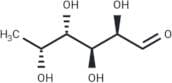
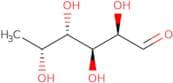
CAS :Formule :C6H12O5Degré de pureté :>98.0%(HPLC)Couleur et forme :White to Almost white powder to crystalMasse moléculaire :164.16(2R,3S,4S,5R)-2,3,4,5-Tetrahydroxyhexanal
CAS :Formule :C6H12O5Degré de pureté :98%Couleur et forme :SolidMasse moléculaire :164.1565D-(+)-Fucose
CAS :1. D-(+)-Fucose is a hexose deoxy sugar found on N-linked glycans that appears on the cell surface of mammalian and plant cells.Formule :C6H12O5Degré de pureté :99.26% - 99.87%Couleur et forme :White PowderMasse moléculaire :164.16D-(+)-Fucose
CAS :Formule :C6H12O5Degré de pureté :≥ 98.0%Couleur et forme :White to off-white crystalline powderMasse moléculaire :164.16D-Fucose
CAS :Produit contrôléApplications D-Fucose is a hexose deoxy sugar found on N-linked glycans that appears on the cell surface of mammalian and plant cells. D-Fucose is also the building block of fucoidan polysaccharide, an sulfated polysaccharide found in various species of brown algae.
References Becker, D.J., et al.: Glycobiol., 13, 41 (2003); Denkova, R., et al.: Food. Environ. Safe., 11, 5 (2012); Janathan, M.C., et al.: Carb. Poly., 93, 232 (2013);Formule :C6H12O5Couleur et forme :NeatMasse moléculaire :164.16D-Fucose
CAS :D-Fucose is a sugar that can be synthesized in vitro. It is a component of the xanthurenic acid pathway, which is involved in the synthesis of l-arabinose. D-Fucose has been found to have anti-leukemic effects and to inhibit enzyme activities in vitro. It has also been shown to bind to the toll-like receptor, α1-acid glycoprotein, and surface membranes. A hydroxyl group at position 1 on the fucose molecule may be important for this binding. D-Fucose's biological properties are related to its structural analysis and the cell receptors it binds with. D-Fucose has an optimum pH level of 7, so it cannot survive outside of a neutral environment. It does not need any biological cofactors or enzymes for its synthesis, so it is classified as a nonessential nutrient. D-Fucose is also used in blood groups because it contains an antigenFormule :C6H12O5Degré de pureté :Min. 97 Area-%Couleur et forme :White Off-White PowderMasse moléculaire :164.16 g/molD-(+)-Fucose extrapure
CAS :Formule :C6H12O5Couleur et forme :White, Crystalline powder, Clear, ColourlessMasse moléculaire :164.16α-D-Fucose
CAS :Fucose is a 6-carbon sugar that is an essential component of the human diet. It is found in many vegetables and fruits, but it can also be produced by the body from glucose. Fucose is involved in a number of important biochemical processes, including calcium metabolism and the synthesis of galactose, l-glutamic acid, and other carbohydrates. Fucose has been shown to inhibit leukemia cells through programmed cell death and may also have a role in regulating cell proliferation.
Formule :C6H12O5Degré de pureté :Min. 98.0 Area-%Masse moléculaire :164.16 g/mol