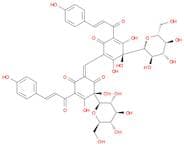
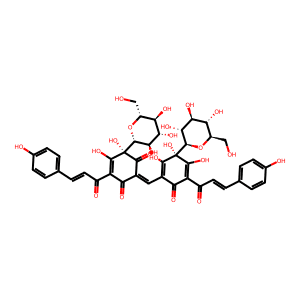
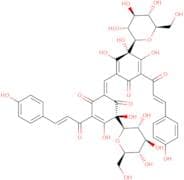
CAS 36338-96-2
:Carthame
Description :
Carthame, identifié par le numéro CAS 36338-96-2, fait référence à un composé chimique dérivé du carthame (Carthame tinctorius), connu pour son utilisation en médecine traditionnelle et comme colorant. Cette substance est caractérisée par ses potentielles propriétés antioxydantes et est souvent étudiée pour ses applications dans l'alimentation, les cosmétiques et les produits pharmaceutiques. Le composé peut présenter diverses activités biologiques, y compris des effets anti-inflammatoires et cardioprotecteurs, ce qui le rend intéressant pour la recherche en santé. Sa structure chimique comprend généralement des groupes fonctionnels qui contribuent à sa réactivité et à son interaction avec les systèmes biologiques. De plus, Carthame est reconnu pour son rôle dans la production d'huile de carthame, riche en acides gras insaturés. Comme de nombreux produits naturels, les caractéristiques spécifiques, telles que la solubilité, la stabilité et la réactivité, peuvent varier en fonction des méthodes d'extraction et de purification utilisées. Dans l'ensemble, Carthame représente un composé précieux avec diverses applications dans divers domaines, en particulier dans la santé et la nutrition.
Formule :C43H42O22
InChI :InChI=1S/C43H42O22/c44-14-24-30(52)32(54)34(56)40(64-24)42(62)36(58)20(28(50)26(38(42)60)22(48)11-5-16-1-7-18(46)8-2-16)13-21-29(51)27(23(49)12-6-17-3-9-19(47)10-4-17)39(61)43(63,37(21)59)41-35(57)33(55)31(53)25(15-45)65-41/h1-13,24-25,30-35,40-41,44-47,52-58,60-63H,14-15H2/b11-5+,12-6+,21-13-/t24-,25-,30-,31-,32+,33+,34-,35-,40-,41-,42+,43-/m1/s1
Code InChI :InChIKey=WLYGSPLCNKYESI-RSUQVHIMSA-N
SMILES :O[C@@]1(C(=O)/C(=C\C2=C(O)[C@](O)(C(O)=C(C(/C=C/C3=CC=C(O)C=C3)=O)C2=O)[C@@]4(O[C@H](CO)[C@@H](O)[C@H](O)[C@H]4O)[H])/C(=O)C(C(/C=C/C5=CC=C(O)C=C5)=O)=C1O)[C@@]6(O[C@H](CO)[C@@H](O)[C@H](O)[C@H]6O)[H]
Synonymes :- (2Z,6S)-6-β-<span class="text-smallcaps">D</smallcap>-Glucopyranosyl-2-[[(3S)-3-β-<smallcap>D</span>-glucopyranosyl-2,3,4-trihydroxy-5-[(2E)-3-(4-hydroxyphenyl)-1-oxo-2-propen-1-yl]-6-oxo-1,4-cyclohexadien-1-yl]methylene]-5,6-dihydroxy-4-[(2E)-3-(4-hydroxyphenyl)-1-oxo-2-propen-1-yl]-4-cyclohexene-1,3-dione
- 4-Cyclohexene-1,3-dione, 6-beta-D-glucopyranosyl-2-((3-beta-D-glucopyranosyl-2,3,4-trihydroxy-5-(3-(4-hydroxyphenyl)-1-oxo-2-propenyl)-6-oxo-1,4-cyclohexadien-1-yl)methylene)-5,6-dihydroxy-4-(3-(4-hydroxyphenyl)-1-oxo-2-propenyl)-
- 4-Cyclohexene-1,3-dione, 6-β-<span class="text-smallcaps">D</smallcap>-glucopyranosyl-2-[[(3S)-3-β-<smallcap>D</span>-glucopyranosyl-2,3,4-trihydroxy-5-[(2E)-3-(4-hydroxyphenyl)-1-oxo-2-propen-1-yl]-6-oxo-1,4-cyclohexadien-1-yl]methylene]-5,6-dihydroxy-4-[(2E)-3-(4-hydroxyphenyl)-1-oxo-2-propen-1-yl]-, (2Z,6S)-
- 4-Cyclohexene-1,3-dione, 6-β-<span class="text-smallcaps">D</smallcap>-glucopyranosyl-2-[[(3S)-3-β-<smallcap>D</span>-glucopyranosyl-2,3,4-trihydroxy-5-[(2E)-3-(4-hydroxyphenyl)-1-oxo-2-propenyl]-6-oxo-1,4-cyclohexadien-1-yl]methylene]-5,6-dihydroxy-4-[(2E)-3-(4-hydroxyphenyl)-1-oxo-2-propenyl]-, (2Z,6S)-
- 4-Cyclohexene-1,3-dione, 6-β-<span class="text-smallcaps">D</smallcap>-glucopyranosyl-2-[[3-β-<smallcap>D</span>-glucopyranosyl-2,3,4-trihydroxy-5-[3-(4-hydroxyphenyl)-1-oxo-2-propenyl]-6-oxo-1,4-cyclohexadien-1-yl]methylene]-5,6-dihydroxy-4-[3-(4-hydroxyphenyl)-1-oxo-2-propenyl]-, [S-(R*,R*)]-
- 5,6-dihydroxy-4-[3-(4-hydroxyphenyl)prop-2-enoyl]-6-[(2R,3R,4S,5S,6R)-3,4,5-trihydroxy-6-(hydroxymethyl)tetrahydropyran-2-yl]-2-[[2,3,4-trihydroxy-5-[3-(4-hydroxyphenyl)prop-2-enoyl]-6-oxo-3-[(2R,3R,4S,5S,6R)-3,4,5-trihydroxy-6-(hydroxymethyl)tetrahydropyran-2-yl]-1-cyclohexa-1,4-dienyl]methylene]cyclohex-4-ene-1,3-dione
- Carthamin
- Carthamin Yellow
- Carthamine
- Carthamus
- Carthamus (dye)
- Carthamus Red AP
- Liofresh Red CR
- Natural Red 26
- Safflower red
- 4-Cyclohexene-1,3-dione, 6-β-D-glucopyranosyl-2-[[(3S)-3-β-D-glucopyranosyl-2,3,4-trihydroxy-5-[(2E)-3-(4-hydroxyphenyl)-1-oxo-2-propen-1-yl]-6-oxo-1,4-cyclohexadien-1-yl]methylene]-5,6-dihydroxy-4-[(2E)-3-(4-hydroxyphenyl)-1-oxo-2-propen-1-yl]-, (2Z,6S)-
- 4-Cyclohexene-1,3-dione, 6-β-D-glucopyranosyl-2-[[(3S)-3-β-D-glucopyranosyl-2,3,4-trihydroxy-5-[(2E)-3-(4-hydroxyphenyl)-1-oxo-2-propenyl]-6-oxo-1,4-cyclohexadien-1-yl]methylene]-5,6-dihydroxy-4-[(2E)-3-(4-hydroxyphenyl)-1-oxo-2-propenyl]-, (2Z,6S)-
- 4-Cyclohexene-1,3-dione, 6-β-D-glucopyranosyl-2-[[3-β-D-glucopyranosyl-2,3,4-trihydroxy-5-[3-(4-hydroxyphenyl)-1-oxo-2-propenyl]-6-oxo-1,4-cyclohexadien-1-yl]methylene]-5,6-dihydroxy-4-[3-(4-hydroxyphenyl)-1-oxo-2-propenyl]-, [S-(R*,R*)]-
- Voir plus de synonymes
Trier par
Degré de pureté (%)
0
100
|
0
|
50
|
90
|
95
|
100
5 produits concernés.
Safflower Yellow
CAS :Formule :C43H42O22Degré de pureté :1%Couleur et forme :SolidMasse moléculaire :910.7804Safflower-yellow
CAS :Safflower yellow, from Carthamus tinctorius, is used in Chinese medicine for heart and brain vessel health.Formule :C43H42O22Degré de pureté :98%Couleur et forme :SolidMasse moléculaire :910.78Ref: TM-T6263
5mg46,00€10mg59,00€1mL*10mM (DMSO)69,00€25mg95,00€50mg129,00€100mg177,00€200mg268,00€500mg420,00€Carthamus red
CAS :Carthamus red is a natural dye, which is obtained from the petals of the safflower plant, Carthamus tinctorius. This dye is known for its vibrant red hue and is extracted through a meticulous process involving the drying and steeping of safflower petals. The primary pigments responsible for its coloration are carthamin and carthamidin, which are anthocyanin derivatives.
Formule :C43H42O22Degré de pureté :Min. 95 Area-%Couleur et forme :Red PowderMasse moléculaire :910.78 g/mol