CAS 39319-11-4
:Phosphine, (4-éthénylphényl)diphenyl-, polymère avec diéthénylbenzène et éthénylbenzène
Description :
La substance chimique connue sous le nom de "Phosphine, (4-éthénylphényl)diphenyl-, polymère avec diéthénylbenzène et éthénylbenzène," avec le numéro CAS 39319-11-4, est un type de polymère qui incorpore des fonctionnalités de phosphine dans sa structure. Ce polymère se caractérise par son agencement complexe de groupes phényles et de substituants éthényles (vinyles), qui contribuent à ses propriétés physiques et chimiques uniques. En général, ces polymères présentent une bonne stabilité thermique et peuvent posséder différents degrés de rigidité et de flexibilité en fonction de l'agencement spécifique des unités monomères. La présence de groupes de phosphine peut conférer une réactivité spécifique, rendant le polymère utile dans des applications telles que la catalyse ou comme ligand en chimie de coordination. De plus, la structure du polymère peut influencer sa solubilité, sa résistance mécanique et ses propriétés optiques, le rendant adapté à diverses applications industrielles, y compris les revêtements, les adhésifs et les matériaux électroniques. Cependant, des informations détaillées sur la sécurité et la manipulation doivent être consultées en raison des dangers potentiels associés aux dérivés de phosphine.
Formule :(C20H17P·C10H10·C8H8)x
Synonymes :- Benzene, diethenyl-, polymer with ethenylbenzene and (4-ethenylphenyl)diphenylphosphine
- (4-Ethenylphenyl)diphenylphosphine-diethenylbenzene-ethenylbenzene copolymer
- Phosphine, (4-ethenylphenyl)diphenyl-, polymer with diethenylbenzene and ethenylbenzene
- Benzene, ethenyl-, polymer with diethenylbenzene and (4-ethenylphenyl)diphenylphosphine
- Diphenyl(4-vinylphenyl)phosphine-divinylbenzene-styrene copolymer
- TRIPHENYLPHOSPHINE POLYSTYRENE
- MACROPOROUS POLYMER SUPPORTED TRIPHENYLPHOSPHINE
- Triphenylphosphine, polymer supported1.4-2.0mmol/g on polystyrene 200-400 mesh2% DVB loading
- Triphenylphosphine, polymer-supported, 1.4 to 2.0mmol/g on polystyrene
- Triphenylphosphine, polymer-bound 100-200 mesh, extent of labeling: ~1.6 mmol/g loading
- PL-TPP MP-RESIN
- 4-Diphenylphosphino polystyrene resin, cross-linked with 2% DVB
- TriphenylphosphineResin1%DvbMesh,1-1.5Mmol/G
- TRIPHENYLPHOSPHINE POL. BOUND, 200-400 M ESH, ~3 MMOL/G
- POLYMER-BOUND TRIPHENYLPHOSPHINE
- -C6H4P(C6H5)2
- Triphenylphosphine resin, 1% crosslinked with DVB
- TRIPHENYLPHOSPHINE, POLYMER-SUPPORTED
- TRIPHENYLPHOSPHINE NOVAGEL
- POLYSTYRENE-PPH2
- Triphenylphosphine resin(1.0-1.5 meq/g, 100-200 mesh)
- TRIPHENYLPHOSPHINE RESIN, 1% CROSSL.WITH DVB, 1.2-1.5 MMOL/G, 200-400 MESH
- DIPHENYLPHOSPHINOBENZOYL NOVAGEL(TM) AM RESIN
- diphenylphosphinated
- Triphenylphosphine polystyrene (200-400 mesh, 1.0-1.5 mmol
- TRIPHENYLPHOSPHINE POL. BOUND, 100-200 M ESH, ~1.6 MMOL/G
- DIPHENYLPHOSPHINO-POLYSTYRENE
- POLYMER SUPPORTED TRIPHENYLPHOSPHINE
- Triphenylphosphine resin, 1% crossl. with DVB, 1.2-1.5 mmol/g, 100-200 mesh
- Triphenylphosphine, polymer-bound 100-200 mesh, extent of labeling: ~3 mmol/g triphenylphosphine loading
- 4-Diphenylphosphino Polystyrene Resin cross-linked with 2% DVB (200-400mesh) (1.0-2.0mmol/g)
- Triphenylphosphine, polyMer-bound 100-200 Mesh, extent of labeling: ~3.0 MMol/g loading, 2 % cross-linked with divinylbenzene
- TRIPHENYLPHOSPHINE POLYMER BOUND
- TRIPHENYLPHOSPHINE NOVAGEL(TM)
- PL-TPP RESIN
- COPOLYMER OF STYRENE AND DIVINYLBENZENE, DIPHENYLPHOSPHINATED
- Triphenylphosphine polystyrene (100-200 mesh, 0.8-1.6 mmol
- TRIPHENYLPHOSPHINE PS RESIN
- TRIPHENYLPHOSPHINE PS
- TRIPHENYLPHOSPHINE RESIN
- 4-DIPHENYLPHOSPHINO POLYSTYRENE RESIN
- Triphenylphosphine resin, Crosslinked with 1% DVB, 1.2-1.5 mmol/g, 100-200 mesh
- POLYSTYRENE CROSSLINKED WITH DIVINYL-BENZENE, DIPHENYLPHOSPHINATED
- Triphenylphosphine resin, 1% crosslinked with DVB, 1.0-1.5mmol/g
- 4-DIPHENYLPHOSPHINO POLYSTYRENE RESIN, CROSS-LINKED WITH 2% DVB: (1.0-2.0MMOLP/G), 200-400MESH
- Voir plus de synonymes
Trier par
Degré de pureté (%)
0
100
|
0
|
50
|
90
|
95
|
100
7 produits concernés.
Triphenylphosphine resin
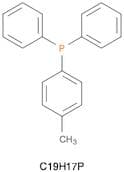
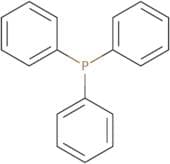
CAS :Formule :C18H15PDegré de pureté :%Couleur et forme :SolidMasse moléculaire :262.2855Triphenylphosphine, polymer bound
CAS :Triphenylphosphine, polymer boundDegré de pureté :100-200 mesh, extent of labeling: ~1.6 mmol/g loadCouleur et forme :SolidMasse moléculaire :261.28g/molTriphenylphosphine, polymer bound, 1.4-2.0 mmol/g on polystyrene, 200-400 mesh, 1% cross linked with DVB
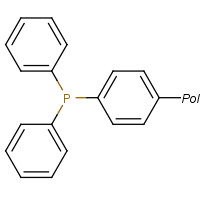
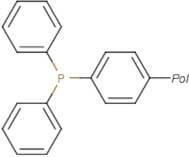
CAS :Triphenylphosphine, polymer bound, 1.4-2.0 mmol/g on polystyrene, 200-400 mesh, 1% cross linked with DVBFormule :C18H14PPolDegré de pureté :≥95%Couleur et forme : cream to off white resin beads solidMasse moléculaire :261.27752g/molTriphenylphosphine, polymer supported 1.4-2.0mmol/g on polystyrene 200-400 mesh 1% DVB loading
CAS :Formule :C18H14PCouleur et forme :SolidMasse moléculaire :261.284Triphenylphosphine, polymer bound, 1.4-2.0 mmol/g on polystyrene, 200-400 mesh, 2% cross linked with DVB
CAS :Triphenylphosphine, polymer bound, 1.4-2.0 mmol/g on polystyrene, 200-400 mesh, 2% cross linked with DVBDegré de pureté :≥95%Triphenylphosphine, polymer supported 1.4-2.0mmol/g on polystyrene 200-400 mesh 2% DVB loading
CAS :Produit contrôléFormule :(C20H17P·C10H10·C8H8)xCouleur et forme :MixtureMasse moléculaire :262.29Triphenylphosphine resin
CAS :Triphenylphosphine resin is a solid catalyst that is used in organic synthesis. It is obtained by the reaction of triphenylphosphine and trifluoroacetic acid with fatty acids. Triphenylphosphine resin can be used to synthesize compounds, such as pharmaceuticals, plastics, and pesticides. This catalyst has been shown to produce light emission when it reacts with diphenyl sulfoxide in an acidic environment. The light emission indicates that the reaction proceeds via a radical chain mechanism. Triphenylphosphine resin also has transport properties and can be used to study reactions involving mitochondrial membranes with potential. In addition, this catalyst has been shown to react with hydrochloric acid and sodium carbonate to generate nuclear DNA without harming mitochondrial DNA or proteins. The structural analysis of this compound shows that it consists of biphenyl-type molecules connected through phosphorous atoms.br>br>NMR spectroscopic data for triphenylphosphine resinFormule :(C20H17P)m•(C10H10)n•(C8H8)xDegré de pureté :Min. 95%Couleur et forme :Powder