CAS 39450-01-6
:Protéinase K
Description :
Protéinase K est une enzyme protéase sérine largement utilisée en biologie moléculaire pour sa capacité à digérer les protéines et à faciliter l'extraction des acides nucléiques. Elle est dérivée du champignon Tritirachium album et se caractérise par sa large spécificité de substrat, lui permettant de cliver les liaisons peptidiques adjacentes à des acides aminés aliphatiques et aromatiques. Protéinase K est particulièrement efficace pour fonctionner dans une large gamme de niveaux de pH et de températures, ce qui en fait un outil polyvalent dans diverses applications de laboratoire. Elle est couramment utilisée dans les protocoles de purification de l'ADN et de l'ARN, car elle peut dégrader efficacement les protéines qui pourraient interférer avec l'extraction des acides nucléiques. De plus, Protéinase K est résistante à l'inhibition par des détergents et peut rester active en présence d'agents chaotropiques, ce qui améliore encore son utilité dans l'isolement des acides nucléiques. L'enzyme est généralement fournie sous forme de poudre lyophilisée et est reconstituée dans des solutions tampons pour une utilisation dans les expériences. Sa stabilité et son efficacité en font un élément essentiel dans la recherche et le diagnostic en biologie moléculaire.
Formule :Unspecified
Synonymes :- E.C. 3.4.21.64
- Endopeptidase K
- Prok
- Protease K
- Proteinase K
- Proteinase, Tritirachium album-Serin→
- Tritirachium album proteinase K
- proteinasa, serina de Tritirachium album
- proteinase, serine, Tritirachium album
- proteinase K crude
- PROTEINASE K, IMMOBILIZED
- Proteinase, Tritirachium album serine
- IUB: 3.4.21.64
- PROTEINASE K, LYOPHILIZED
- EC 3.4.21.64
- Proteinase K from Tritirachium album limber, Recombinant
- EC 3.4.21.14
- proteinase K from tritrachium album
- proteinase K aseptically filled
- Recombinant Proteinase K
- IUB: 3.4.21.14
- proteinase K solution in 40%*(V/V) glycerol
- 3.4.21.14
- Voir plus de synonymes
Trier par
Degré de pureté (%)
0
100
|
0
|
50
|
90
|
95
|
100
15 produits concernés.
Proteinase K, from Tritirachium album
CAS :Proteinase K, from Tritirachium albumDegré de pureté :The product has been tested (Typical Value in Batch COA)Couleur et forme : white crystalline solidProteinase K
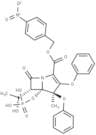
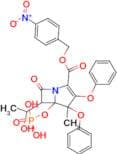
CAS :Proteinase K (Protease K) is a non-specific serine protease. Proteinase K hydrolyzes peptide bonds and is used for protein digestion. Cost-effective and quality-assured.Formule :C29H27N2O12PDegré de pureté :98%Couleur et forme :SolidMasse moléculaire :626.511Proteinase K
CAS :Degré de pureté :≥ 30units/mg (pH 7.5, 37°C, dried basis)Couleur et forme :White or almost white lyophilized powderMasse moléculaire :-Proteinase K, high-quality, liquid, recombinant
CAS :Proteinase K, high-quality, liquid, recombinant is an advanced enzymatic product, which is a serine protease derived through recombinant DNA technology. It cleaves peptide bonds to facilitate protein digestion with broad substrate specificity. Its robust proteolytic activity is optimal under various conditions, including a wide range of temperatures and pH levels, making it incredibly versatile.Proteinase K, freeze-dried, recombinant
CAS :Proteinase K, freeze-dried, recombinant is an enzyme preparation used extensively in molecular biology and biochemistry. It is derived through recombinant DNA technology, producing a highly pure enzyme that is expressed in a non-pathogenic host. Its mode of action involves the non-specific cleavage of peptide bonds in proteins, making it a critical tool for protein digestion.Proteinase K - from Candida albicans
CAS :Proteinase K is used for the general digestion of proteins and removal of protein contamination in nucleic acids. Addition of Protease K also stabilizes nucleic acids by degrading any nucleases present. Proteinase K is active in wide range of pH range, in the presence of SDS, urea and Guanidinium chloride at low to moderate concentrations. Proteinase K is also known under names of protease K and endopeptidase K.Degré de pureté :Min. 95%Proteinase K Solution
CAS :20mg/ml aq. solution. Proteinase K is used for the general digestion of proteins and removal of protein contamination in nucleic acids. Addition of Protease K also stabilizes nucleic acids but degrading any nucleases present. Proteinase K is active in wide range of pH range, in the presence of SDS, urea and Guanidinium chloride at low to moderate concentrations. Proteinase K is also known under names of protease K and endopeptidase K.
Couleur et forme :Clear LiquidProteinase K ex. PichiaPastoris (Type E - Recombinant) for molecular biology & PCR, 40U/mg protein
CAS :Degré de pureté :70%Couleur et forme :White, Crystalline powderProteinase K ex. PichiaPastoris (Type D - Recombinant) for molecular biology & PCR, 30U/mg protein
CAS :Degré de pureté :70%Couleur et forme :White, Crystalline powderProteinase K ex. Tritirachium Album (Type A) for molecular biology, 30U/mg protein
CAS :Degré de pureté :70%Couleur et forme :White, Crystalline powderProteinase K - from Tritirachium album
CAS :Proteinase K is used for the general digestion of proteins and removal of protein contamination in nucleic acids. Addition of Protease K also stabilizes nucleic acids by degrading any nucleases present. Proteinase K is active in wide range of pH range, in the presence of SDS, urea and Guanidinium chloride at low to moderate concentrations. Proteinase K is also known under names of protease K and endopeptidase K.Proteinase K, high-quality, freeze-dried, recombinant
CAS :A proteolytic enzyme; degrades protein contaminants in nucleic acid preparations