CAS 39642-87-0
:Trier par
Degré de pureté (%)
0
100
|
0
|
50
|
90
|
95
|
100
7 produits concernés.
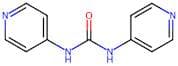
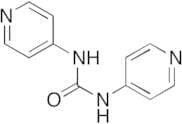
Dalfampridine Related Compound C (1,3-Di(pyridin-4-yl)urea)
CAS :Compounds containing an unfused pyridine ring in the structure, nesoiFormule :C11H10N4OCouleur et forme :White SolidMasse moléculaire :214.08546N,N’-Bis(4-pyridyl)urea
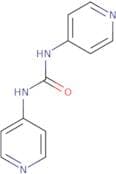
CAS :Formule :C11H10N4ODegré de pureté :97%Couleur et forme :SolidMasse moléculaire :214.22331,3-Di(pyridin-4-yl)urea
CAS :1,3-Di(pyridin-4-yl)ureaDegré de pureté :97%Masse moléculaire :214.23g/mol1,3-Di(pyridin-4-yl)-Urea
CAS :Formule :C11H10N4OCouleur et forme :White To Off-White SolidMasse moléculaire :214.23N,N'-Bis(4-pyridyl)urea
CAS :Produit contrôléFormule :C11H10N4OCouleur et forme :NeatMasse moléculaire :214.22N,N-Bis(4-pyridyl)urea
CAS :N,N-Bis(4-pyridyl)urea is a potent inhibitor of protein kinase C, an enzyme involved in the regulation of cell growth and division. It has been shown to inhibit the growth of cancer cells in vitro and in vivo, making it a promising candidate for anticancer therapy. N,N-Bis(4-pyridyl)urea has also been found to inhibit human neutrophil elastase, an enzyme involved in the breakdown of connective tissue. This suggests that it may have potential as an anti-inflammatory agent. Additionally, N,N-Bis(4-pyridyl)urea has been shown to induce apoptosis (programmed cell death) in cancer cells, further highlighting its potential as a therapeutic agent against tumors. Overall, this compound represents a promising analog for the development of novel cancer treatments.Formule :C11H10N4ODegré de pureté :Min. 95%Masse moléculaire :214.22 g/mol