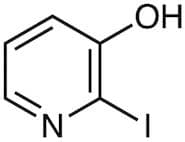
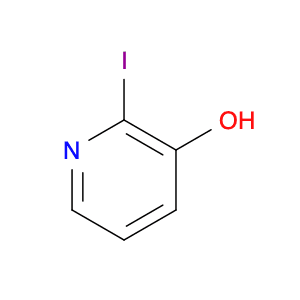
CAS 40263-57-8
:2-Iodo-3-pyridinol
- 2-Hydroxy-3-Iodopyridine
- 2-Iodo-3-hydroxypyridine
- 2-Iodopyridin-3-Ol
- 3-Hydroxy-2-iodopyridine
- 3-Pyridinol, 2-iodo-
- NSC 103161
- Pyridine, 2-iodo-3-hydroxy-
- 2-Iodo-3-pyridinol
3-Hydroxy-2-iodopyridine
CAS :Formule :C5H4INODegré de pureté :>98.0%(GC)Couleur et forme :White to Light yellow powder to crystalMasse moléculaire :221.003-Hydroxy-2-iodopyridine
CAS :Formule :C5H4INODegré de pureté :97%Couleur et forme :SolidMasse moléculaire :220.99583-Hydroxy-2-iodopyridine
CAS :3-Hydroxy-2-iodopyridineFormule :C5H4INODegré de pureté :95%Couleur et forme : light brown to brown solidMasse moléculaire :221.00g/mol3-Hydroxy-2-iodopyridine
CAS :Formule :C5H4INODegré de pureté :97%Couleur et forme :Solid, Yellow powderMasse moléculaire :220.9972-lodo-3-hydroxypyridine
CAS :2-lodo-3-hydroxypyridine is a chemical compound that is used as a solvent and as a reagent in organic synthesis. 2-Lodo-3-hydroxypyridine has shown potent inhibition against influenza A and B viruses, which are the causative agents of the flu. It also has prognostic value in patients with chronic hepatitis B virus infection. The structure of 2-lodo-3-hydroxypyridine is similar to that of the nucleoside ribonucleotide, which can be synthesized by reacting with compounds such as magnesium ion, phenolate ion, and hydroxylamine. This reaction is known to occur through an electrophilic substitution mechanism, in which the nucleophile attacks the electrophilic carbocation intermediate to form a covalent bond. The optical properties of 2-lodo-3-hydroxypyridine were found by this research group to be sensitive to its environment; they found that when
Formule :C5H4INODegré de pureté :Min. 95%Masse moléculaire :221 g/mol