CAS 40762-22-9
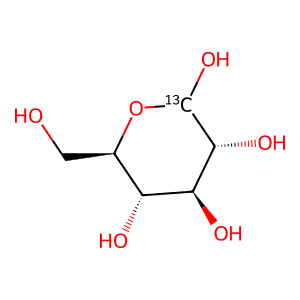
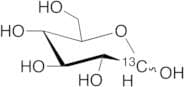
:D-Glucose-1-13C
D-Glucose-1-13C
CAS :Formule :C6H12O6Degré de pureté :%Couleur et forme :SolidMasse moléculaire :181.1485D-Glucose-1-13C min. Chem. 99% min. Isot. 99%
CAS :D-Glucose-1-13C min. Chem. 99% min. Isot. 99%Degré de pureté :>99%Couleur et forme :White CrystalsMasse moléculaire :181.15g/molD-Glucose 1-13C
CAS :D-Glucose 1-13C is a kinetic isotope that is used to study the metabolic pathways of glucose. The presence of 13C in the molecule allows for the identification of metabolites and provides an accurate measurement of metabolic rate. This isotope has been used to study lipid metabolism in exudates from animals, as well as fatty acid synthesis in microsomes from rats. D-Glucose 1-13C has also been used in studies on yeast, specifically Saccharomyces cerevisiae strain and Saccharomyces cerevisiae strain.Formule :CC5H12O6Degré de pureté :Min. 95%Couleur et forme :White PowderMasse moléculaire :181.15 g/molD-Glucose-1-13C
CAS :Produit contrôléApplications Labelled D-Glucose is a simple sugar that is present in plants. A monosaccharide that may exist in open chain or cyclic conformation if in solution. It plays a vital role in photosynthesis and fuels the energy required for cellular respiration. D-Glucose is used in various metabolic processes including enzymic synthesis of cyclohexyl-α and β-D-glucosides. Can also be used as a diagnostic tool in detection of type 2 diabetes mellitus and potentially Huntington's disease through analysis of blood-glucose in type 1 diabetes mellitus.
References Wang, R., et al.: J. Mol. Catal. B. Enz., 56, 131 (2009); Springhorn, C. et al.: J. Clin. Endocrinol. Metab., 97, 4640 (2012); Hashimoto, K. et al.: J. Clin. Endocrinol. Metab., 97, 3016 (2012); Avelange, M. et al.: Plant. Phys., 94, 1157 (1990); Cramer, C. et al.: J. Chem. Soc., 115, 5745 (1993);Formule :CC5H12O6Couleur et forme :NeatMasse moléculaire :181.15