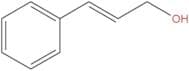
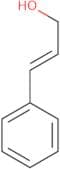
CAS 4407-36-7
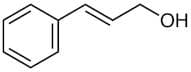
:alcool trans-cinnamylique
- trans-Cinnamyl alcohol
- 2-Propen-1-ol, 3-phenyl-, (E)-
- (2E)-3-Phenyl-2-propen-1-ol
- 2-Propen-1-ol, 3-phenyl-, (2E)-
- Cinnamyl alcohol, (E)-
(E)-Cinnamyl Alcohol
CAS :Formule :C9H10ODegré de pureté :>97.0%(GC)Couleur et forme :White or Colorless to Light yellow powder to lump to clear liquidMasse moléculaire :134.183-Phenyl-2-propen-1-ol
CAS :Formule :C9H10ODegré de pureté :97%Couleur et forme :SolidMasse moléculaire :134.1751(E)-3-Phenylprop-2-En-1-Ol
CAS :(E)-3-Phenylprop-2-En-1-OlDegré de pureté :99%Masse moléculaire :134.18g/mol3-Phenyl-2-propen-1-ol
CAS :The compounds 3-phenyl-2-propen-1-ol , 2-methyl-3-butyn-2-ol, 3,7-dimethylnonane, and 2-hydroxybenzoic acid occurred only during estrus which may be consideredFormule :C9H10OCouleur et forme :SolidMasse moléculaire :134.183-Phenyl-2-propen-1-ol
CAS :Formule :C9H10ODegré de pureté :95%~99%Couleur et forme :OilMasse moléculaire :134.1783-Phenyl-2-propen-1-ol
CAS :3-Phenyl-2-propen-1-ol is a cinnamyl compound that is found in plants, such as cinnamon and cassia. It has been shown to have an inhibitory effect on the enzyme activities of sorbitol dehydrogenase, which is involved in the synthesis of polysaccharides. 3-Phenyl-2-propen-1-ol also has a transcriptional regulatory effect on genes that encode enzymes involved in the synthesis of polymers. The reaction mechanism for this reaction has been proposed to be through an initial nucleophilic attack by the hydroxyl group on the electrophilic carbonyl carbon atom followed by protonation and elimination of water.
3-Phenyl-2-propen-1-ol has also been shown to be a signal peptide, which is used to identify proteins for transport within cells. This polymerase chain reaction (PCR) model system can be used to determineFormule :C9H10ODegré de pureté :Min. 95%Couleur et forme :PowderMasse moléculaire :134.18 g/mol