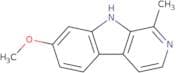
CAS 442-51-3
:Dérivé de l'harmine
Description :
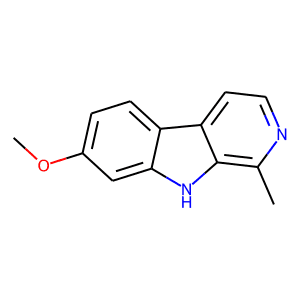
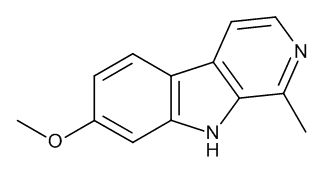
Dérivé de l'harmine, identifié par le numéro CAS 442-51-3, est un composé lié à l'harmine, qui est un alcaloïde bêta-carboline. Cette substance présente plusieurs caractéristiques notables, y compris son rôle en tant qu'inhibiteur réversible de la monoamine oxydase A (MAO-A), ce qui est significatif dans le contexte de la neuropharmacologie et des applications thérapeutiques potentielles. Les Dérivé de l'harmine sont souvent étudiés pour leurs propriétés psychoactives et leur utilisation potentielle dans le traitement de divers troubles de la santé mentale. Ils peuvent également présenter des activités antioxydantes et anti-inflammatoires, contribuant à leur intérêt en chimie médicinale. Structurellement, les Dérivé de l'harmine contiennent généralement un système d'anneaux fusionnés d'indole et de pyridine, qui est crucial pour leur activité biologique. De plus, ces composés peuvent interagir avec divers systèmes de neurotransmetteurs, influençant l'humeur et la cognition. L'étude des Dérivé de l'harmine continue d'évoluer, avec des recherches en cours explorant leur potentiel pharmacologique et leurs mécanismes d'action dans le système nerveux central.
Formule :C13H12N2O
InChI :InChI=1S/C13H12N2O/c1-8-13-11(5-6-14-8)10-4-3-9(16-2)7-12(10)15-13/h3-7,15H,1-2H3
Code InChI :InChIKey=BXNJHAXVSOCGBA-UHFFFAOYSA-N
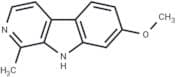
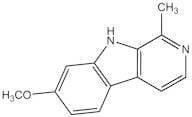
SMILES :CC1=C2C(C=3C(N2)=CC(OC)=CC3)=CC=N1
Synonymes :- 1-Methyl-7-methoxy-β-carboline
- 7-Methoxy-1-methyl-9H-beta-carbolin
- 7-Methoxy-1-methyl-9H-beta-carboline
- 7-Methoxy-1-methyl-9H-pyrido[3,4-b]indole
- 9H-Pyrido(3,4-b)indole, 7-methoxy-1-methyl-
- Banisterin
- Banisterine
- Banisterine Monohydrate
- Harmin
- Harmine
- Leucoharmine
- Telepathin
- Telepathine
- Yagein
- Yageine
- 4-b)indole,7-methoxy-1-methyl-9h-pyrido(
- TELEPATHINE MONOHYDRATE
- 1-Methyl-7-methoxy-beta-carboline
- Telepathien
- PYRIDO(3,4-B)INDOLE,7-METHOXY-1-METHYL-
- Harmine,98+%
- HARMINE FREE BASE
- Garmin
- HARMINE MONOHYDRATE
- HARMAN MONOHYDROCHLORIDE MONOHYDRATE
- Voir plus de synonymes
Trier par
Degré de pureté (%)
0
100
|
0
|
50
|
90
|
95
|
100
13 produits concernés.
Harmine
CAS :Formule :C13H12N2ODegré de pureté :>98.0%(T)Couleur et forme :White to Orange to Green powder to crystalMasse moléculaire :212.259H-Pyrido[3,4-b]indole, 7-methoxy-1-methyl-
CAS :Formule :C13H12N2ODegré de pureté :98%Couleur et forme :SolidMasse moléculaire :212.2472Harmine
CAS :Formule :C13H12N2ODegré de pureté :97.5 - 102.5 %Couleur et forme :White to off-white crystalline powderMasse moléculaire :212.25Harmine
CAS :Harmine (Telepathine) is an alkaloid isolated from seeds of Peganum harmala.Formule :C13H12N2ODegré de pureté :98.29% - 99.92%Couleur et forme :Off-White SolidMasse moléculaire :212.25Harmine
CAS :Natural alkaloidFormule :C13H12N2ODegré de pureté :≥ 98.0 % (HPLC)Couleur et forme :PowderMasse moléculaire :212.25Harmine
CAS :Applications Harmine is a natural β-carboline alkaloid and a CNS stimulant (1,2). Harmine has been shown to be a potent and selective inhibitor of dual specificity tyrosine phosphorylation regulated kinase 1A (DYRK1A) (3). DYRK1A is a potential therapeutic target for treating diabetes, Down Syndrome, and HIV (4).
References (1) DiStefano, S., et al.: J. Pharmacol. Exp. Ther., 174, 456 (1970)(2) Dos Santos, R. G. and Hallak, J. E. J Psychoactive Drugs. 5,1 (2016) (3) Atteya, R., et al.: Mech Ageing Dev. 6, S0047 (2016)(4) Bol, S. M., et al.: PLoS One. 6, e17190 (2011)Formule :C13H12N2OCouleur et forme :White To BrownMasse moléculaire :212.25Harmine
CAS :Produit contrôléHarmine is a molecule that interacts with DNA by binding to the minor groove, which is the non-helical area of DNA. Harmine has been shown to have cytotoxic properties in murine hepatoma cells, as well as anticancer activity in mouse tumor cells. Harmine also has antiviral and antimicrobial effects, and has been shown to inhibit the growth of human cancer cells. Harmine binds to Toll-like receptor 4 (TLR4), which is a pattern recognition receptor that plays an important role in innate immunity. Harmine inhibits TLR4 signaling, thereby inhibiting inflammatory responses such as acute toxicities. The molecular docking analysis of harmine shows that it has high affinity for polymerase chain reaction (PCR) enzymes and can be used for PCR inhibition studies. The analytical method for harmine was developed using a natural compound crystal structure as a model system.Formule :C13H12N2OMasse moléculaire :212.25 g/molHarmine
CAS :Formule :C13H12N2ODegré de pureté :99%Couleur et forme :Solid, Very pale yellow to pale yellow powderMasse moléculaire :212.252
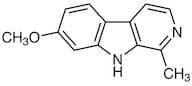



![9H-Pyrido[3,4-b]indole, 7-methoxy-1-methyl-](/_next/image/?url=https%3A%2Fstatic.cymitquimica.com%2Fproducts%2FIN%2Fthumb%2FDA00I8E6.jpg&w=3840&q=75)