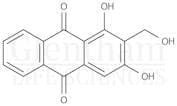
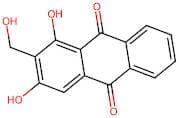
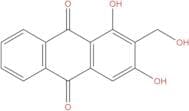
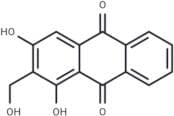
CAS 478-08-0
:Lucidine
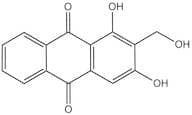
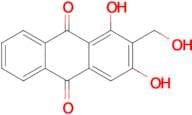
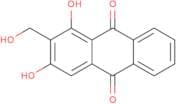
- 1,3-Dihydroxy-2-(hydroxymethyl)-9,10-anthracenedione
- 1,3-Dihydroxy-2-(hydroxymethyl)-9,10-anthraquinone
- 1,3-Dihydroxy-2-(hydroxymethyl)anthraquinone
- 9,10-Anthracenedione, 1,3-Dihydroxy-2-(Hydroxymethyl)-
- Anthraquinone, 1,3-dihydroxy-2-(hydroxymethyl)-
- Henine
- Lucidin
- Lucidin (quinone)
- NSC 30546
1,3-Dihydroxy-2-(Hydroxymethyl)Anthracene-9,10-Dione
CAS :1,3-Dihydroxy-2-(Hydroxymethyl)Anthracene-9,10-DioneDegré de pureté :98%Masse moléculaire :270.24g/molLucidin
CAS :1. Lucidin (NSC-30546) and its derivatives are genotoxic, it is mutagenic at the hypoxanthine-guanine phosphoribosyl transferase gene locus.Formule :C15H10O5Degré de pureté :98% - 98.05%Couleur et forme :SolidMasse moléculaire :270.24Ref: TM-TJS0405
1mg47,00€5mg96,00€1mL*10mM (DMSO)105,00€10mg156,00€25mg281,00€50mg424,00€100mg607,00€Lucidin
CAS :QuinoneFormule :C15H10O5Degré de pureté :≥ 90.0 % (HPLC)Couleur et forme :PowderMasse moléculaire :270.24Lucidin
CAS :Lucidin is a trifluoroacetic acid (TFA) derivative of anthraquinone glycosides that has been synthesized for its genotoxic activity. It has been shown to be an eye irritant, and is capable of inducing erythema and corneal damage in rabbits. Lucidin also causes a significant decrease in the survival of microalgae when exposed to it. This compound is analyzed by following the polymerase chain reaction (PCR) technique, which uses two primers complementary to the sequence of luciferase DNA: one with the 5' end at the beginning of the luciferase gene and one with the 3' end at the end of luciferase gene. The PCR product is then measured by spectrophotometry or fluorescence spectroscopy. Lucidin can be detected in biological samples such as tissue culture or blood serum by using high-performance liquid chromatography (HPLC) or gas chromatography-mass
Formule :C15H10O5Degré de pureté :Min. 95%Couleur et forme :PowderMasse moléculaire :270.24 g/mol