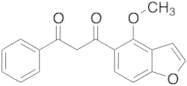
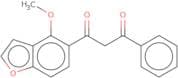
CAS 484-33-3
:Pongamol
Description :
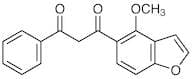
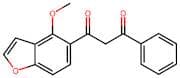
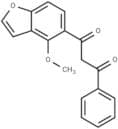
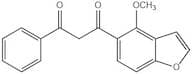
Pongamol, avec le numéro CAS 484-33-3, est un composé chimique naturellement présent, dérivé principalement des graines de l'arbre Pongamia pinnata, communément connu sous le nom d'arbre Pongam ou Karanja. Il est classé comme un flavonoïde, qui est un type de composé polyphénolique connu pour ses propriétés antioxydantes. Pongamol présente une gamme d'activités biologiques, y compris des effets anti-inflammatoires, antimicrobiens et des effets anticancéreux potentiels, ce qui le rend intéressant tant pour les applications pharmacologiques que nutraceutiques. Le composé est généralement caractérisé par sa structure phénolique, qui contribue à sa réactivité et à son interaction avec divers systèmes biologiques. De plus, Pongamol est soluble dans des solvants organiques et a une solubilité limitée dans l'eau, ce qui influence sa biodisponibilité et son application dans les formulations. La recherche sur Pongamol continue d'explorer ses avantages thérapeutiques potentiels et ses mécanismes d'action, en particulier dans le contexte de la médecine traditionnelle et de la pharmacologie moderne.
Formule :C18H14O4
InChI :InChI=1S/C18H14O4/c1-21-18-13(7-8-17-14(18)9-10-22-17)16(20)11-15(19)12-5-3-2-4-6-12/h2-10H,11H2,1H3
Code InChI :InChIKey=XTLSKKJNOIMMBK-UHFFFAOYSA-N
SMILES :O(C)C1=C2C(=CC=C1C(CC(=O)C3=CC=CC=C3)=O)OC=C2
Synonymes :- (2Z)-3-hydroxy-1-(4-methoxy-1-benzofuran-5-yl)-3-phenylprop-2-en-1-one
- 1,3-Propanedione, 1-(4-methoxy-5-benzofuranyl)-3-phenyl-
- 1-(1-Benzofuran-5-Yl)-3-Phenylpropane-1,3-Dione
- 1-(4-Methoxy-1-Benzofuran-5-Yl)-3-Phenylpropane-1,3-Dione
- 1-(4-Methoxy-5-benzofuranyl)-3-phenyl-1,3-propanedione
- Lanceolatin C
- Pongamol
Trier par
Degré de pureté (%)
0
100
|
0
|
50
|
90
|
95
|
100
6 produits concernés.
Pongamol
CAS :Formule :C18H14O4Degré de pureté :>98.0%(HPLC)Couleur et forme :White to Light yellow to Light orange powder to crystalineMasse moléculaire :294.31Pongamol
CAS :Pongamol, an identified lead molecule from the fruits of Pongamia pinnata, on glucose uptake and GLUT4 translocation in skeletal muscle cells.Formule :C18H14O4Degré de pureté :99.23%Couleur et forme :Solid PowderMasse moléculaire :294.3Pongamol
CAS :Oxygen-heterocyclic compoundFormule :C18H14O4Degré de pureté :≥ 90.0 % (HPLC)Masse moléculaire :294.3Pongamol
CAS :Produit contrôléApplications PONGAMOL (cas# 484-33-3) is a useful research chemical.
Not a dangerous good if item is equal to or less than 1g/ml and there is less than 100g/ml in the packageFormule :C18H14O4Couleur et forme :NeatMasse moléculaire :294.3Pongamol
CAS :Pongamol is a bioactive compound, which is a natural product extracted from the seeds of the Pongamia pinnata tree, a member of the Fabaceae family. Its mode of action involves diverse biochemical interactions, including modulation of enzymatic pathways and potential antioxidant activity, making it an intriguing subject in pharmacological studies. Pongamol has been investigated for a variety of applications, particularly in medicine and agriculture. It exhibits promising antifungal, antibacterial, and anti-inflammatory properties, which could be harnessed for developing novel therapeutic agents or agrochemical formulations. Current research is focusing on elucidating its molecular pathways and interactions with cellular targets, aiming to unlock its full potential across various scientific domains.Formule :C18H14O4Degré de pureté :Min. 95%Couleur et forme :White Slightly Yellow PowderMasse moléculaire :294.3 g/mol