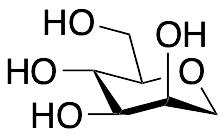
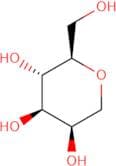
CAS 492-93-3
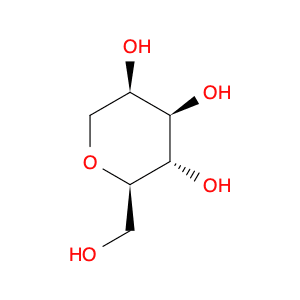
:1,5-Anhydro-D-mannitol
- 1,5-Anhydro-<span class="text-smallcaps">D</span>-mannitol
- 1,5-Anhydro-D-mannitol
- 1,5-Anhydro-mannitol
- 1,5-Anhydromannitol
- 2,6-Anhydro-<span class="text-smallcaps">D</span>-mannitol
- <span class="text-smallcaps">D</span>-Mannitol, 1,5-anhydro-
- D-Mannitol, 1,5-anhydro-
- Mannitol, 1,5-anhydro-, <span class="text-smallcaps">D</span>-
- Styracit
- Styracitol
- Mannitol, 1,5-anhydro-, D-
1,5-Anhydro-d-mannitol
CAS :Formule :C6H12O5Degré de pureté :95%Couleur et forme :SolidMasse moléculaire :164.15651,5-Anhydro-D-mannitol
CAS :1,5-Anhydro-D-mannitol, the inactive analog of 1,5-Anhydrosorbitol, serves as an experimental control, whereas 1,5-Anhydrosorbitol acts as a short-term glycemicFormule :C6H12O5Couleur et forme :SolidMasse moléculaire :164.161,5-Anhydro-D-mannitol
CAS :1,5-Anhydro-D-mannitolFormule :C6H12O5Degré de pureté :>98%Couleur et forme : white crystalsMasse moléculaire :164.16g/mol1,5-Anhydro-D-mannitol
CAS :Produit contrôléApplications A carbohydrate metabolism regulator that has been shown to inhibit gluconeogenesis from lactate plus pyruvate and from substrates that enter the gluconeogenic pathway as triose phosphate.
References Sinclair, H., et al.: Carbohydr. Res., 127, 146 (1984), Niwa, T., et al.: J. Chromatogr. Biomed. Appl., 613, 9 (1993), Harvey, D., et al.: J. Mass Spectrom., 32, 167 (1997),Formule :C6H12O5Couleur et forme :NeatMasse moléculaire :164.161,5-Anhydro-D-mannitol
CAS :1,5-Anhydro-D-mannitol is a monosaccharide that is used as an active ingredient in many pharmaceuticals. It is synthesized by the reaction of benzyl chloride with galactose. The compound has been shown to have radical scavenging activities and to inhibit the formation of carbonyl groups and hydroxyl radicals. 1,5-Anhydro-D-mannitol has also been shown to be effective against dendrobium candidum. This substance is tasteless and has a sweet taste at high concentrations.br>
1,5-Anhydro-D-mannitol is a molecule that consists of two hydroxyl groups and one deuterium atom. The molecule has a basic ph and can exist in six different forms depending on the orientation of the hydrogen atoms on the hydroxyl group. In addition, it contains one acidic ph because it contains a carboxylic acid group on one side.Formule :C6H12O5Degré de pureté :Min. 97 Area-%Couleur et forme :PowderMasse moléculaire :164.16 g/mol