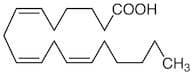
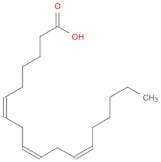
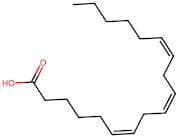
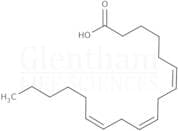
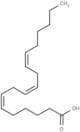
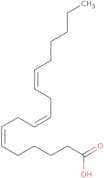
CAS 506-26-3
:Acide gamma-linolénique
- (6Z,9Z,12Z)-6,9,12-Octadecatrienoic acid
- (6Z,9Z,12Z)-octadeca-6,9,12-trienoic acid
- (Z,Z,Z)-6,9,12-Octatrienoic acid
- 6(Z),9(Z),12(Z)-Octadecatrienoic acid
- 6,9,12-Octadecatrienoic acid, (6Z,9Z,12Z)-
- 6,9,12-Octadecatrienoic acid, (Z,Z,Z)-
- 6,9,12-all-cis-Octadecatrienoic acid
- 6-cis,9-cis,12-cis-Octadecatrienoic acid
- Gamolenic Acid
- Linolenicacid
- Octadeca-6,9,12-trienoic acid cis,cis,cis
- all-cis-6,9,12-Octadecatrienoic acid
- cis,cis,cis-6,9,12-Octadecatrienoic acid
- cis-6,cis-9,cis-12-Octadecatrienoic acid
- Voir plus de synonymes
γ-Linolenic Acid
CAS :Formule :C18H30O2Degré de pureté :>98.0%(GC)(T)Couleur et forme :Colorless to Light orange to Yellow clear liquidMasse moléculaire :278.44(6Z,9Z,12Z)-6,9,12-Octadecatrienoic acid
CAS :Formule :C18H30O2Degré de pureté :98%Couleur et forme :LiquidMasse moléculaire :278.4296γ-Linolenic acid, 98%
CAS :Formule :C18H30O2Degré de pureté :(GC) ≥ 98.0%Couleur et forme :Clear, colourless liquidMasse moléculaire :278.436(Z),9(Z),12(Z)-Octadecatrienoic acid
CAS :Formule :C18H30O2Degré de pureté :>99%Couleur et forme :LiquidMasse moléculaire :278.43γ-Linolenic acid
CAS :gamma-Linolenic acid (gamolenic acid), is an unsaturated fatty acid synthesized from linoleic acid (LA) by the enzyme delta-6-desaturase.Formule :C18H30O2Degré de pureté :95% - 98.5%Couleur et forme :SolidMasse moléculaire :278.43gamma-Linolenic Acid
CAS :Produit contrôléStability Light Sensitive
Applications γ-Linolenic Acid is a fatty acid found mainly in vegetable oil. Studies suggest that γ-Linolenic Acid may have immune regulating and anti-inflammatory effects. γ-Linolenic Acid has also been used in the treatment of atopic eczeme although its efficacy is disputed.
References Ziboh, V. et al.: Fatty Acids Food Health Implic., 791 (2008); Kapoor, R. et al.: Curr. Phar, Biotechnol., 7, 531 (2006); Horrobin, D. et al.: Am. J. Nutrit., 71, 367S (2000);Formule :C18H30O2Couleur et forme :NeatMasse moléculaire :278.43(6Z,9Z,12Z)-Octadeca-6,9,12-trienoic acid
CAS :Formule :C18H30O2Degré de pureté :98%Couleur et forme :No data available.Masse moléculaire :278.436Gamma-Linolenic acid
CAS :Gamma-linolenic acid is a polyunsaturated fatty acid that is bound to phospholipids in cell membranes. Gamma-linolenic acid has been shown to have anticancer properties, which may be due to its ability to inhibit the proliferation of cancer cells. The compound also has anti-inflammatory and antioxidant properties. It has been shown to reduce inflammation by inhibiting the production of prostaglandin E2 and reactive oxygen species (ROS). Gamma-linolenic acid also reduces oxidative stress by preventing lipid peroxidation and increasing the levels of antioxidants such as vitamin E. This activity may be due to gamma-linolenic acid's ability to bind with proteins such as chemoattractant protein, which are involved in regulating inflammatory responses. Gamma-linolenic acid can also increase mitochondrial membrane potential and ATP production, which is necessary for energy metabolism within cells. In vivo studies have shown that gamma-linolenic acid can reduce disease activity in chronic dry eye
Formule :C18H30O2Degré de pureté :Min. 98%Couleur et forme :Clear LiquidMasse moléculaire :278.43 g/mol