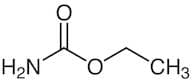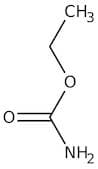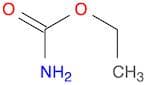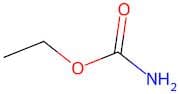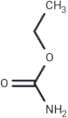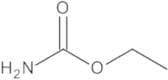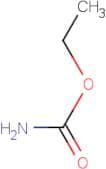
CAS 51-79-6
:Acide carbamique, ester éthylique
- Carbaminsaeure-Aethylester
- Ethyl aminoformate
- Ethyl carbamate
- Ethyl urethane
- Ethylurethane
- Leucethane
- Nsc 746
- O-Ethylurethane
- Pracarbamine
- Uretano
- Urethan
- Urethane
- Urethane (ethyl carbamate)
- Poly(carbonate urethane)
- Ethyluretan
- Aethylurethan
- Carbamicacidethylester
- Voir plus de synonymes
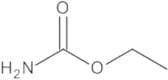
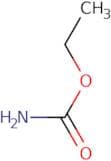
Ethyl Carbamate
CAS :Formule :C3H7NO2Degré de pureté :>98.0%(GC)(N)Couleur et forme :White to Almost white powder to crystalineMasse moléculaire :89.09Ethyl carbamate, 98%
CAS :Ethyl carbamate in its molten state is good solvent for various organic materials, preparation modification of amino resins, as solubilizer.This Thermo Scientific Chemicals brand product was originally part of the Alfa Aesar product portfolio. Some documentation and label information may refer to tFormule :C3H7NO2Degré de pureté :98%Couleur et forme :Crystalline powder, WhiteMasse moléculaire :89.09Ethyl carbamate
CAS :Formule :C3H7NO2Degré de pureté :98%Couleur et forme :SolidMasse moléculaire :89.0932Urethane
CAS :Urethane (Ethylurethane) was an antineoplastic agent .Now is used for other medicinal purposes.Formule :C3H7NO2Degré de pureté :99.01%Couleur et forme :SoildMasse moléculaire :89.09Urethane
CAS :Formule :C3H7NO2Degré de pureté :≥ 98.0%Couleur et forme :White to almost white crystalline powder or crystalsMasse moléculaire :89.09Ethyl carbamate
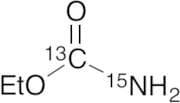
CAS :Ethyl carbamateFormule :C3H7NO2Degré de pureté :99%Couleur et forme : colourless/white crystalsMasse moléculaire :89.09g/molUrethane-13C,15N
CAS :Produit contrôléApplications Urethane-13C, 15N is an intermediate for the synthesis of Diclazuril-13C3,15N2 (D436202), which is the labelled analogue of Diclazuril (D436200). Diclazuril is a nucleotide analogue with broad-spectrum anticoccidial activity and a coccidiostat.
References Maes, L., et al.: J. Parasitol., 74, 931 (1988)Formule :CC2H715NO2Couleur et forme :NeatMasse moléculaire :91.079Urethane
CAS :Produit contrôléApplications Urethane is a naturally occurring contaminant in fermented foods, particularly wine, stone-fruit brandies, and bread. This substance is reasonably anticipated to be a human carcinogen (1) despite being an additive in some alcoholic beverages and foods (2). It binds covalently with DNA however due to its low unavoidable daily intake, it is considered of negligible concern (3).Drinking water contaminant candidate list 3 (CCL 3) compound as per United States Environmental Protection Agency (EPA). Environmental contaminants; Food contaminants.
References 1. Mirvish, S. et al.: Adv. Cancer Res. 1968;11:1-42.2. Battaglia R. et al.: Food Addit Contam. 1990 Jul-Aug;7(4):477-96. 3. Zimmerli B. et al.: Mutat Res. 1991 Mar-Apr;259(3-4):325-50.Formule :C3H7NO2Couleur et forme :White To Off-WhiteMasse moléculaire :89.09Urethane
CAS :Produit contrôléUrethane is a carbamate that inhibits the polymerase chain reaction. It has been used as a model system for carcinogenesis because it induces squamous cell carcinomas in rats and mice. Urethane is metabolized by hydrolysis to urethane, which is an inhibitor of phosphodiesterases. This inhibition can lead to decreased levels of dinucleotide phosphate, which may be responsible for the effects on energy metabolism seen in animals given urethane. The mechanism of action of urethane on growth factor-β1 is unknown, but it causes toxic effects on polymorphonuclear leucocytes and other cells in vitro. Urethane also has been shown to inhibit the activity of enzymes involved in DNA synthesis and protein synthesis, leading to cytotoxicity.
Formule :C3H7NO2Degré de pureté :Min. 95%Masse moléculaire :89.09 g/mol