CAS 512-85-6
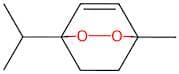
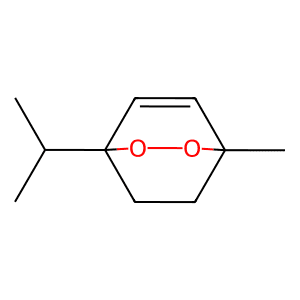
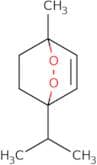
:Ascaridole
- 1,4-Epidioxy-2-p-menthene
- 1,4-Epidioxy-p-menth-2-ene
- 1,4-Peroxido-p-menthene-2
- 1,4-Peroxy-p-menth-2-ene
- 1-Methyl-4-(1-methylethyl)-2,3-dioxabicyclo(2.2.2)oct-5-ene
- 1-Methyl-4-(Propan-2-Yl)-2,3-Dioxabicyclo[2.2.2]Oct-5-Ene
- 2,3-Dioxabicyclo(2.2.2)oct-5-ene, 1-isopropyl-4-methyl-
- 2,3-Dioxabicyclo(2.2.2)oct-5-ene, 1-methyl-4-(1-methylethyl)-
- 2,3-Dioxabicyclo(2.2.2)oct-5-ene, 1-methyl-4-(1-methylethyl)- (9CI)
- Ai3-11049
- Ascaricum
- Ascaridol
- Ascaridole (organic peroxide)
- Ascaridole (organic peroxide) [Forbidden]
- Ascarisin
- Askaridol
- Boldo ascaridole
- NSC 406924
- Nsc 406266
- p-Menth-2-ene, 1,4-epidioxy-
- Voir plus de synonymes
Ascaridole
CAS :Ascaridole (NSC-406266) acts as an anthelmintic compound that repels parasitic helminths (worms) in humans and plants and has weak antimalarial activity.Formule :C10H16O2Degré de pureté :99.82% - 99.93%Couleur et forme :SolidMasse moléculaire :168.23Ascaridole
CAS :Ascaridole is a bicyclic organic compound that has been shown to inhibit ATP-binding cassette transporter proteins. It also inhibits the mitochondrial membrane potential, which plays an important role in cell function and survival. Ascaridole has been found to interact with sephadex g-100, which is a nonionic polymeric material used for chromatography. Ascaridole is a metabolite of anhydrous sodium sulfate that can be quantified by high performance liquid chromatography (HPLC). This compound has been shown to have minimal toxicity and inhibitory properties against Leishmania parasites. Ascaridole has been found to inhibit the growth of K562 cells in culture and possesses biological properties. It also interacts with the mitochondria and binds to DNA, affecting its structure and function. There are many bioactive phytochemicals that contain ascaridole, such as copaiba oil, myrrh gum resin, orris root oil, licorice root
Formule :C10H16O2Degré de pureté :Min. 95%Masse moléculaire :168.23 g/mol