CAS 520-26-3
:Hespéridine
Description :
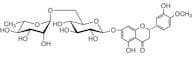
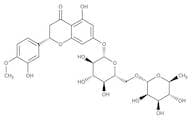
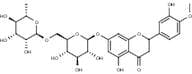
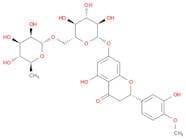
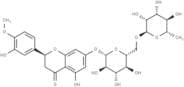
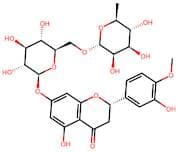
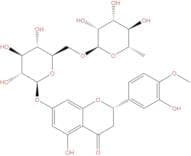
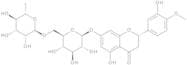
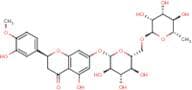
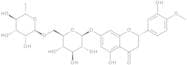
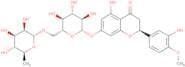
Hespéridine est un glycoside flavonoïde principalement trouvé dans les agrumes, en particulier dans les écorces d'oranges et de citrons. Il est connu pour ses propriétés antioxydantes et ses bénéfices potentiels pour la santé, y compris des effets anti-inflammatoires et protecteurs vasculaires. La structure chimique de Hespéridine consiste en un squelette de flavanone, spécifiquement l'hespérétine, lié à une portion de sucre rutinose. Ce composé est souvent étudié pour son rôle dans la promotion de la santé cardiovasculaire et l'amélioration de la circulation. Hespéridine est également reconnu pour sa capacité à améliorer l'absorption d'autres nutriments et peut contribuer aux bénéfices globaux pour la santé associés à la consommation d'agrumes. En termes de solubilité, Hespéridine est généralement soluble dans l'eau et l'alcool, ce qui le rend adapté à diverses formulations dans les compléments alimentaires et les aliments fonctionnels. Son numéro CAS, 520-26-3, est un identifiant unique qui facilite l'identification et l'étude de ce composé dans la littérature scientifique et les contextes réglementaires. Dans l'ensemble, Hespéridine est un composé bioactif significatif avec diverses applications en santé et nutrition.
Formule :C28H34O15
InChI :InChI=1S/C28H34O15/c1-10-21(32)23(34)25(36)27(40-10)39-9-19-22(33)24(35)26(37)28(43-19)41-12-6-14(30)20-15(31)8-17(42-18(20)7-12)11-3-4-16(38-2)13(29)5-11/h3-7,10,17,19,21-30,32-37H,8-9H2,1-2H3/t10-,17-,19+,21-,22+,23+,24-,25+,26+,27+,28+/m0/s1
Code InChI :InChIKey=QUQPHWDTPGMPEX-QJBIFVCTSA-N
SMILES :O=C1C=2C(O[C@@H](C1)C3=CC(O)=C(OC)C=C3)=CC(O[C@@H]4O[C@H](CO[C@H]5[C@H](O)[C@H](O)[C@@H](O)[C@H](C)O5)[C@@H](O)[C@H](O)[C@H]4O)=CC2O
Synonymes :- (2S)-5-hydroxy-2-(3-hydroxy-4-methoxyphenyl)-4-oxo-3,4-dihydro-2H-chromen-7-yl 6-O-(6-deoxy-alpha-L-erythro-hexopyranosyl)-beta-D-threo-hexopyranoside
- (2S)-5-hydroxy-2-(3-hydroxy-4-methoxyphenyl)-4-oxo-3,4-dihydro-2H-chromen-7-yl 6-O-(6-deoxy-alpha-L-mannopyranosyl)-beta-D-glucopyranoside
- (2S)-5-hydroxy-2-(3-hydroxy-4-methoxyphenyl)-4-oxo-3,4-dihydro-2H-chromen-7-yl 6-O-(6-deoxy-beta-L-mannopyranosyl)-beta-D-glucopyranoside
- (2S)-7-[[6-O-(6-Deoxy-α-<span class="text-smallcaps">L</smallcap>-mannopyranosyl)-β-<smallcap>D</span>-glucopyranosyl]oxy]-2,3-dihydro-5-hydroxy-2-(3-hydroxy-4-methoxyphenyl)-4H-1-benzopyran-4-one
- (2S)-Hesperidin
- (S)-7-[[6-O-(6-Deoxy-alpha-L-mannopyranosyl)-beta-D-glucopyranosyl]oxy]-2,3-dihydro-5-hydroxy-2-(3-hydroxy-4-methoxyphenyl)-4H-1-benzopyran-4-one
- 4H-1-Benzopyran-4-one, 7-[[6-O-(6-deoxy-α-<span class="text-smallcaps">L</smallcap>-mannopyranosyl)-β-<smallcap>D</span>-glucopyranosyl]oxy]-2,3-dihydro-5-hydroxy-2-(3-hydroxy-4-methoxyphenyl)-, (2S)-
- 4H-1-Benzopyran-4-one, 7-[[6-O-(6-deoxy-α-<span class="text-smallcaps">L</smallcap>-mannopyranosyl)-β-<smallcap>D</span>-glucopyranosyl]oxy]-2,3-dihydro-5-hydroxy-2-(3-hydroxy-4-methoxyphenyl)-, (S)-
- 4H-1-Benzopyran-4-one, 7-[[6-O-(6-deoxy-α-L-mannopyranosyl)-β-D-glucopyranosyl]oxy]-2,3-dihydro-5-hydroxy-2-(3-hydroxy-4-methoxyphenyl)-, (2S)-
- 4H-1-Benzopyran-4-one, 7-[[6-O-(6-deoxy-α-L-mannopyranosyl)-β-D-glucopyranosyl]oxy]-2,3-dihydro-5-hydroxy-2-(3-hydroxy-4-methoxyphenyl)-, (S)-
- 5-Hydroxy-2-(3-Hydroxy-4-Methoxy-Phenyl)-7-[3,4,5-Trihydroxy-6-[(3,4,5 -Trihydroxy-6-Methyl-Oxan-2-Yl)Oxymethyl]Oxan-2-Yl]Oxy-Chroman-4-One
- 5-hydroxy-2-(3-hydroxy-4-methoxyphenyl)-4-oxo-3,4-dihydro-2H-chromen-7-yl 6-O-(6-deoxyhexopyranosyl)hexopyranoside
- 7-[[6-O-(6-deoxy-.alpha.-L-mannopyranosyl)-.be ta.-D-glucopyranosyl ]oxy]-2,3-dihydro-5-hydroxy-2-(3-hydroxy-4-methox yphenyl)-, (S)-, 4H-1-Benzopyran-4-one, 7-[[6-O- (6-deoxy-.alpha.-L-mannopyranosyl-.bet a.-D-glucopyranosyl] oxy]-2,3-dihydro-5-hydr
- 7-[[6-O-(6-deoxy-α-L-mannopyranosyl)-β-D-glucopyranosyl]oxy]-2,3-dihydro-5-hydroxy-2-(3-hydroxy-4-methoxyphenyl)-4H-1-benzopyran-4-one
- Atripliside B
- Cirantin
- Flavanone, 3',5,7-trihydroxy-4'-methoxy-, 7-(6-O-α-L-rhamnosyl-D-glucoside)
- Flavanone, 3′,5,7-trihydroxy-4′-methoxy-, 7-(6-O-α-<span class="text-smallcaps">L</smallcap>-rhamnosyl-<smallcap>D</span>-glucoside)
- Glucopyranoside
- Hesperetin 7-O-rutinoside
- Hesperetin 7-[6-O- (6-deoxy-.alpha.-L-mannopyranosyl)]-.beta.-D-gluco pyranosid e)
- Hesperetin 7-rhamnoglucoside
- Hesperetin 7-rutinoside
- Hesperidin
- Hesperidina
- Hesperidine
- Hesperidoside
- Hesperitin 7-O-rutinoside
- Hesperitin-7-rhamnoglucoside
- Nsc 44184
- Nsc44184
- S)-(-)-Hesperidine
- Usaf cf-3
- Vitamin P
- hesperetin-7[6-O-(6-deoxy-.alpha.-L-mannopyranosyl)]-beta-D-
- (2S)-7-[[6-O-(6-Deoxy-α-L-mannopyranosyl)-β-D-glucopyranosyl]oxy]-2,3-dihydro-5-hydroxy-2-(3-hydroxy-4-methoxyphenyl)-4H-1-benzopyran-4-one
- Voir plus de synonymes
Trier par
Degré de pureté (%)
0
100
|
0
|
50
|
90
|
95
|
100
Hesperidin
CAS :Formule :C28H34O15Degré de pureté :>90.0%(T)(HPLC)Couleur et forme :White to Light yellow powder to crystalMasse moléculaire :610.57Hesperidin, 95%
CAS :Acts as an antioxidantFormule :C28H34O15Degré de pureté :95%Couleur et forme :White to pale yellow, PowderMasse moléculaire :610.57Hesperidin
CAS :Hesperidin analytical standard provided with w/w absolute assay, to be used for quantitative titration.Formule :C28H34O15Degré de pureté :(HPLC) ≥98%Couleur et forme :PowderMasse moléculaire :610.57Hesperidin
CAS :Other glycosides, natural or reproduced by synthesis, and their salts, ethers, esters and other derivativesFormule :C28H34O15Couleur et forme :Beige PowderMasse moléculaire :610.18977(2S)-5-hydroxy-2-(3-hydroxy-4-methoxyphenyl)-7-{[(2S,3R,4S,5S,6R)-3,4,5-trihydroxy-6-({[(2R,3R,4R,5R,6S)-3,4,5-trihydroxy-6-methyloxan-2-yl]oxy}methyl)oxan-2-yl]oxy}-3,4-dihydro-2H-1-benzopyran-4-one
CAS :Formule :C28H34O15Degré de pureté :97%Couleur et forme :SolidMasse moléculaire :610.5606Hesperidin
CAS :Hesperidin (Cirantin), a citrus-fruit flavanone glycoside, boasts antioxidant, anti-inflammatory, anti-carcinogenic, and cardiovascular benefits.Formule :C28H34O15Degré de pureté :97.74% - 97.75%Couleur et forme :Fine Brownish Powder Solid PowderMasse moléculaire :610.56Hesperidin (Diosmin EP Impurity B)
CAS :Formule :C28H34O15Couleur et forme :White To Off-White SolidMasse moléculaire :610.57Hesperidin
CAS :Formule :C28H34O15Degré de pureté :≥ 90.0%Couleur et forme :Off-white to yellow or brown powderMasse moléculaire :610.56Hesperidin
CAS :Hesperidin, a bioflavonoid, is an abundant and inexpensive by-product of Citrus cultivation, has antioxidant, anti-inflammatory, hypolipidemic, vasoprotective and anticarcinogenic and cholesterol lowering actions; can improves the health of capillaries by reducing the capillary permeability; can inhibit following enzymes: phospholipase A2, lipoxygenase, HMG-CoA reductase and cyclo-oxygenase.Formule :C28H34O15Degré de pureté :95%~99%Couleur et forme :PowderMasse moléculaire :610.565Diosmin EP Impurity B
CAS :Produit contrôléFormule :C28H34O15Couleur et forme :NeatMasse moléculaire :610.56Hesperidin
CAS :Natural glycosideFormule :C28H34O15Degré de pureté :≥ 90.0 % (HPLC)Couleur et forme :PowderMasse moléculaire :610.57Hesperidine
CAS :Produit contrôléImpurity Diosmin EP Impurity B
Applications Hesperidine (Diosmin EP Impurity B) is a flavanone found in citrus fruits, also regarded as Vitamin P.
References Ananth, V., et al.: J. Pharm. Res., 2, 1739 (2009), Cejudo B., et al.: J. Agric. Food Chem., 58, 11814 (2010),Formule :C28H34O15Couleur et forme :Light YellowMasse moléculaire :610.56S-Hesperidin
CAS :Please enquire for more information about S-Hesperidin including the price, delivery time and more detailed product information at the technical inquiry form on this pageFormule :C28H34O15Masse moléculaire :610.56 g/molHesperidin (natural)
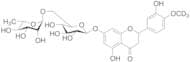
CAS :Hesperidin is a bioflavonoid compound, which is naturally sourced from citrus fruits, primarily found in the peels of oranges and lemons. Its mode of action involves acting as a potent antioxidant by scavenging free radicals and reducing oxidative stress. Hesperidin also exhibits anti-inflammatory effects by modulating various signaling pathways and inhibiting the release of pro-inflammatory cytokines.In scientific applications, hesperidin is extensively studied for its potential therapeutic benefits. Its antioxidant properties make it a candidate for mitigating oxidative damage in various tissues, while its anti-inflammatory effects are explored in the context of chronic inflammatory conditions. Research has shown potential cardiovascular benefits, including the improvement of endothelial function and lipid profiles. Additionally, hesperidin is investigated for its neuroprotective effects and potential in managing metabolic disorders. These diverse applications highlight the significance of hesperidin in pharmacological research, aiming to leverage its natural properties for health benefits.Formule :C28H34O15Degré de pureté :Min. 90 Area-%Couleur et forme :Off-White PowderMasse moléculaire :610.56 g/molrac Hesperidine-d3
CAS :Produit contrôléFormule :C28D3H31O15Couleur et forme :NeatMasse moléculaire :613.579