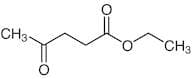
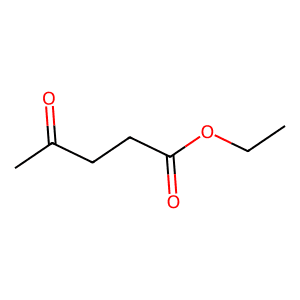
CAS 539-88-8
:Levulinate d'éthyle
- 4-Ketovaleric acid ethyl ester
- 4-Oxopentanoic acid ethyl ester
- Ethyl levulinate, (4-Ketovaleric acid ethyl ester
- Ethyl 3-acetylpropionate
- Ethyl 4-ketovalerate
- Ethyl 4-oxopentanoate
- Ethyl 4-oxovalerate
- Ethyl Laevulate
- Ethyl laevulinate
- Levulinic acid ethyl ester)
- NSC 24876
- NSC 8863
- Voir plus de synonymes
Ethyl Levulinate
CAS :Formule :C7H12O3Degré de pureté :>98.0%(GC)Couleur et forme :Colorless to Almost colorless clear liquidMasse moléculaire :144.17Ethyl levulinate, 98%
CAS :Ethyl levulinate is used to develop a preparative HPLC method to preserve wine aromas and isolates fruity characteristics of red wine aroma extracts This Thermo Scientific Chemicals brand product was originally part of the Alfa Aesar product portfolio. Some documentation and label information may reFormule :C7H12O3Degré de pureté :98%Couleur et forme :Clear colorless, LiquidMasse moléculaire :144.17ethyl 4-oxopentanoate
CAS :Formule :C7H12O3Degré de pureté :97%Couleur et forme :LiquidMasse moléculaire :144.1684Ethyl 4-oxopentanoate
CAS :Ethyl 4-oxopentanoate is a reagent containing both ester and ketone groups, widely used in biochemical experiments and drug synthesis research.
Formule :C7H12O3Degré de pureté :98.02%Couleur et forme :SolidMasse moléculaire :144.17Ethyl Levulinate
CAS :Formule :C7H12O3Degré de pureté :97%Couleur et forme :Liquid, ClearMasse moléculaire :144.17Ethyl Levulinate
CAS :Produit contrôléApplications Ethyl levulinate is a compound that is produced through the esterification of Levulinic acid (L379500) and has the potential to be used as an octane booster for gasoline and a hybrid biodiesel fuel. Ethyl levulinate is also used as food flavouring.
References Leonard, R.: Eng. Chem., 48, 1330 (1956); Le Van, M., et al.: Catal. Lett., 141, 271 (2011); Windom, B., et al.: Energ. Fuel., 25, 1878 (2011)Formule :C7H12O3Couleur et forme :NeatMasse moléculaire :144.17Ethyl Levulinate
CAS :Ethyl Levulinate is a chemical catalyst that can be used to produce levulinate. The reactivity of this catalyst has been evaluated in the presence of hydrogen tartrate and 5-hydroxymethylfurfural. The reaction mechanism includes the formation of an intermediate, which reacts with the metal hydroxide to form ethyl levulinate. This catalyst is stable under acidic conditions and can be used for reactions that require a pH range from 4-8.
Formule :C7H12O3Degré de pureté :Min. 95%Masse moléculaire :144.17 g/mol