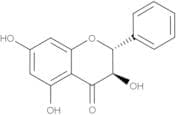
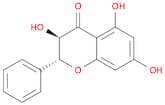
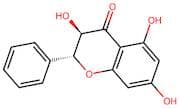
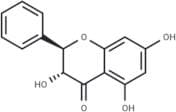
CAS 548-82-3
:Pinobanksine
Description :
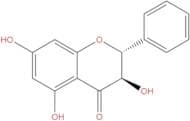
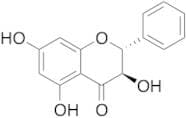
Pinobanksine, avec le numéro CAS 548-82-3, est un composé flavonoïde qui se trouve naturellement dans diverses plantes, en particulier dans la résine de certaines espèces de pin. Il est classé comme un flavanone, qui est un type de flavonoïde caractérisé par une structure chimique spécifique incluant un squelette de chromone. Pinobanksine présente des propriétés antioxydantes, qui contribuent à ses potentiels bienfaits pour la santé, y compris des effets anti-inflammatoires et antimicrobiens. Le composé est souvent étudié pour son rôle dans la médecine traditionnelle et ses applications potentielles dans la conservation des aliments et les cosmétiques en raison de sa capacité à éliminer les radicaux libres. En termes de propriétés physiques, Pinobanksine est typiquement un solide cristallin jaunâtre, et il est soluble dans des solvants organiques mais a une solubilité limitée dans l'eau. Sa structure chimique permet divers dérivés, qui peuvent améliorer son activité biologique. Dans l'ensemble, Pinobanksine suscite de l'intérêt tant dans la recherche pharmacologique que dans la chimie des produits naturels en raison de ses diverses activités biologiques et de ses potentielles applications thérapeutiques.
Formule :C15H12O5
InChI :InChI=1S/C15H12O5/c16-9-6-10(17)12-11(7-9)20-15(14(19)13(12)18)8-4-2-1-3-5-8/h1-7,14-17,19H/t14-,15+/m0/s1
Code InChI :InChIKey=SUYJZKRQHBQNCA-LSDHHAIUSA-N
SMILES :O=C1C=2C(O[C@@H]([C@H]1O)C3=CC=CC=C3)=CC(O)=CC2O
Synonymes :- (2R,3R)-2,3-Dihydro-3,5,7-trihydroxy-2-phenyl-4H-1-benzopyran-4-one
- (2R,3R)-Pinobanksin
- 3,5,7-Trihydroxyflavanone
- 4H-1-Benzopyran-4-one, 2,3-dihydro-3,5,7-trihydroxy-2-phenyl-, (2R-trans)-
- 4H-1-benzopyran-4-one, 2,3-dihydro-3,5,7-trihydroxy-2-phenyl-, (2R,3R)-
- Dihydrogalangin
- Flavanone, 3,5,7-trihydroxy-
- Pinobanksin
Trier par
Degré de pureté (%)
0
100
|
0
|
50
|
90
|
95
|
100
8 produits concernés.
Pinobanksin
CAS :Pinobanksin analytical standard provided with chromatographic purity, to be used as reference material for qualitative determination.Formule :C15H12O5Degré de pureté :(HPLC) ≥95%Couleur et forme :PowderMasse moléculaire :272.26(2R,3R)-2,3-Dihydro-3,5,7-trihydroxy-2-phenyl-4H-1-benzopyran-4-one
CAS :Formule :C15H12O5Degré de pureté :%Couleur et forme :SolidMasse moléculaire :272.2528Pinobanksin
CAS :Pinobanksin is a natural flavonoid that induces apoptosis in cancer cells. It is a potent antioxidant that inhibits the peroxidation of LDL and inhibits XO.Formule :C15H12O5Degré de pureté :99.92%Couleur et forme :SolidMasse moléculaire :272.25Pinobanksin
CAS :Applications Pinobanksin is a dihydroflavonol that posesses antioxidant properties. Pinobanksin is most commonly found in propolis, a material utilized by bees in the construction of their hives.
References Burdock, G.: Food Chem. Toxicol., 36, 347 (1998); Loman, A.: Bulletin, 13, no pp given (1970); Neacsu, M., et al.: Holz Roh. Werks., 65, 1 (2007)Formule :C15H12O5Couleur et forme :White To Off-WhiteMasse moléculaire :272.25rac-Pinobanksin
CAS :Rac-Pinobanksin is a flavonoid that has been shown to have antioxidant and anti-inflammatory properties. It is extracted from propolis and has been shown to stimulate the mitochondrial membrane potential in colorectal adenocarcinoma cells and increase energy metabolism. Rac-Pinobanksin also inhibits the activity of p-hydroxybenzoic acid (PHBA) hydroxylase, which metabolizes PHBA into p-hydroxybenzoic acid (PHBA). Rac-Pinobanksin acetate has also been shown to inhibit the activity of the enzyme caffeoyl esterase, which catalyzes the hydrolysis of caffeic acids (CA) into ferulic acid (FA) and p-coumaric acid (PCA). Rac-Pinobanksin acetate increases FA levels and decreases PCA levels.Formule :C15H12O5Degré de pureté :Min. 95%Masse moléculaire :272.25 g/mol