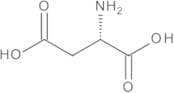
CAS 56-84-8
:Acide L-aspartique
Description :
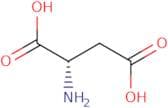
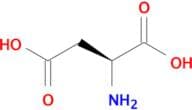
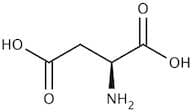
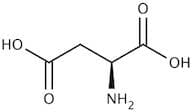
Acide L-aspartique, avec le numéro CAS 56-84-8, est un acide aminé non essentiel qui joue un rôle crucial dans la biosynthèse des protéines. Il est classé comme un acide aminé polaire et hydrophile en raison de ses groupes fonctionnels d'acide carboxylique, qui peuvent donner des protons, le rendant négativement chargé à pH physiologique. Acide L-aspartique est impliqué dans divers processus métaboliques, y compris le cycle de l'urée et la synthèse d'autres acides aminés et neurotransmetteurs. On le trouve dans de nombreuses protéines et il est particulièrement abondant dans les tissus végétaux et animaux. La substance est soluble dans l'eau, ce qui facilite son rôle dans les systèmes biologiques. Acide L-aspartique peut exister sous des formes D et L, la forme L étant l'isomère biologiquement actif. De plus, il est utilisé dans l'industrie alimentaire comme exhausteur de goût et dans les compléments alimentaires pour son rôle potentiel dans la production d'énergie et la fonction cognitive. Dans l'ensemble, Acide L-aspartique est essentiel pour de nombreuses fonctions physiologiques et est un élément clé de la structure des protéines.
Formule :C4H7NO4
InChI :InChI=1S/C4H7NO4/c5-2(4(8)9)1-3(6)7/h2H,1,5H2,(H,6,7)(H,8,9)/t2-/m0/s1
Code InChI :InChIKey=CKLJMWTZIZZHCS-REOHCLBHSA-N
SMILES :[C@H](CC(O)=O)(C(O)=O)N
Synonymes :- (+)-<span class="text-smallcaps">L</span>-Aspartic acid
- (+)-Aspartic acid
- (S)-2-Aminobutanedioic acid
- (S)-Aminobutanedioic acid
- (S)-Aspartic acid
- 2-Aminobutanedioic acid
- 75: PN: WO2005016244 PAGE: 71 claimed protein
- 7: PN: US20050014160 SEQID: 7 claimed protein
- <span class="text-smallcaps">L</span>-Aminosuccinic acid
- <span class="text-smallcaps">L</span>-Asparagic acid
- <span class="text-smallcaps">L</span>-Asparaginic acid
- Acide aspartique
- Acido Aspartico
- Asparagic acid
- Asparaginic acid
- Asparaginsaure
- Aspartic acid, <span class="text-smallcaps">L</span>-
- Aspartic acid, L-
- Butanedioic acid, amino-, (S)-
- H-Asp-OH
- L-2-Aminobutanedioic acid
- L-Aminosuccinic acid
- L-Aspantic acid
- L-Asparagic acid
- L-Asparaginic acid
- Nsc 3973
- Nsc 79553
- L-(+)-Aspartic acid
- L-Aspartic acid
- L-Aspartic acid
- Voir plus de synonymes
Trier par
Degré de pureté (%)
0
100
|
0
|
50
|
90
|
95
|
100
L-Aspartic acid
CAS :<p>L-Aspartic acid is an amino acid that plays a role in the biochemical reactions of energy metabolism. This amino acid is also important for the synthesis of proteins, such as enzymes and structural proteins. L-Aspartic acid is synthesized from oxaloacetate by transamination. It can also be synthesized from glutamate by the action of aspartate aminotransferase using pyridoxal phosphate as a cofactor. L-Aspartic acid has been shown to play a role in neuronal death, particularly in primary sclerosing cholangitis, and may have potential therapeutic use for this condition. L-Aspartic acid has been used as a model system to study polymerase chain reaction (PCR) methods and analytical methods in biochemistry research.</p>Formule :C4H7NO4Degré de pureté :Min. 95%Couleur et forme :White Off-White PowderMasse moléculaire :133.1 g/molH-Asp-OH
CAS :<p>M03000 - H-Asp-OH</p>Formule :C4H7NO4Degré de pureté :97%Couleur et forme :SolidMasse moléculaire :133.103L-Aspartic Acid ExiPlus, Multi-Compendial, 99%
CAS :Formule :C4H7NO4Degré de pureté :min. 99%Couleur et forme :White, Crystalline powder, Clear, ColourlessMasse moléculaire :133.10L-Aspartic Acid PrimeDx, 99%
CAS :Formule :C4H7NO4Degré de pureté :min. 99.0%Couleur et forme :White to off-white, Crystalline powder, Clear, Colourless to plae yellowMasse moléculaire :133.10L-Aspartic Acid extrapure CHR, 99%
CAS :Formule :C4H7NO4Degré de pureté :min. 99%Couleur et forme :White, Crystalline powder, Clear, ColourlessMasse moléculaire :133.10L-Aspartic acid
CAS :<p>L-Aspartic acid is an amino acid that plays a crucial role in protein synthesis and DNA repair. It has been shown to activate the TRPV1 receptor, which is involved in pain sensation and thermoregulation. L-Aspartic acid has also been studied for its potential therapeutic effects on Alzheimer's disease, as it may inhibit the formation of amyloid beta plaques in the brain. Additionally, L-Aspartic acid has been used as a substrate for DNA ligase, an enzyme that joins together two strands of DNA. This amino acid is also found in plants such as broccoli and Brussels sprouts, where it contributes to the formation of glucosinolates. Studies have shown that L-Aspartic acid can enhance neuronal imaging and improve cognitive function when combined with compounds such as capsaicin or cycloastragenol. Furthermore, polygodial, a compound found in certain plants, has been shown to interact with L-Aspartic acid</p>Formule :C4H7NO4Masse moléculaire :133.11 g/mol