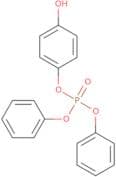
CAS 56806-74-7
:Trier par
Degré de pureté (%)
0
100
|
0
|
50
|
90
|
95
|
100
6 produits concernés.
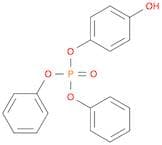
Phosphoric acid, 4-hydroxyphenyl diphenyl ester
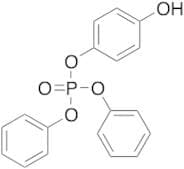
CAS :Formule :C18H15O5PDegré de pureté :95%Couleur et forme :SolidMasse moléculaire :342.2825Diphenyl p-Hydroxyphenyl Phosphate
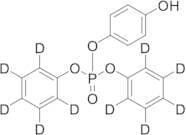
CAS :Formule :C18H15O5PCouleur et forme :NeatMasse moléculaire :342.28Diphenyl p-Hydroxyphenyl Phosphate-d10
CAS :Produit contrôléApplications Diphenyl p-Hydroxyphenyl Phosphate-d10 is the deuterated form of Diphenyl p-Hydroxyphenyl Phosphate (D492418), which is a phosphorus flame retardant additive.
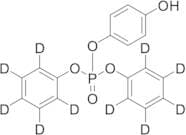
References Kojima, H., et al.: Toxicology Letters, 245, 31-39. (2016);Formule :C18H5D10O5PCouleur et forme :NeatMasse moléculaire :352.34Diphenyl p-Hydroxyphenyl Phosphate-d10 (major)
CAS :Produit contrôléFormule :C18H5D10O5PCouleur et forme :NeatMasse moléculaire :352.34Diphenyl p-Hydroxyphenyl Phosphate
CAS :Diphenyl p-Hydroxyphenyl Phosphate-d10 (DPHP) is a phosphate ester that has been used in the diagnosis of allergic symptoms. DPHP is a metabolite of diphenyl oxide, which can be found in many household products such as paints, varnishes, and lacquers. It has also been found to have health effects on ovaries and extracorporeal membrane devices. DPHP can be detected in urine samples using gas chromatography with mass spectrometry or liquid chromatography with tandem mass spectrometry. This compound has shown to bioconcentrate in tissues and human urine samples. Symptoms of exposure may include allergic skin reactions, conjunctivitis, rhinitis, wheezing, and asthma. There are risk factors associated with this compound including population size and tissue distribution.Formule :C18H15O5PDegré de pureté :Min. 95%Masse moléculaire :342.28 g/mol