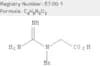
CAS 57-00-1
:Créatine
Description :
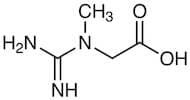
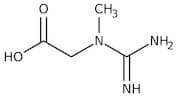
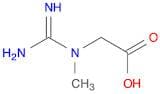
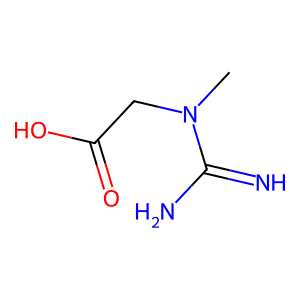
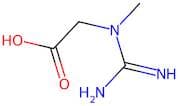
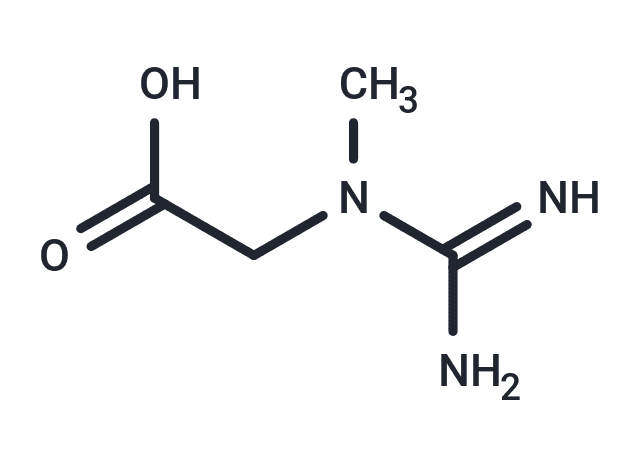
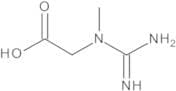
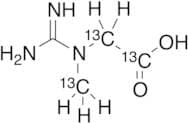
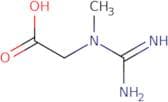
Créatine est un acide organique azoté qui joue un rôle crucial dans le métabolisme énergétique, en particulier dans les cellules musculaires. Il est composé de trois acides aminés : arginine, glycine et méthionine. Créatine se trouve principalement chez les vertébrés et est synthétisé dans le foie, les reins et le pancréas. Sous sa forme pure, Créatine apparaît comme une poudre blanche cristalline, inodore et ayant un goût légèrement amer. Il est soluble dans l'eau, bien que sa solubilité puisse varier avec la température. Créatine fonctionne comme un donneur de phosphate à haute énergie, facilitant la régénération rapide de l'adénosine triphosphate (ATP) lors de courtes périodes d'activité physique intense. Cette propriété le rend populaire en tant que complément alimentaire parmi les athlètes et les culturistes pour améliorer les performances et la masse musculaire. Créatine est généralement considéré comme sûr à la consommation lorsqu'il est utilisé correctement, mais une consommation excessive peut entraîner des effets secondaires potentiels, notamment des inconforts gastro-intestinaux et une déshydratation. Sa formule chimique est C4H9N3O2, et il est classé comme un nutriment non essentiel, ce qui signifie que le corps peut le produire à partir d'autres composés.
Formule :C4H9N3O2
InChI :InChI=1S/C4H9N3O2/c1-7(4(5)6)2-3(8)9/h2H2,1H3,(H3,5,6)(H,8,9)
Code InChI :InChIKey=CVSVTCORWBXHQV-UHFFFAOYSA-N
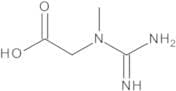
SMILES :N(CC(O)=O)(C(=N)N)C
Synonymes :- (1-Methylguanidino)acetic acid
- (N-Methyl-guanidino)-acetic acid
- 2-(1-Methylguanidino)acetic acid
- 2-(N-Methylcarbamimidamido)acetic acid
- 2-[(C-Azaniumylcarbonimidoyl)-methylamino]acetate
- 5-Chloro-2-Maino Benzotrifluoride
- Cosmocair C 100
- Creatine anhydrous
- Creatine preparation
- Glycine, N-(aminoiminomethyl)-N-methyl-
- Kre-Alkalyn
- Methylguanidoacetic acid
- N-(Aminoiminomethyl)-N-methylglycine
- N-Amidinosarkosin
- N-Methyl-N-guanylglycine
- N-amidinosarcosina
- N-amidinosarcosine
- N-carbamimidoyl-N-methylglycine
- Neotine
- Nsc 8752
- Phosphagen
- Tego Cosmo C 100
- Vitargo
- [N-(Amidino)-N-methylamino]acetic acid
- Voir plus de synonymes
Trier par
Degré de pureté (%)
0
100
|
0
|
50
|
90
|
95
|
100
16 produits concernés.
Creatine
CAS :Formule :C4H9N3O2Degré de pureté :>98.0%(T)(HPLC)Couleur et forme :White to Almost white powder to crystalMasse moléculaire :131.14Creatine, anhydrous, 98%
CAS :Creatine is involved in the rapid production of ATP associated with creatine kinases in skeletal muscle tissue. Creatine may be used as a supplement to study its mechanism of action. It acts as a nutraceutical and a neuroprotective agent. This Thermo Scientific Chemicals brand product was originallyFormule :C4H9N3O2Degré de pureté :98%Couleur et forme :White, PowderMasse moléculaire :131.14Glycine, N-(aminoiminomethyl)-N-methyl-
CAS :Formule :C4H9N3O2Degré de pureté :95%Couleur et forme :SolidMasse moléculaire :131.1332Creatine, anhydrous
CAS :Formule :C4H9N3O2Degré de pureté :≥ 98.0%Couleur et forme :White to almost white powderMasse moléculaire :131.13Creatine
CAS :Creatine, an amino acid in vertebrates, forms phosphocreatine in muscle, aids energy transfer, is made in the liver, and mainly stored in muscles.Formule :C4H9N3O2Degré de pureté :99.63% - 99.83%Couleur et forme :Colourless To Light Yellow SolidMasse moléculaire :131.13Creatine
CAS :Applications Creatine can be used in biological study of high fat diets with different ketogenic ratios on hippocampal accumulation of creatine.
References Skoczen, A., et al.: Spectrochim Acta A, 184, 13 (2017)Formule :C4H9N3O2Couleur et forme :NeatMasse moléculaire :131.13Creatine zinc chloride
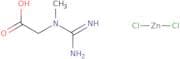
CAS :Creatine zinc chloride is a basic protein that is metabolized to creatinine and guanidinoacetate. Creatine zinc chloride has been shown to inhibit the mitochondrial membrane potential, leading to the inhibition of cardiac muscle contraction and myocardial infarct size. Creatine zinc chloride also has physiological functions in energy metabolism, cytosolic calcium regulation, and glomerular filtration rate. Creatine zinc chloride may be used for the treatment of metabolic disorders, such as obesity and diabetes mellitus type II.
Formule :C4H9N3O2·ZnCl2Degré de pureté :Min. 99%Couleur et forme :PowderMasse moléculaire :267.43 g/molCreatine, anhydrous
CAS :Creatine is a basic protein that is used in the production of adenosine triphosphate (ATP) in muscle and other tissues. Creatine has been shown to have inhibitory properties against ubiquitin ligases, which are proteins that regulate protein degradation by marking them for cellular destruction. Creatine also has been shown to have protective effects against oxidative injury in the bowel, as well as inhibitory properties against neuronal death induced by anoxia or oxidative stress. Creatine can be found at physiological levels in human serum and mitochondrial membranes and has been shown to increase mitochondrial membrane potential, enzyme activities, and ATP production. Creatine may be involved in transfer reactions such as phosphocreatine synthesis from creatine.Formule :C4H9N3O2Degré de pureté :Min. 95%Couleur et forme :PowderMasse moléculaire :131.13 g/mol