CAS 57-15-8
:Chlorobutanol
Description :
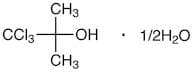
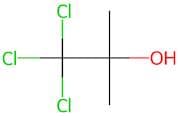
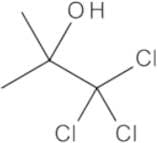
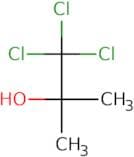
Chlorobutanol, avec le numéro CAS 57-15-8, est un composé organique qui appartient à la classe des alcools chlorés. Il se présente généralement sous forme de liquide incolore à jaune pâle ou de solide, selon sa forme, et a une odeur caractéristique. Chlorobutanol est connu pour ses propriétés antiseptiques et conservatrices, ce qui le rend utile dans les produits pharmaceutiques et cosmétiques. Il est soluble dans l'eau et les solvants organiques, ce qui améliore sa polyvalence dans diverses applications. Le composé présente une toxicité modérée, et des précautions de sécurité doivent être prises lors de sa manipulation. Chlorobutanol peut également agir comme un réactif dans la synthèse organique et est parfois utilisé comme stabilisant dans certaines formulations. Sa structure chimique présente un squelette de butanol avec un atome de chlore substitué à l'une des positions du carbone, ce qui contribue à ses propriétés uniques. Dans l'ensemble, Chlorobutanol est apprécié pour ses applications fonctionnelles tant dans les environnements industriels que de laboratoire.
Formule :C4H7Cl3O
InChI :InChI=1S/C4H7Cl3O/c1-3(2,8)4(5,6)7/h8H,1-2H3
Code InChI :InChIKey=OSASVXMJTNOKOY-UHFFFAOYSA-N
SMILES :C(C(Cl)(Cl)Cl)(C)(C)O
Synonymes :- 1,1,1-Trichloro-2-methyl-2-propanal
- 1,1,1-Trichloro-2-methyl-2-propanol
- 1,1,1-Trichloro-tert-butyl alcohol
- 2,2,2-Trichloro-1,1-dimethylethanol
- 2-(Trichloromethyl)-2-propanol
- 2-Methyl-1,1,1-Trichlor-2-Propanol
- Acetochlorone
- Acetonchloroform
- Acetone chloroform
- Anhydrous chlorobutanol
- Chlorbutanol
- Chlorbutol
- Chloreton
- Chloretone
- Chlorobutanol
- Chlortran
- Clorobutanol
- Clortran
- Coliquifilm
- Dentalone
- Khloreton
- Methaform
- Nsc 44794
- Nsc 4596
- Nsc 5208
- Propan-2-Ol, 1,1,1-Trichloro-2-Methyl-
- Sedaform
- Trichloro-tert-butyl alcohol
- Trichlorobutanol
- β,β,β-Trichloro-tert-butyl alcohol
- 1-Methyl-1-(trichloromethyl)ethanol
- 2-Methyl-1,1,1-trichloro-2-propanol
- Trichloro-tert-buty alcohol
- 2-Trichhloromethyl-2-propanol
- 2-Propanol, 1,1,1-trichloro-2-methyl-
- Voir plus de synonymes
Trier par
Degré de pureté (%)
0
100
|
0
|
50
|
90
|
95
|
100
8 produits concernés.
1,1,1-Trichloro-2-methyl-2-propanol Hemihydrate
CAS :Formule :C4H7Cl3OH2ODegré de pureté :>98.0%(GC)(T)Couleur et forme :White to Light yellow powder to crystalMasse moléculaire :186.46Chlorobutanol
CAS :Chlorobutanol (Chlortran) is a chemical preservative, sedative hypnotic and weak local anaesthetic.Formule :C4H7Cl3ODegré de pureté :≥98%Couleur et forme :Less Crystals Colorless CrystalsMasse moléculaire :177.461,1,1-Trichloro-2-methylpropan-2-ol
CAS :Produit contrôléStability Hygroscopic
Applications Chlorobutanol is used as a preservative and sedative. It has also been shown to exhibit antibacterial properties.
References Dutta, T., et al.: PCT Int. Appl., 22, (2020); Ibibia, E., et al.: Asian. J. Pharm. Clin. Res., 9, 179-182 (2016)Formule :C4H7Cl3OCouleur et forme :Off-WhiteMasse moléculaire :177.46Chlorobutanol
CAS :Chlorobutanol is an antimicrobial agent that is used in the preservation of pharmaceuticals, cosmetics, and other products. It has been shown to be effective against a variety of bacterial and fungal organisms. Chlorobutanol is also used as a preservative in topical ophthalmic preparations. In addition, chlorobutanol has been found to be a potent inhibitor of histone deacetylase (HDAC) activity, which may be due to its ability to bind to the active site of HDACs. This binding prevents acetylation of lysine residues on histones, thereby preventing transcriptional activation.Formule :C4H7OCl3Degré de pureté :Min. 95%Couleur et forme :White To Off-White SolidMasse moléculaire :177.46 g/mol