CAS 58-73-1
:Diphénhydramine
Description :
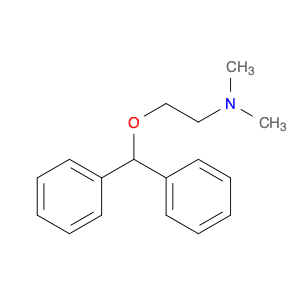
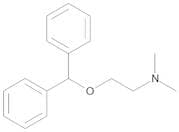
Diphénhydramine est un antihistaminique couramment utilisé pour soulager les symptômes d'allergie, de rhume des foins et de rhume commun. Il est classé comme un antagoniste des récepteurs H1 de première génération, ce qui signifie qu'il bloque l'action de l'histamine, une substance dans le corps qui provoque des symptômes allergiques. Chimiquement, Diphénhydramine se caractérise par sa structure, qui comprend deux cycles phényliques reliés par une chaîne d'éthylamine. Cette structure contribue à sa capacité à traverser la barrière hémato-encéphalique, entraînant des effets sédatifs, c'est pourquoi il est également utilisé comme traitement à court terme pour l'insomnie. Diphénhydramine a une solubilité relativement faible dans l'eau mais est soluble dans des solvants organiques. Ses effets pharmacologiques peuvent inclure somnolence, bouche sèche, vertiges et, dans certains cas, des réactions paradoxales telles que l'excitabilité, en particulier chez les enfants. En raison de ses propriétés sédatives, il est conseillé de faire preuve de prudence lors de l'utilisation de machines ou de la conduite après consommation. De plus, il peut interagir avec d'autres médicaments, il est donc important de consulter des professionnels de la santé avant utilisation.
Formule :C17H21NO
InChI :InChI=1/C17H21NO/c1-18(2)13-14-19-17(15-9-5-3-6-10-15)16-11-7-4-8-12-16/h3-12,17H,13-14H2,1-2H3
Code InChI :InChIKey=ZZVUWRFHKOJYTH-UHFFFAOYSA-N
SMILES :C(OCCN(C)C)(C1=CC=CC=C1)C2=CC=CC=C2
Synonymes :- 2-(Benzhydryloxy)-N,N-dimethylethanamine
- 2-(Benzhydryloxy)-N,N-dimethylethylamine
- 2-(Diphenylmethoxy)-N,N-dimethylethanamine
- 2-(Diphenylmethoxy)-N,N-dimethylethylamine
- 2-Benzhydryloxyethyldimethylamine
- Benzhydramine
- DPH
- Difenhidramina
- Dimedrol base
- Diphenhydramin
- Ethanamine, 2-(diphenylmethoxy)-N,N-dimethyl-
- Ethylamine, 2-(diphenylmethoxy)-N,N-dimethyl-
- Far 90X2
- N,N-Dimethyl-2-(diphenylmethoxy)ethylamine
- N-[2-(Diphenylmethoxy)ethyl]-N,N-dimethylamine
- Nsc 665800
- O-Benzhydryldimethylaminoethanol
- Probedryl
- Restamin
- α-(2-Dimethylaminoethoxy)diphenylmethane
- β-Dimethylaminoethanol diphenylmethyl ether
- β-Dimethylaminoethyl benzhydryl ether
- β-Dimethylaminoethylbenzhydrylether
- Diphenylhydramine
- Allergeval
- 2-(Diphenylmethoxy)-N,N-dimethylethanam-ine
- Allergical
- Aleryl
- Allergival
- Allergan B
- 2-(diphenylmethoxy)-n,n-dimethyl-ethanamin
- DIPHENHYDRAMINE BASE
- 2-(Benzohydryloxy)-N,N-dimethylethylamine
- AURORA KA-7664
- 2-(diphenylmethoxy)-n,n-dimethyl-ethylamin
- Alledryl
- DIPHENHYDRAMINE
- Voir plus de synonymes
Trier par
Degré de pureté (%)
0
100
|
0
|
50
|
90
|
95
|
100
11 produits concernés.
Diphenhydramine
CAS :Formule :C17H21NODegré de pureté :>98.0%(GC)(T)Couleur et forme :Colorless to Yellow clear liquidMasse moléculaire :255.36Ethanamine, 2-(diphenylmethoxy)-N,N-dimethyl-
CAS :Formule :C17H21NODegré de pureté :98%Couleur et forme :LiquidMasse moléculaire :255.3547Orphenadrine EP Impurity D (Diphenhydramine)
CAS :Formule :C17H21NOCouleur et forme :Yellow LiquidMasse moléculaire :255.36Diphenhydramine Hydrochloride
CAS :Formule :C17H21NO·HClDegré de pureté :>98.0%(T)(HPLC)Couleur et forme :White powder to crystalMasse moléculaire :291.82Diphenhydramine
CAS :Diphenhydramine (Syntedril): first-gen antihistamine for allergies, antiemetic, antitussive, anticholinergic, sedative, treats drug-induced parkinsonism.Formule :C17H21NODegré de pureté :98.07%Couleur et forme :SolidMasse moléculaire :255.35Diphenhydramine
CAS :Produit contrôléApplications Diphenhydramine can be used for improving dry skin with itching.
References Takeshima, H., et.al.: Jpn. Kokai Tokkyo Koho, 12, (2021);Formule :C17H21NOCouleur et forme :NeatMasse moléculaire :255.3612-(Benzhydryloxy)-N,N-dimethylethanamine
CAS :Formule :C17H21NODegré de pureté :95%Couleur et forme :LiquidMasse moléculaire :255.361Diphenhydramine
CAS :Produit contrôléDiphenhydramine is a drug that belongs to the class of antihistamines, and is used to treat allergic symptoms such as hay fever, urticaria, and other allergic reactions. It has been shown to inhibit the production of hydrogen fluoride in analytical methods for measuring this compound. Diphenhydramine is also known to have potential interactions with other drugs, including α1-adrenergic antagonists (i.e., h1-antagonists), cyclic peptides, and surfactants. In addition, it has been shown to bind to the α1 subunit of G protein receptors within the gastrointestinal tract in a reaction mechanism that is not yet fully understood. This binding inhibits the response of these receptors to certain stimuli from neurotransmitters and hormones, which can lead to bowel disease.Formule :C9H18CINODegré de pureté :Min. 95%Masse moléculaire :295.16 g/mol