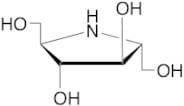
CAS 59920-31-9
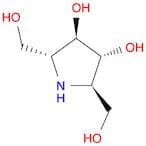
:2,5-Didésoxy-2,5-imino-D-mannitol
- (2R,3R,4R,5R)-2,5-bis(hydroxymethyl)pyrrolidine-3,4-diol
- (2R,3R,4R,5R)-3,4-Dihydroxy-2,5-pyrrolidinedimethanol
- 2(R),5(R)-Bis(hydroxymethyl)-3(R),4(R)-dihydroxypyrrolidine
- 2,5-Bis(Hydroxymethyl)Pyrrolidine-3,4-Diol
- 2,5-Dideoxy-2,5-imino-<span class="text-smallcaps">D</span>-mannitol
- 2,5-Dideoxy-2,5-imino-D-mannitol
- 2,5-Pyrrolidinedimethanol, 3,4-dihydroxy-, (2R,3R,4R,5R)-
- 2,5-Pyrrolidinedimethanol, 3,4-dihydroxy-, [2R-(2α,3β,4α,5β)]-
- Dmdp
- α-Glucosidase
(2R,3R,4R,5R)-2,5-Bis(hydroxymethyl)pyrrolidine-3,4-diol
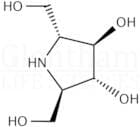
CAS :Formule :C6H13NO4Degré de pureté :98%Couleur et forme :SolidMasse moléculaire :163.17172,5-Dideoxy-2,5-imino-D-mannitol
CAS :Produit contrôléStability Hygroscopic
Applications A glucosidase inhibitor.
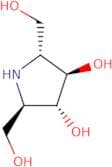
References Fellows, L.E.: Pestic. Sci., 17, 602 (1986)Formule :C6H13NO4Couleur et forme :Off White SolidMasse moléculaire :163.172,5-Dideoxy-2,5-imino-D-mannitol
CAS :2,5-Dideoxy-2,5-imino-D-mannitol is an iminosugar compound, which is a synthetic derivative with potent glycosidase inhibitory properties. The compound, typically synthesized through complex organic processes, acts by mimicking the transition state of natural substrates in glycosidases, thereby inhibiting their enzymatic activity. This mode of action involves binding to the active site of glycosidase enzymes, preventing the normal hydrolysis of glycosidic bonds.
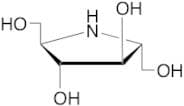
Formule :C6H13NO4Degré de pureté :Min. 95%Couleur et forme :PowderMasse moléculaire :163.17 g/mol2,5-Anhydro-2,5-imino-D-mannitol
CAS :Produit contrôléApplications Many pyrrolidines are powerful inhibitors of glycohydrolases, enzymes responsible for cleavage of glycosidic bonds, glycoprotein processing and the gastrointestinal breakdown of dietary carbohydrates. These compounds are charged at physiological pH and are believed to associate with acidic amino acids at the active site. Inhibition of glycohydrolases could be of therapeutic value for the treatment of viral infections, cancer, diabetes, and obesity.
References Fellows, L.E., et al.: J. Chem. Brit., 287, (1987), Elbein, A.D.: Annu. Rev. Biochem., 56, 497 (1987), Fleet, G.W., et al.: J. Chem. Brit., 287, (1989) Baxter, E.W., et al.: J. Org. Chem., 59, 3175 (1994); Tyms, A.S. et al. Lancet 1025, (1987); Spearman, M.A. et al. Expt. Cell Res. 168, 116 (1987); Horii, S. et al. J. Med. Chem. 29, 1038 (1986), Minami, Y., et al.: Bioorg. Med. Chem., 16, 2734 (2008),Formule :C6H13NO4Couleur et forme :NeatMasse moléculaire :163.17