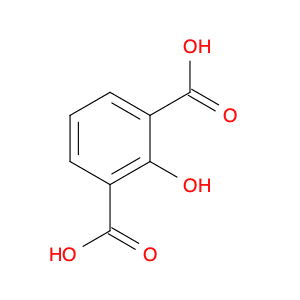
CAS 606-19-9
:Acide 2-hydroxy-1,3-benzènedicarboxylique
- 1,3-Benzenedicarboxylic Acid, 2-Hydroxy-
- 2-Hydroxy-1,3-benzene dicarboxylic acid
- 2-Hydroxy-1,3-benzenedicarboxylic acid
- 2-Hydroxyisophthalic acid
- Isophthalic acid, 2-hydroxy-
- NSC 252689
2-Hydroxybenzene-1,3-dicarboxylic acid
CAS :Formule :C8H6O5Couleur et forme :SolidMasse moléculaire :182.13022-Hydroxyisophthalic acid
CAS :2-Hydroxyisophthalic acidDegré de pureté :≥95%Couleur et forme :SolidMasse moléculaire :182.13g/mol2-Hydroxyisophthalic acid
CAS :2-Hydroxyisophthalic acid is a hydroxylated derivative of p-hydroxybenzoic acid. It is used in the manufacture of esters such as 2-ethoxyethanol and 2-ethoxyethyl acetate. It has also been shown to have a number of enzyme activities, including esterases, glycosidases, and lipases. The macrocyclic structure of 2-hydroxyisophthalic acid is responsible for its ability to interact with other molecules through hydrogen bonding and coordination chemistry. The carboxylate group on 2-hydroxyisophthalic acid interacts with the hydroxy group on the fatty acids found in soap, which leads to its use as an emulsifying agent. The carbonyl oxygens on 2-hydroxyisophthalic acid are responsible for its anti-inflammatory properties as they inhibit prostaglandin synthesis when they bind to the cyclooxygenase enzymes that catalyze
Formule :C8H6O5Degré de pureté :Min. 95 Area-%Couleur et forme :PowderMasse moléculaire :182.13 g/mol